





She formed couples while disappointing a part of her community. The Tinder app keeps causing debate about its true motivation to honor love. However, it continues to be massively used by 70 million users.
It is far from the time when one flirted at the evening with friends or with a colleague. Even further, the time when one was looking for a wife at the ball. Since the arrival of dating applications, there is no need to leave home to meet love, a lover or good company. At the end of the 90s and at the beginning of the 21st century, companies had the idea to move dating classifieds on paper to bring them into the digital age. American Match.com opens the dance, followed by eHarmony or even OkCupid. In France, it will be necessary to wait for Meetic in 2001, a site designed by Marc Simoncini, with dazzling success. Six years later, AdopteUnMec’s viral marketing continues to popularize the new phenomenon. These first sites pave the way for digital exchanges and this new form of dating. But with the massive arrival of smartphones, everything is transforming and accelerating.
Tinder, the mastodon of online dating
In 2012 in Los Angeles, Sean Rad, Joe Munoz, Justin Mateen, Alexa Mateen, Dinesh Moorjani, Jonathan Badee and Whitney Wolfe Herd launch the application Tinder, within the group specialized in online matches IAC/Match Group. The small group revolutionizes the system with a fun and intuitive interface, as well as a geolocation system to display members not far from the user. We then discover the swipe, the fact of sliding to the right to like a profile, and to the left to pass it. Photos, description and interests are mentioned to find THE person who suits us in no time. A reciprocal like gives the famous match, engaging in a conversation.
In 2013, Tinder already had millions of swipes per day, especially on US university campuses where it was tested. The application quickly expands to other markets and adds a variety of paid features, allowing it to generate revenue. Tinder Plus, Tinder Gold and Super Likes then make their appearances. The promise? Allow people with few matches, not meeting someone or wanting more exchanges to boost their profile and the use of the application.
Copied and challenged by Hinge, Bumble, Happn or even Once, Tinder also promises a plurality of encounters. From great love to a night’s escape or an outing without a headache, everyone, in theory, can find their account.
Attracting young people
And no question of limiting oneself to profiles over 40 years old. While old dating sites could be perceived as cheesy by the young generation, Tinder is cleaning up its priorities to attract this target. The application is thus mainly aimed at 18-35 year olds, with a direct, humorous and sometimes provocative language. The flame logo sets the tone, the perfectly smartphone-friendly design convinces. Campaigns are often based on micro-stories, and Tinder rides the evolution of ultra-connected youth behaviors.
Spending a lot of time on your screen has become commonplace, so why not take the opportunity to meet people? The dating giant also takes advantage of the increasingly prevalent social anxiety, shyness and social interactions 3.0 to affirm its commitment to breaking loneliness. Containment came to establish this position where apps were almost the only way to talk with a stranger.
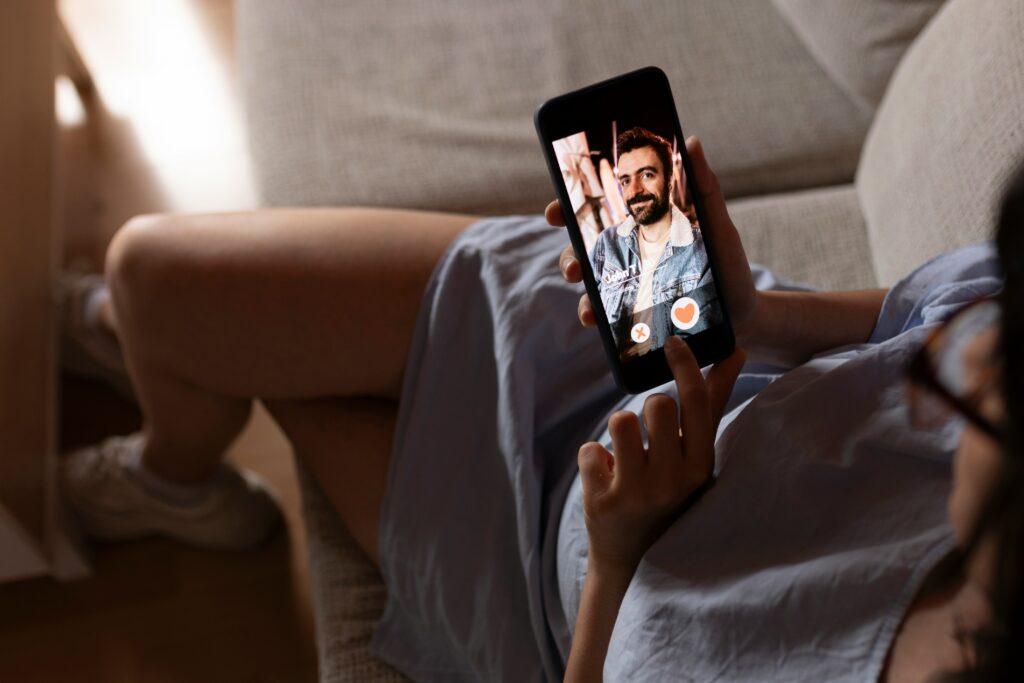
This vision works very quickly. No more shame to be on Tinder since everyone is there: the application is installed on the phone next to other social networks. In 2025, Tinder would have around 70 million monthly active users worldwide, and 9.6 million paid subscribers. Users perform around 1.6 billion swipes per day, generating around 26 million daily matches.
Scandals on the bill
If, on paper, Tinder has revolutionized and anticipated new forms of digital discussions, numerous scandals have come to tarnish this position of cupid. Internally, several cases of sexual harassment have disturbed the established order. The application has also been accused of violating its members’ privacy and not protecting personal data enough.
But it is also its conception in itself that gives rise to debate. In 2024, a complaint was filed in the US against Match Group (owner of Tinder, Hinge, etc.): the complainants accuse the company of designing its apps with manipulative functions to make users “addicted”, pushing them to buy subscriptions or paid features, all at the expense of their well-being or their sincere search for a relationship. In other words: a ‘playful’ interface promoting compulsive use. Tinder also bets on the male wallet. Indeed, with a ratio of 8 men to 2 women, the platform encourages these gentlemen in particular to put money to have as much chance as possible to meet the right profiles.
Other members believe that the swipe system creates a hypermarket of love where everyone becomes a lost product in an infinite mass. Many also reproach the platform for favoring ‘beautiful’ profiles at the expense of people deemed less attractive by the algorithm, as well as racial minorities and trans people, which can introduce a ‘superficial greed’ or make connections less deep.
Especially since e-meetings distort interactions in real life, everything being easier with messages sometimes more in a seduction strategy than a fluid conversation in IRL (in real life). Also difficult to sort between the serious profiles and those turned towards a carnal escapade, weakening the loving destiny of the application. Clearly: a vicious circle between almost industrial swips, repetitive exchanges and distorted alchemy, ultimately increasing the disappointment and loneliness of the members. To the delight of Tinder, which thus keeps its single users active…
From the small to the big screen
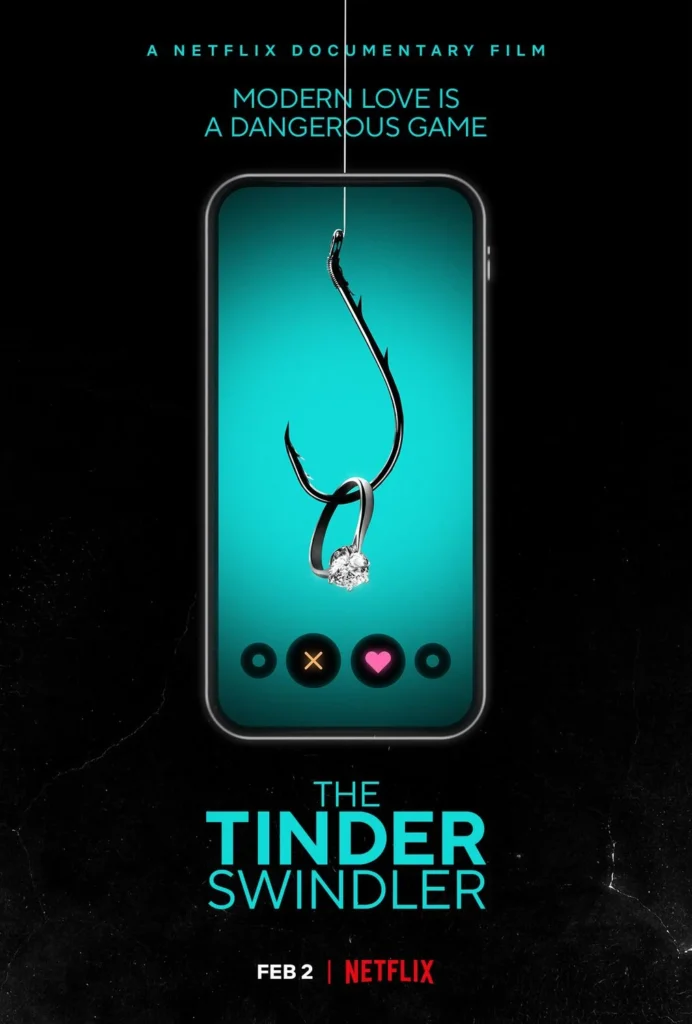
This “fake” side was notably brought to the forefront in L’Escroqueur by Tinder, a Netflix documentary released in 2002. We follow women who have fallen under the charm of the ‘perfect’ man, namely rich, handsome and caring, who is actually just a scammer asking money from his many suitors to ensure his lifestyle. The film was a great success, with 166 million hours viewed in 28 days, and encouraged the members of the application to remain cautious and vigilant in their e-meetings.
In the same vein, Fake is a drama series broadcast in 2024 that follows a magazine editor who thinks she has found her soulmate when she meets a successful breeder on a dating app. But who discovers later that he is not quite what she had believed.
Episode 4 of season 4 of Black Mirror, Hang the DJ, features Amy and Frank, two singles, who test “The System”, a dating app linking temporary relationships to find the ideal match. After a memorable first date, they are separated and begin to question the algorithm and their freedom of choice following unspectacular connections.
In September was also released Swiped, a film by Rachel Lee Goldenberg that traces the journey of Whitney Wolfe Herd: graduated, she drilled into the predominantly male world of tech, co-founded Tinder, but left the company due to sexist behaviors and harassment. She then founded Bumble, a dating app that puts women first. The film shows her struggle to reinvent the codes of dating apps, and how she ends up becoming, by the strength of her talent alone, one of the youngest billionaires.
Read also : Lovers or friends: the boom of digital relationships with an AI
Featured photo : © Unsplash