

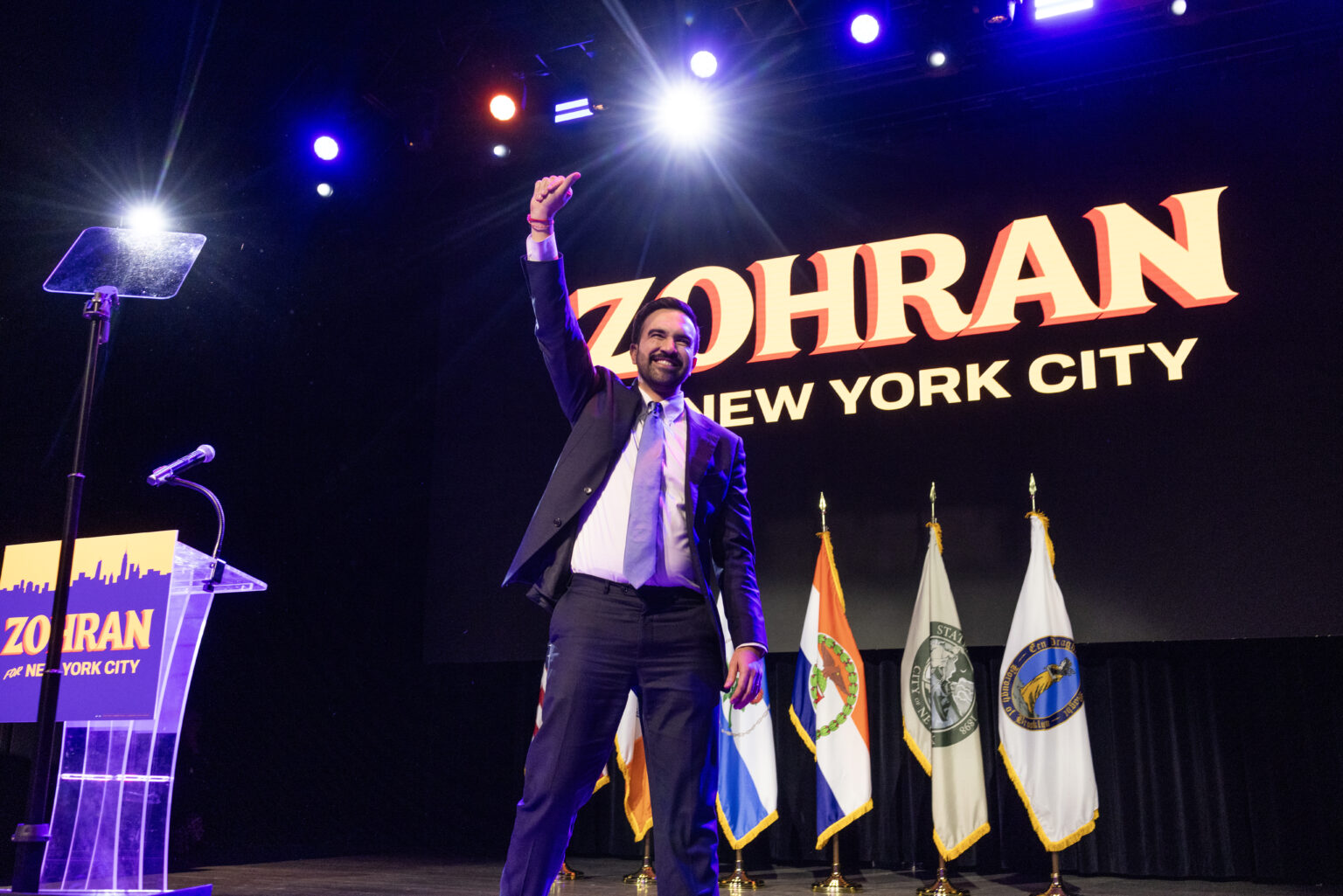




In an election night that could well mark a turning point in US political history, Zohran Mamdani won the New York City mayoral race last night and will become the 111th mayor of New York City on January 1, 2026.
“I am a Muslim. I am a democratic socialist. And worst of all, I refuse to apologize for any of it.” These words resonated on Tuesday night in Brooklyn when Zohran Mamdani became mayor of New York City at the age of just 34.
But the radical proposals of New York’s newly elected mayor are generating as much enthusiasm as they are concern…
An unusual career path
Born on October 18, 1991, in Uganda, Zohran Mamdani arrived in New York at the age of seven after spending time in South Africa. He grew up in the American metropolis, resumed his studies at the Bronx High School of Science, and earned a bachelor’s degree in African studies from Bowdoin College in 2014.
Before diving into the political arena, he worked as an advisor to prevent property foreclosures. His political commitment then found its first political platform in 2020 : he was elected to the New York State Assembly for District 36, then re-elected unopposed in 2022 and 2024.
Mamdani then set his sights further afield and aimed for the mayoralty of New York City, announcing his candidacy in October 2024. A year later, he won against Andrew Cuomo (who had switched to independent) and Republican Curtis Sliwa. This victory was achieved in a context of more than 2 million ballots cast, the highest turnout since 1969 in such a race.
He made history by becoming the first Muslim to lead New York, the youngest mayor elected in over a century, and the first of South Asian origin to hold this office : a series of firsts that speak volumes about the shift that this election brought about.
A social and urban agenda
Zohran Mamdani’s political vision revolves around a complete overhaul of the New York urban model, where the city would once again become, in his words, “a place to live before a place to profit.”
At the heart of his program, the issue of housing is a priority : he promises an immediate freeze on rents in regulated apartments, as well as an ambitious plan to build several hundred thousand truly affordable homes. For him, this is the key to stopping the exodus of the middle classes and restoring social balance.
In terms of transportation and public services, Mamdani advocates for making mobility accessible to all. He plans to make buses free throughout the city and expand the network in order to reduce dependence on cars and open up access to outlying neighborhoods. In the same vein, he wants to create municipal grocery stores in the five boroughs to offer basic necessities at very low prices, a proposal that is as economically risky as it is unprecedented for New York.
On the financial front, Mamdani advocates for higher taxes on large corporations and incomes over $1 million per year to finance his social projects. His rhetoric contrasts sharply with that of his predecessors : he embraces his left-wing politics in a city long governed by more centrist figures. On education, he opposes the proliferation of charter schools, semi-private schools financed by public funds, which he considers unfair, preferring to strengthen traditional public schools.
Finally, his environmental policy is rooted in a logic of combating climate change, greening infrastructure, and improving urban quality of life, conceived not as ecological luxuries, but as fundamental rights.
Mamdani’s election is therefore both a signal and a gamble. For New York, it is a new generation that wants to take the reins : young, cosmopolitan, progressive, and ready to break with certain traditions.
However, the new mayor’s agenda raises questions about the future balance of power in the city : the business world, real estate companies, and New York State institutions. Implementing such ambitions will require alliances and compromises, given the radicalism already announced by Mamdani.
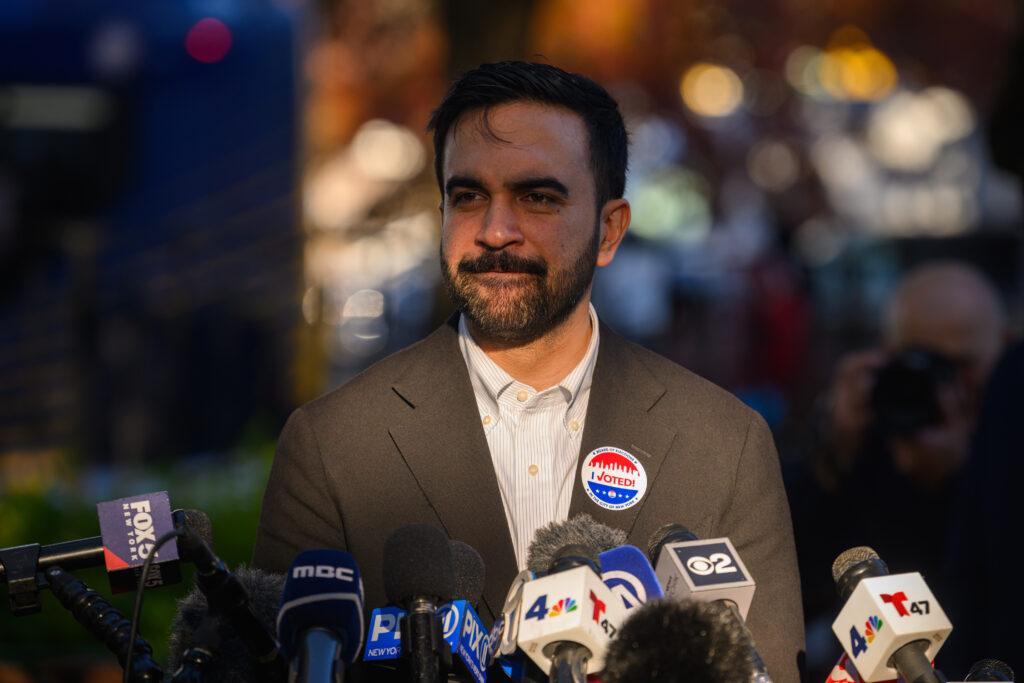
The Israeli-Palestinian conflict imported to New York
Beyond his program, Zohran Mamdani stood out for his positions on the Israeli-Palestinian conflict, which crystallized some of the tensions surrounding his candidacy, particularly in New York’s Jewish community. The progressive politician has always been critical of Israeli policy, which he has repeatedly described as “genocidal,” supporting the BDS (Boycott, Divestment and Sanctions) movement as a form of nonviolent pressure.
He also stated that New York should align its municipal foreign policy with international law, going so far as to say that he would support an International Criminal Court arrest warrant for Benjamin Netanyahu if he visited the city.
These statements provoked strong reactions. Several Democratic officials asked him to clarify his support for the militant slogan “Globalize the Intifada,” which some perceived as a call to violence. Mamdani then qualified his remarks, saying he understood the emotional charge of the slogan but stating that he would not use it himself.
Among Jewish voters, these statements sparked a heated debate : for some, they reflect hostility toward Israel ; for others, they are consistent with an American left that is more open to criticizing the state and defending Palestinian rights. In a city where the Jewish community represents nearly 12% of the population, this position remains both a political risk and a marker of his ideological consistency.
Read also > New York reintroduces its vintage train for the festive season
Featured photo : © Getty Images