





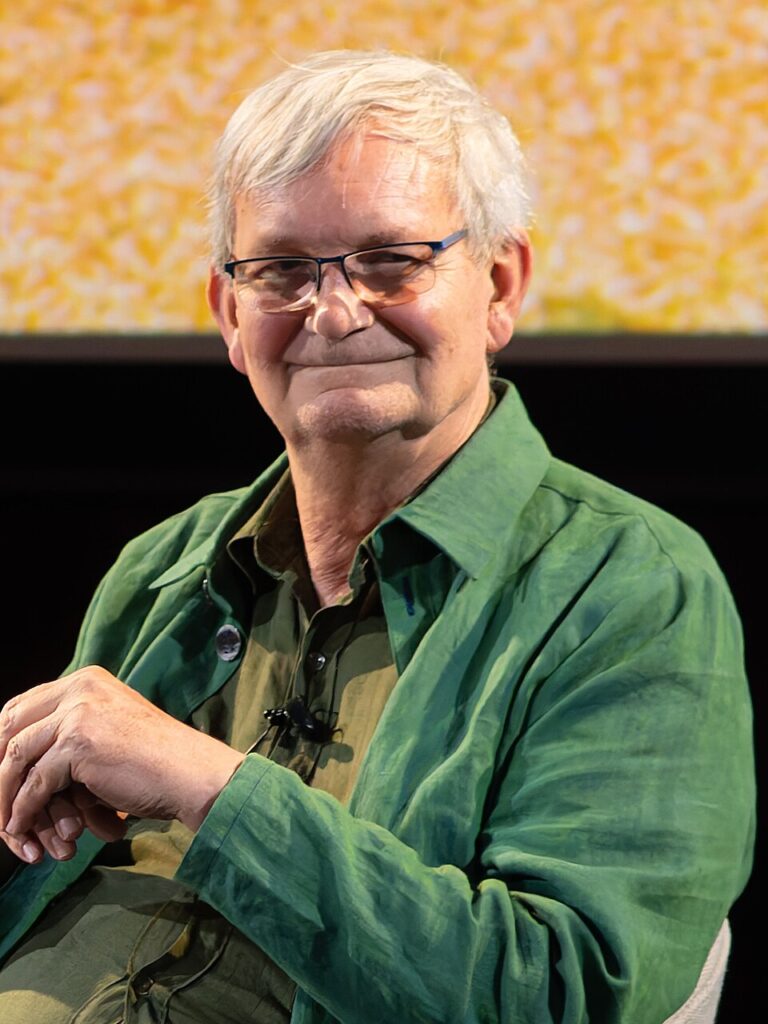
An undisputed talent of documentary photography, Martin Parr passed away on December 6, 2025, at his home in Bristol. Leisure, consumption, social classes… For five decades, this major figure of the renowned Magnum Photos agency leaves behind a unique perspective on society.
Born in 1952 in Epsom, Surrey, England, the young Martin discovered nature with his parents, who were passionate about ornithology. His sense of observation and patience was further strengthened by his grandfather George, an amateur photographer and member of the Royal Photographic Society. It was he who gave Martin his first camera and a book entitled Instructions to Young Photographers.
As a teenager, he became interested in the work of major figures in documentary photography such as Bill Brandt and Henri Cartier-Bresson, and understood that photography could become a true language through the lens of art. At the age of 16, he produced a series of photographs centered on a fish and chips shop. A mundane subject, yet a revealing one, foreshadowing his sensitivity for capturing everyday life.
From black and white to color
In 1970, Martin Parr entered the photography department of Manchester Polytechnic and graduated in 1973. During his studies, he continued to observe and document daily life, notably through a project on a psychiatric hospital. The budding artist began his career in a favorable context, as documentary photography was experiencing a real boom in the United Kingdom. His attention to the ordinary, his interest in social interactions, and his desire to go where others did not look already defined his style.
At the time, Martin Parr focused on black-and-white photography. He settled in northern England at the end of his studies and began photographing rural life and small communities. He thus initiated a sensitive body of work on collective memory, nostalgia, and the disappearance of traditional ways of life.
In the 1980s, he gradually abandoned black and white in favor of color photography, with vivid, saturated tones and frequent use of flash. This choice became one of his major visual signatures. Based in Liverpool and then Brighton, Martin Parr undertook documentary series centered on popular everyday life: beaches, holidays, the working class, modest leisure activities, and the emerging consumer society. His name spread within artistic circles, drawn to his striking images and a style focused on social truth, irony, and satire.
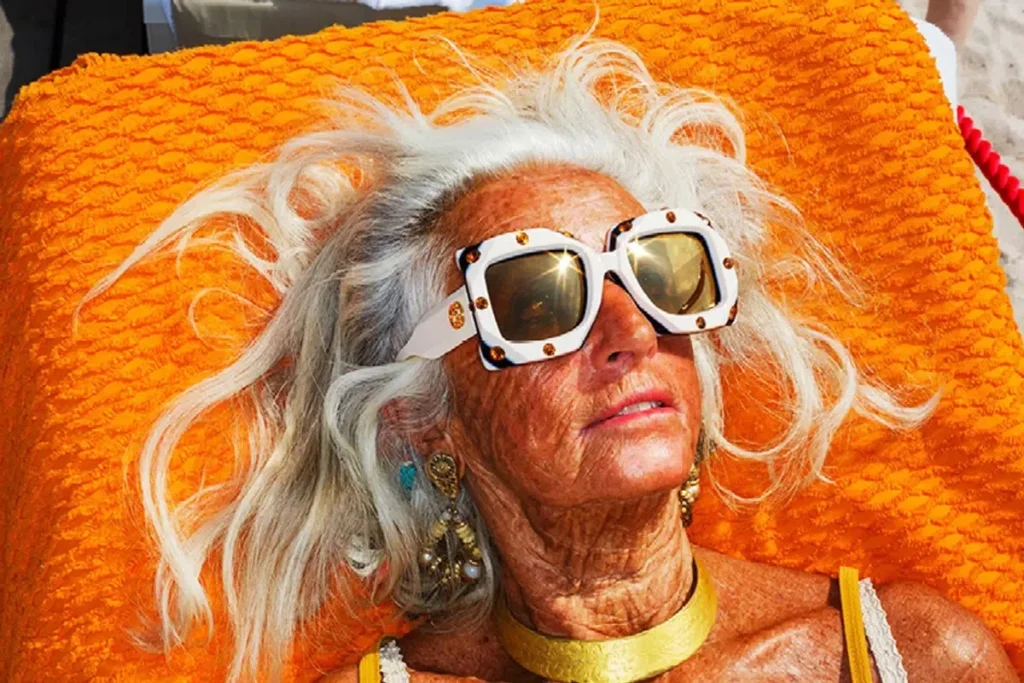
The Last Resort (1982–1985) is the flagship series of this decade. Parr photographs working-class holidaymakers on a seaside beach, exposing scenes of modest leisure, often raw, where kitsch meets social reality. This series is often cited as one of the first milestones of what would be called the “new color documentary photography.” The works are exhibited, giving him international visibility.
Broadening the perspective
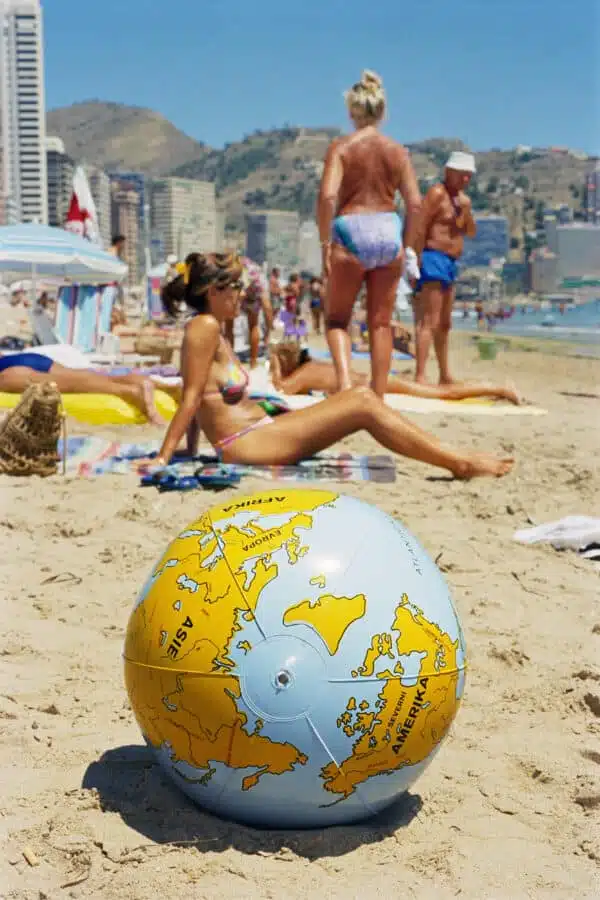
Martin Parr continued his work beyond Great Britain. From 1987 to 1994, he photographed mass tourism and holidaymakers. Published the following year, this series entitled Small World shows the globalization of leisure and standardization – a theme that would become one of the photographer’s signatures.
He adopted a global documentary approach that led him to become a member of Magnum Photos after a period as an associate. The agency, founded in the 1930s, has visually documented most of the world’s major events and personalities, covering society, politics, events, and conflicts. Despite criticism, Parr gained recognition with numerous international awards.
Between 1995 and 1999, he produced Common Sense, a series focused on mass consumption, consumerism, and modern lifestyles. Food, disposable objects, décor – everyday life and contemporary behaviors are all examined. The success was immense. The publication and exhibition of the series were on a large scale: 41 galleries across 17 countries presented it.
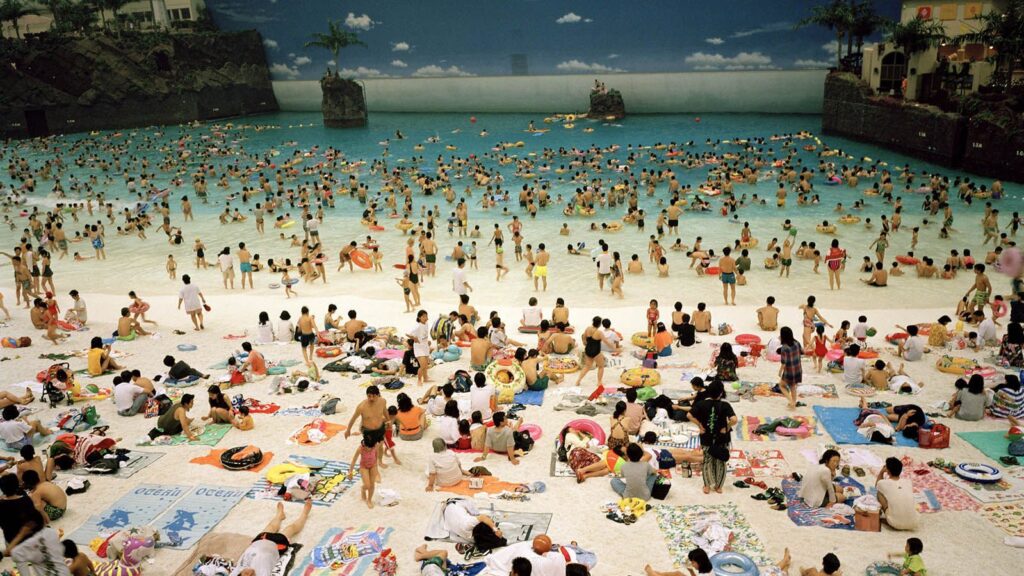
Three years later, Martin Parr unveiled a follow-up to The Last Resort, continuing his exploration of British beaches and leisure. The photographer published retrospective and thematic books, such as Martin Parr: Think of England in 2000. In 2005, a major retrospective was devoted to him at the Maison Européenne de la Photographie in Paris (covering the early 1970s to 2001). He was also exhibited at the Museum of Photography in London and in international exhibitions.
The Martin Parr Foundation
In 2014, the Martin Parr Foundation was created in Bristol, with the aim of preserving his photographs, promoting British and Irish photography, and supporting young photographers. It became a major center for archives and dissemination of contemporary documentary photography.
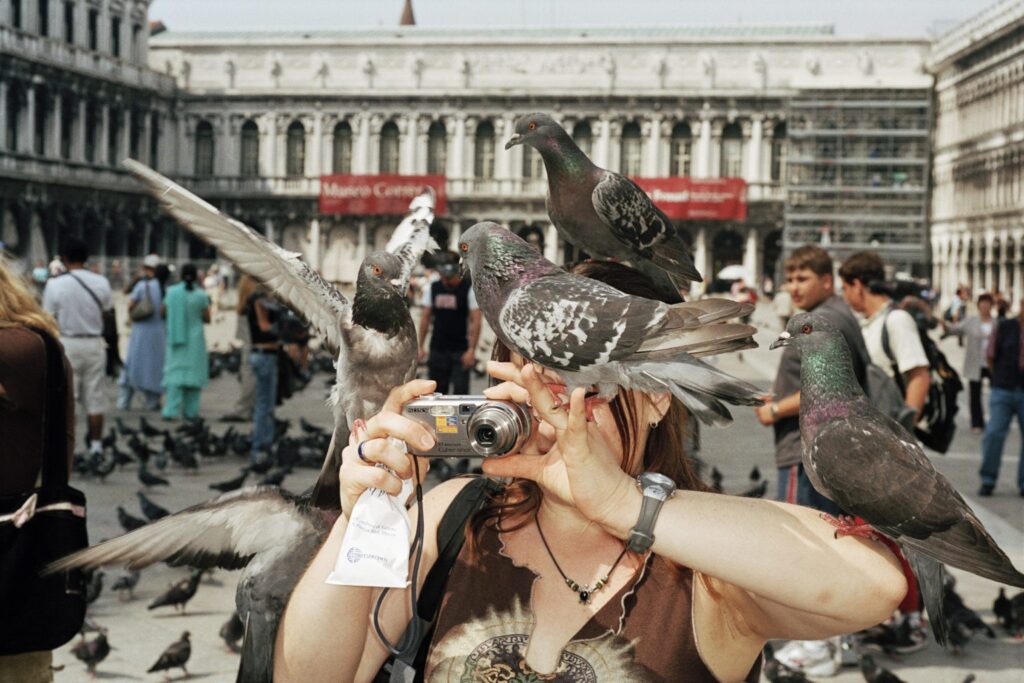
At the same time, he presented Food (& Other Series) at the Kamel Mennour Gallery in Paris, featuring his latest photographs focused on food, consumption, and contemporary pop culture. Parr also worked with magazines such as British Vogue, The Face, and Dazed & Confused, and collaborated with luxury brands. He imposed his distinctive eye on fashion photography, more accustomed to polished shoots: Gucci, Saint Laurent, Paul Smith… He conceived campaigns and capsule collections. In 2024, Louis Vuitton even published Fashion Eye – United Kingdom, bringing together around one hundred of his photographs since the late 1990s.
In 2020, he was exhibited at the Parrathon at Frac Bretagne in Rennes, a retrospective of nearly 500 photographs covering his entire career, before being at the heart of the Life’s a Beach exhibition at the Quai de la Photo in Paris three years later. Throughout his life, several galleries and institutions, such as Fotomuseum Winterthur (Switzerland), the Victoria and Albert Museum (London), and of course the Magnum Gallery (New York), presented retrospectives or monographic exhibitions.
Final years and legacy
His final years were certainly shaped by photography, but Martin Parr also embraced roles as a curator, teacher, and collector. Diagnosed with cancer in 2021, he passed away on December 6, 2025, at his home in Bristol, at the age of 73.
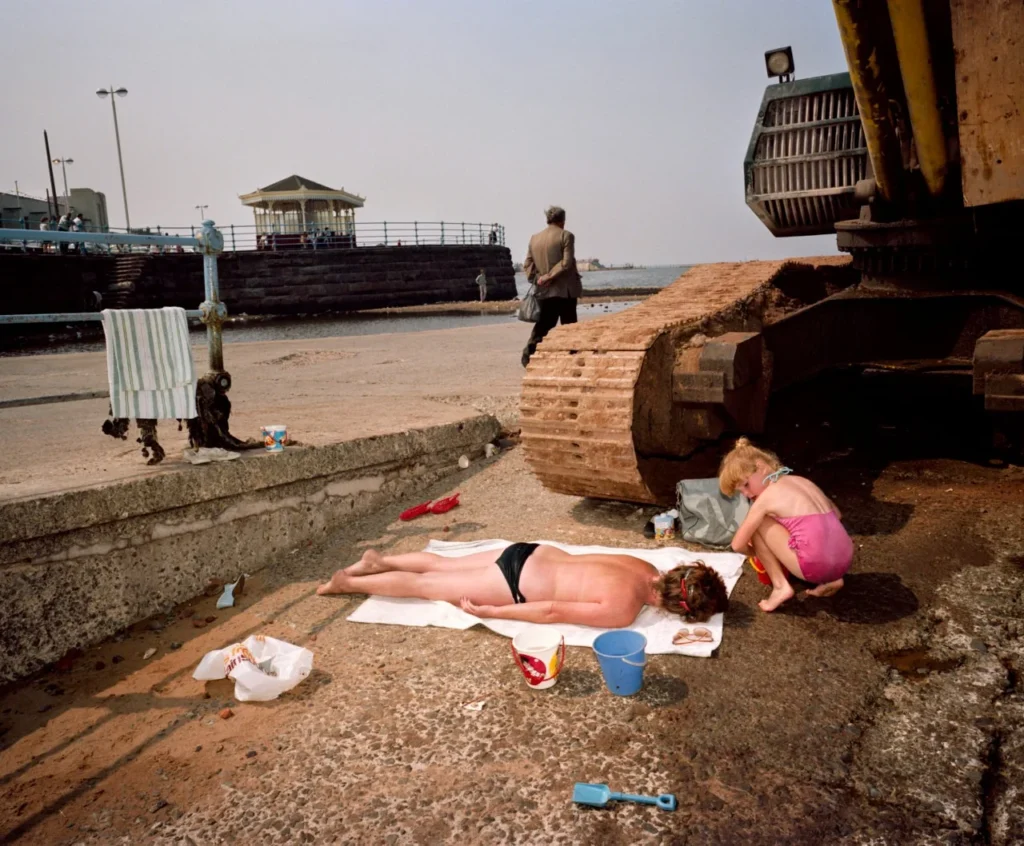
His one-of-a-kind body of work will remain one of the pillars of contemporary documentary photography: a sincere, colorful, and ironic vision of our society and everyday life.
Read also : The best exhibitions to celebrate 100 years of Art Deco
Featured photo: © Martin Parr