





From Eastern Europe to the Middle East, from Venezuela to forgotten Africa, current conflicts reveal a planet where the authority of the international order is increasingly contested. States are openly competing with each other, while new hotbeds of violence threaten to spread.
The year 2026 exposes deep fractures in the global geopolitical architecture. The war in Ukraine is no longer just an East-West confrontation: it symbolizes the end of a stable European order. The humanitarian crisis in the Middle East continues to spread, and the US intervention in Venezuela raises questions about the sustainability of international law. In this fractured world, diplomacy is being put to the test, and each crisis becomes a test for the entire world.
Ongoing conflicts
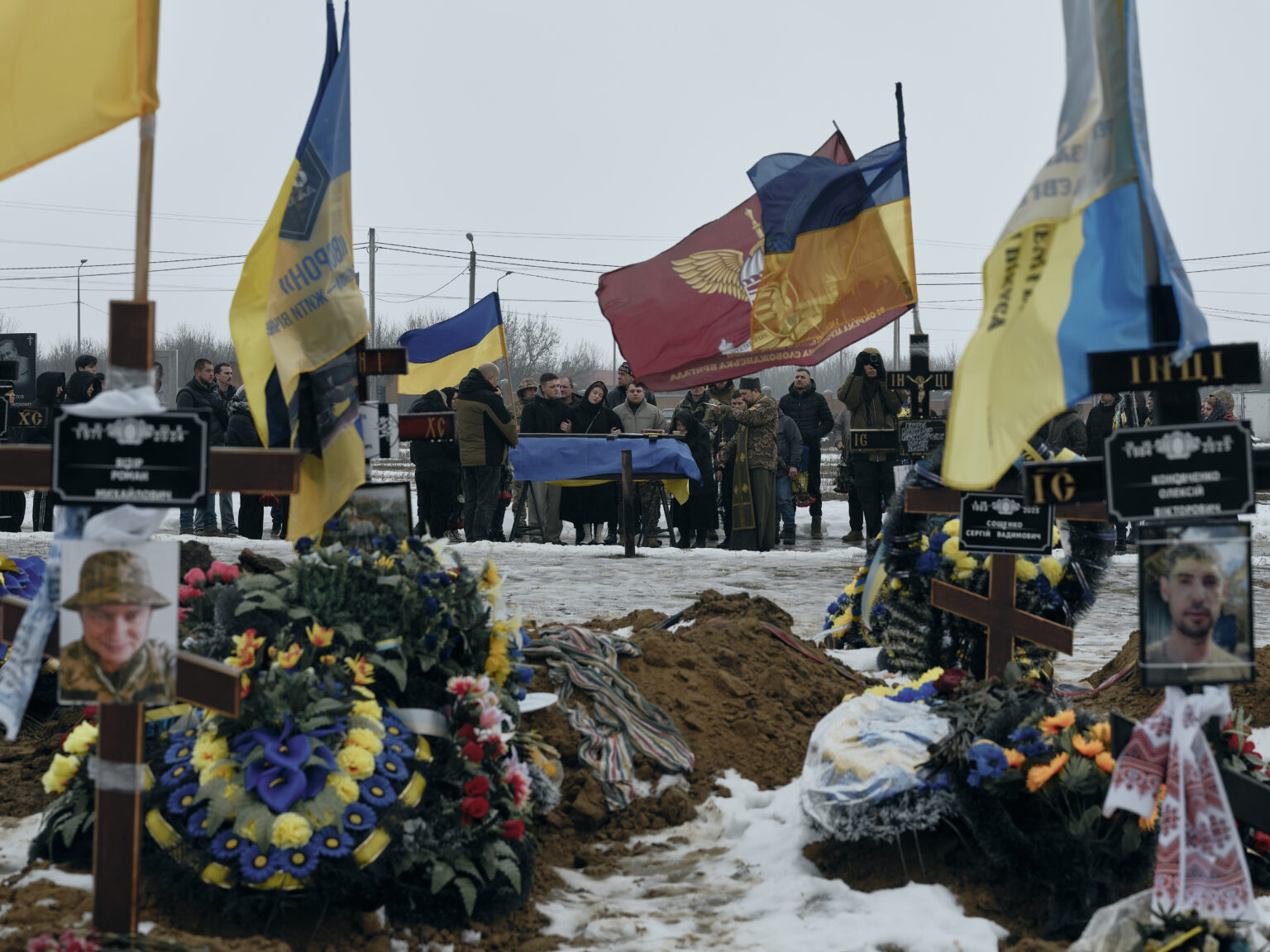
Since Russia’s invasion of Ukraine in February 2022, the conflict has entered its fifth year with no clear prospects for peace. According to a recent study by the Center for Strategic and International Studies (CSIS), nearly 2 million military personnel were killed, wounded, or missing on both sides between 2022 and the end of 2025. This is a human toll that no major power has experienced since World War II.
Civilians are also paying a heavy price: 2025 was the “deadliest” year for non-combatants since the invasion began, with more than 2,500 civilians killed and more than 12,000 wounded, according to the UN.
This war is profoundly transforming Europe: diplomatic negotiations, such as those recently observed in Abu Dhabi, revolve around the territorial issue, reflecting a frozen standoff between Moscow and Kiev, under ever-increasing American and European pressure.
The Israeli-Palestinian conflict, which has been dramatically reignited since the attack on October 7, 2023, has led to an unprecedented humanitarian catastrophe in the Gaza Strip. Official Palestinian sources estimate the death toll at more than 70,000, including at least 18,000 children, with more than 171,000 wounded, not counting the tens of thousands of indirect victims. Demographic studies suggest that the actual death toll could even exceed 100,000, reflecting a dramatic decline in life expectancy and massive destruction of infrastructure.
This conflict is spreading to the West Bank, where forced expulsions and attacks by settlers forced tens of thousands of Palestinians to leave their homes in 2025.
Add to this the multitude of other wars that continue to intensify amid relative indifference in the Sahel, Ethiopia, Myanmar, and Pakistan, due in particular to the collapse of state authorities and internal rivalries, and we have a highly unstable world.
Iran on the brink
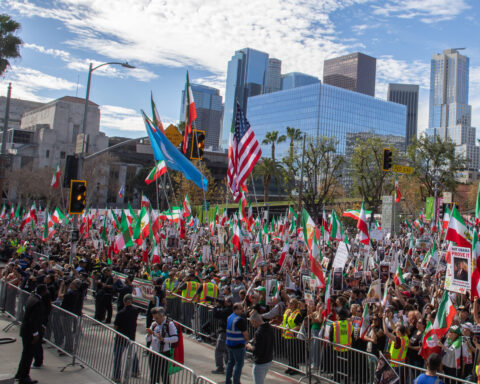
At the heart of the Middle East, Iran is going through a period of instability that has intensified in recent weeks with an unprecedented wave of popular protests, triggered by the worsening economic crisis and amplified by extremely violent state repression.
According to the most recent reports, security forces have cracked down on these demonstrations with a ferocity that has left thousands dead and tens of thousands injured.
What began as “simple” protests quickly turned into a political movement demanding profound changes to the system. Some voices are even calling for a reconfiguration of power itself, with slogans going so far as to evoke the return of a monarchical model or a post-revolutionary alternative. The regime has responded by imposing massive cuts in access to communications, a method already used during the major movements of 2019 and 2022, with the aim of hindering the organization of protesters and limiting information flowing to the outside world.
Following this, tensions between Tehran and Washington reached new heights: the United States increased its military presence in the Persian Gulf and issued repeated warnings to the Iranian authorities, while denying any desire to engage in direct confrontation. At the same time, the European Union, alarmed by the crackdown on protests, is preparing to adopt new targeted sanctions against Iranian officials.
Venezuela: a dramatic turning point
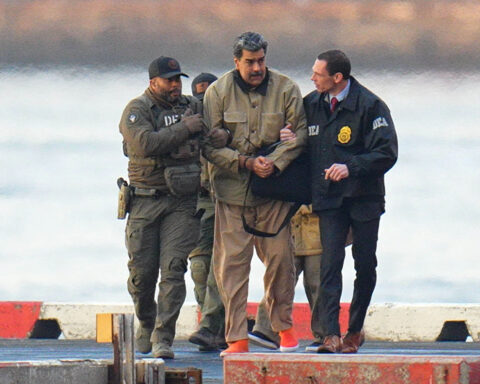
On January 3, 2026, the United States launched a military operation in Venezuela that resulted in the capture of President Nicolás Maduro and his wife. This dramatic turning point sparked an international outcry.
While the human toll of this operation remains fairly limited, the political and legal consequences are immense. Many states believe that this action violates international law because it was carried out without a UN mandate and without an invitation from the legitimate government in Caracas.
Since then, Washington has begun to ease certain sanctions and is considering resuming diplomatic activities in Caracas while maintaining intense political pressure on the interim government. US intelligence services have recently expressed doubts about its complete alignment with the objectives of Donald Trump’s administration, particularly with regard to severing ties with partners such as China and Russia.
Finally, on the domestic front, the overthrow of Maduro has led to the release of several hundred political prisoners, according to Venezuelan authorities. But human rights NGOs question the speed of the process and the tentative hopes for economic recovery. They also raise serious doubts about a genuine and lasting democratic transition in a country where institutions are deeply fractured.
A speech in Davos that resonates strongly
In Davos, Canadian Prime Minister Mark Carney‘s speech made a strong impression in this context of international tensions. Former governor of the Bank of Canada and then the Bank of England, and now a central figure in global climate finance, Carney noted a historic shift: that of a global economy now inextricably linked to geopolitical power relations.
According to the data cited, more than 60% of world trade now depends on regions exposed to major geopolitical tensions, compared with less than 20% in the 2000s, a sign of the accelerating fragmentation of the international economy.
In his speech, described as historic by the Canadian and international press, Mark Carney emphasized that the current period marks “the end of a pleasant fiction,” in other words, a cycle that began after the fall of the Berlin Wall, when trade liberalization seemed to evolve independently of security considerations. He stated that energy, raw materials, critical technologies, and financial flows have now once again become instruments of power, on a par with military alliances. This analysis echoes the sanctions against Russia and US restrictions on Chinese semiconductors.
It is in this context of fragmentation that the signing on January 27 of a reinforced strategic agreement between the European Union and India takes on a highly geopolitical dimension. This agreement, which covers trade, technological cooperation, defense, climate, and infrastructure, concerns a group representing more than 1.8 billion people and nearly 22% of global GDP, making this rapprochement one of the most significant of the decade.
For the European Union, this partnership aims to secure supply chains, particularly for semiconductors, rare metals, and hydrogen, while reducing excessive dependence on China. For India, it is part of a strategy of “modernized strategic non-alignment,” seeking to take advantage of rivalries between major powers without locking itself into a bloc.
Read also > Maduro captured : the US intervention that divides the world
Featured photo : © Getty Images