

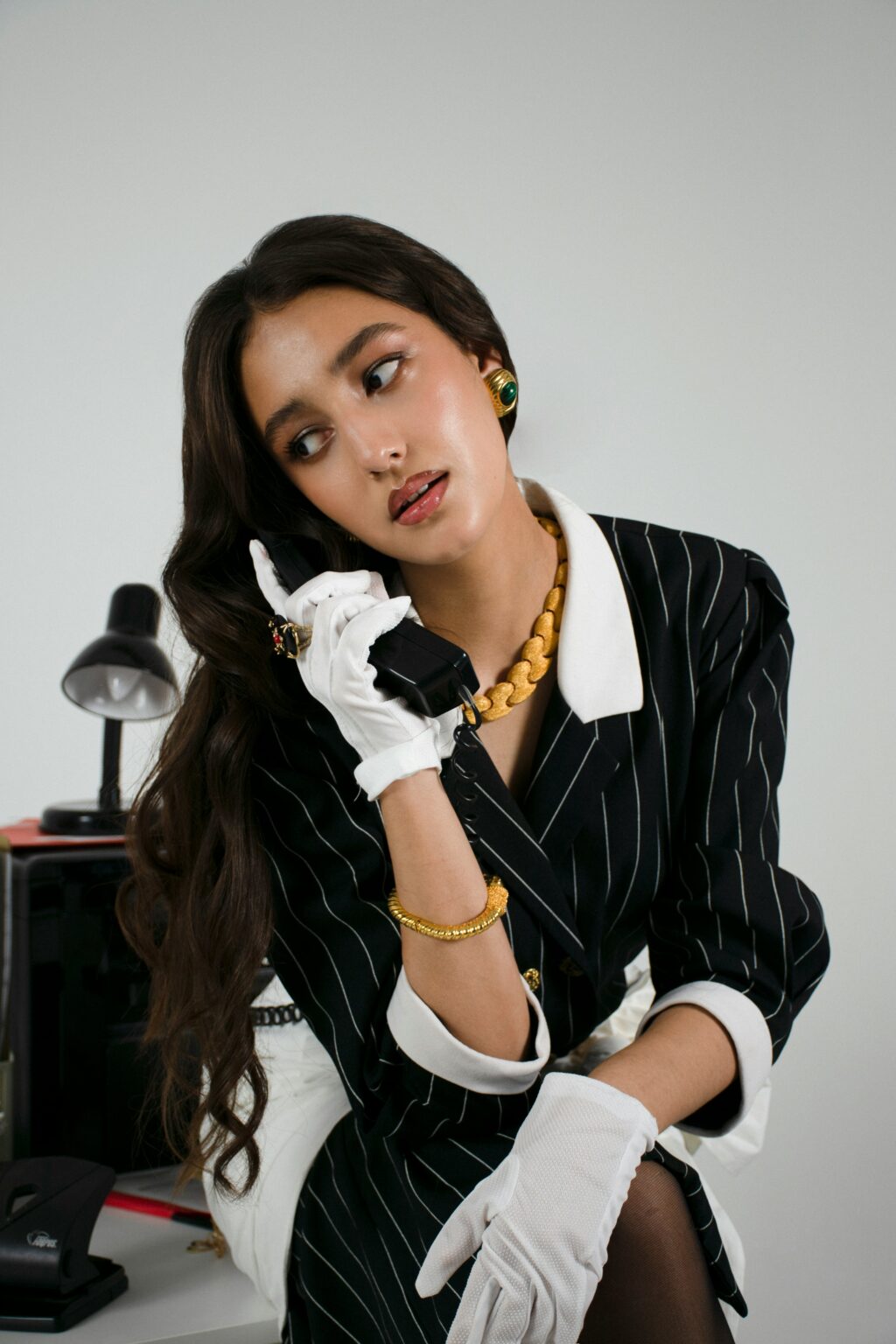

Strong shoulders, structured suits, a commanding presence: the Boss Lady doesn’t just dress – she asserts herself. From 1980s tailoring to today’s icons, power dressing turns clothing into a manifesto of authority.
The Boss Lady trend, also known as power dressing, refers to a B style of dress associated with authority, confidence, and professional success. Emerging in the late 1970s and popularized in the 1980s, it accompanied women’s entry into the political, economic, and media spheres. Clothing thus becomes a means of asserting one’s legitimacy and power by playing with masculine codes… without going too far.
The hallmarks of the Boss Lady
Visually, the style is based on structured silhouettes inspired by men’s tailoring. Shoulders are defined, cuts are clean, and colors are understated: black, gray, beige, or navy blue dominate. The goal is to convey an image of seriousness, poise, and elegance, like an armour of soft power.

Certain pieces have become emblematic of this aesthetic. The structured blazer is the centerpiece of the Boss Lady wardrobe. Paired with wide-leg pants or a straight skirt, it instantly creates an authoritative and sophisticated look. The pantsuit is also a key piece. Once reserved for men, it has become a symbol of female empowerment. Added to these elements are the white shirt, the silk blouse, pumps, loafers, and structured bags, which complete an elegant and assertive silhouette. The whole look is accompanied by precious jewelry (a sign of a certain level of success) that is more or less discreet, without being ostentatious.
Voir cette publication sur Instagram
But the Boss Lady trend is not limited to a question of style. It also represents a social transformation: the conquest of positions of power by women. Clothing becomes a strategic tool for projecting an image of competence and authority.

Saint Laurent, Armani, Thierry Mugler…
The history of power dressing began well before the 1980s. In 1966, Yves Saint Laurent created Le Smoking (or the tuxedo) for women, marking a major turning point in fashion. By adapting an iconic piece from the men’s wardrobe to the female form, the designer paved the way for a new vision of elegance and power.
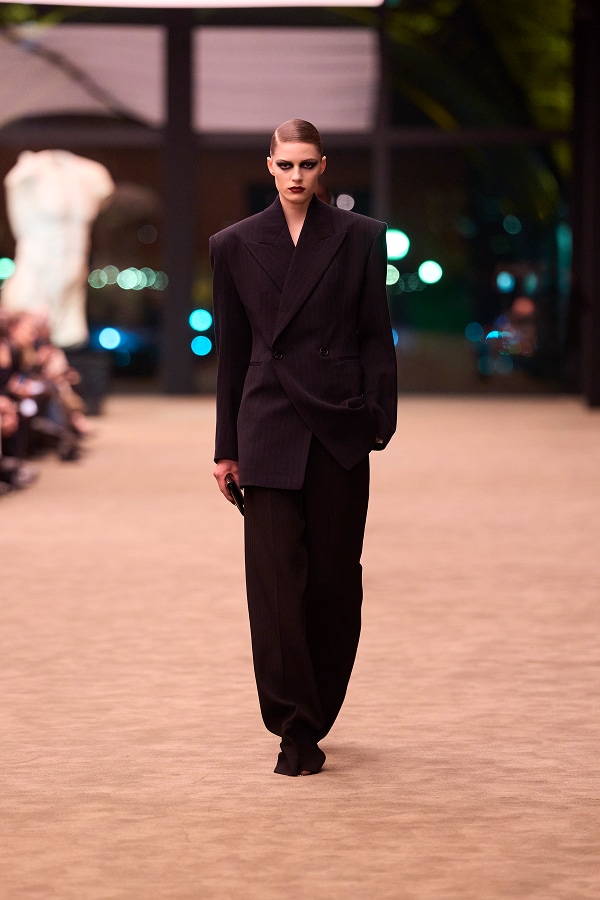
In the 1980s, this aesthetic reached its peak. Silhouettes became more dramatic, featuring broad shoulders and structured jackets. Designers such as Thierry Mugler and Claude Montana created almost sculptural silhouettes, evoking a form of modern armor for active women.
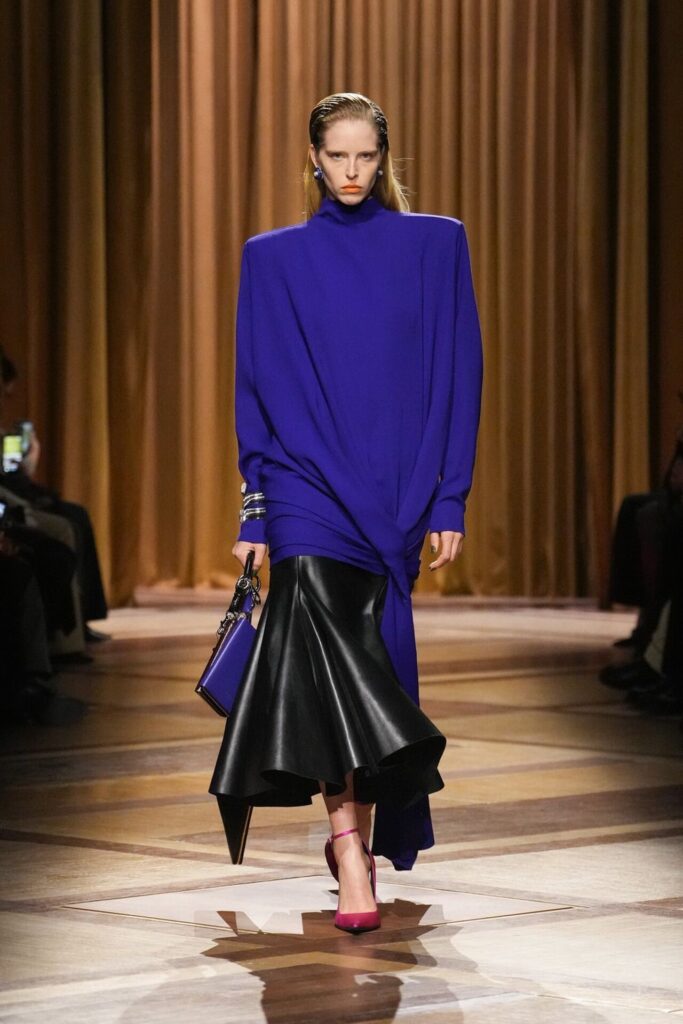
Among the most influential designers, Giorgio Armani played a central role in this evolution. His minimalist, fluid suits redefined the image of the active woman. Armani’s elegant, structured suits became a benchmark in the professional world and in popular culture.
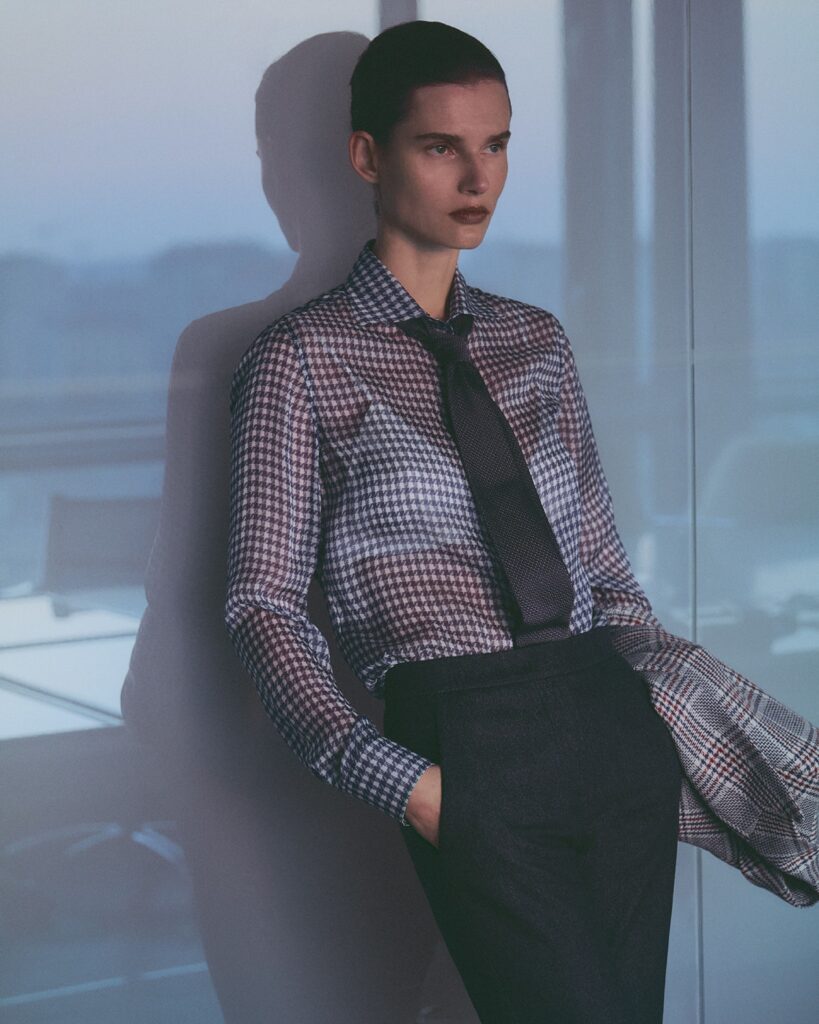
Other fashion houses also contributed to spreading this aesthetic. In the 1990s, Donna Karan developed an urban wardrobe designed for New York’s working women, while Jil Sander offered a more minimal and refined take on power dressing.
Nowadays, this aesthetic continues to inspire runways as evidenced by the Fall/Winter 2026 collections. At Saint Laurent, oversized suits and strong shoulders remain central. Meanwhile, at Gucci, the runway show evokes the quintessential femme fatale of the 1990s, Catherine Tramell/Sharon Stone, the villain from *Basic Instinct* movie and her impeccable Hitchcockian white dress.
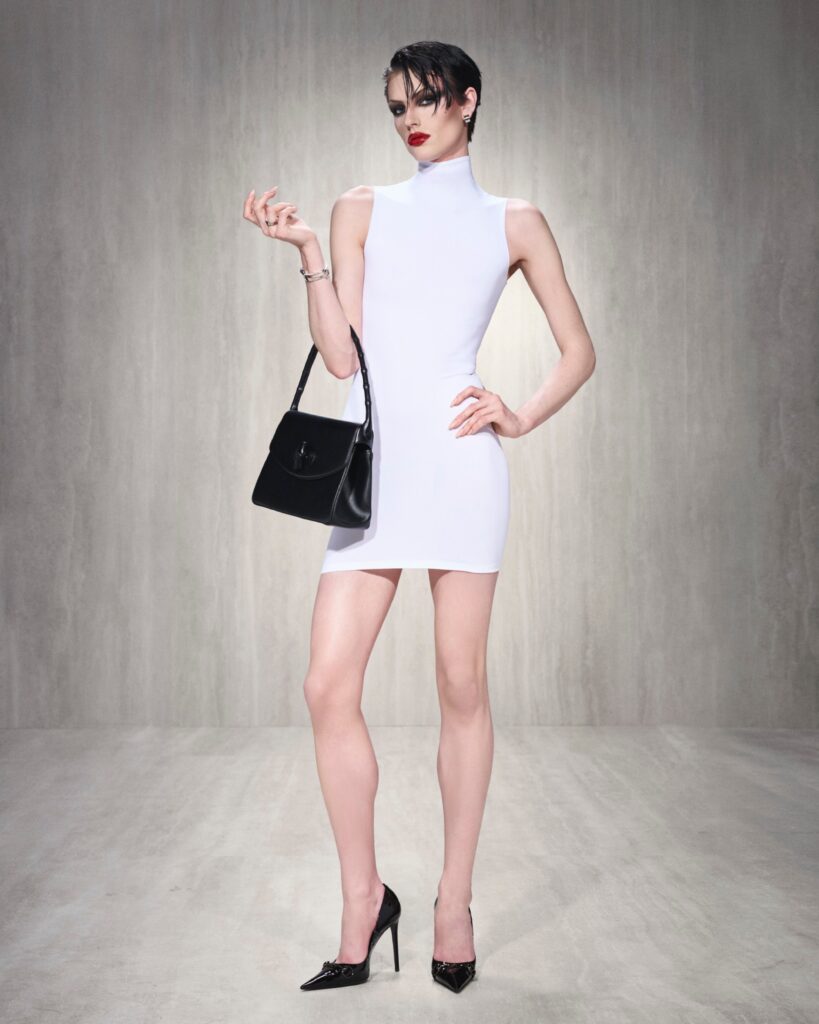
The Boss Lady in pop culture
The image of the Boss Lady is also very prominent in pop culture, where clothing serves as an immediate way to signal power and ambition.
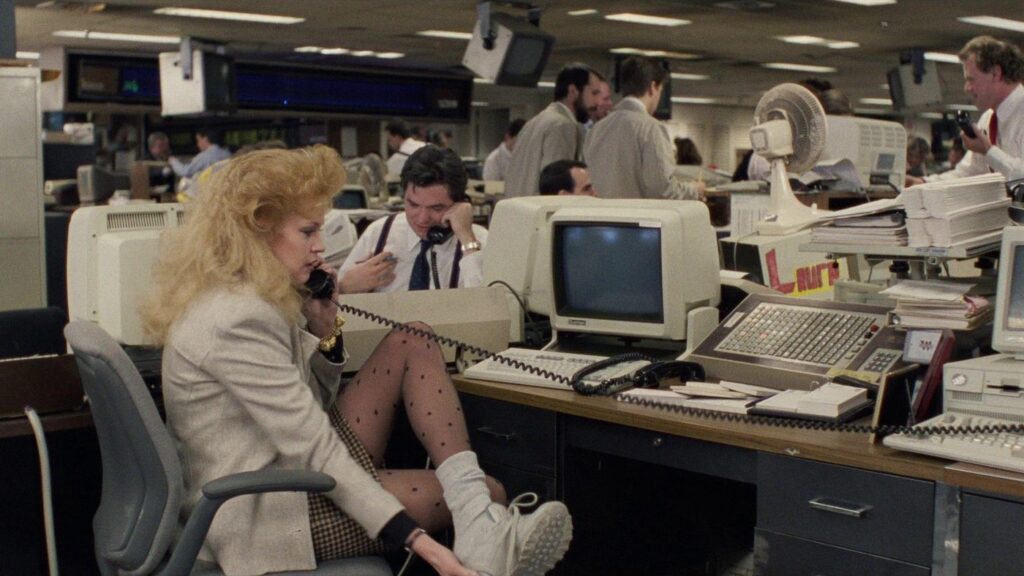
The Working Girl movie (1988) remains one of the most iconic portrayals of power dressing. It tells the story of a young woman’s (played by Melanie Griffith) rise in the world of finance, whose tailored suits with structured shoulders perfectly embody the aesthetic of the 1980s.
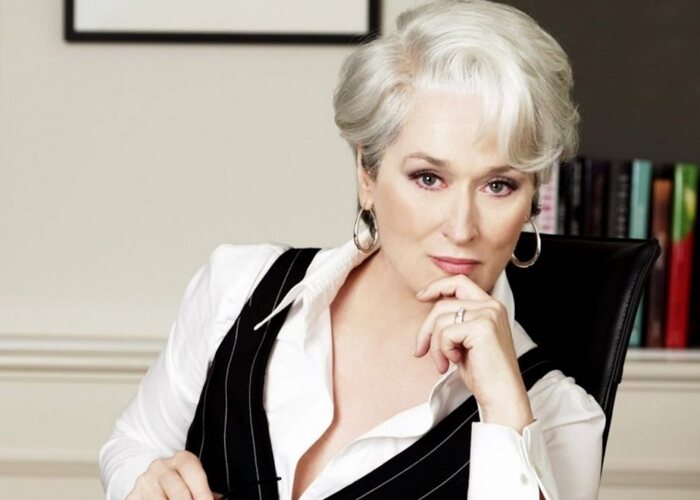
In The Devil Wears Prada (2006), the character of Miranda Priestly, directly inspired by the former editor-in-chief of Vogue USA, Anna Wintour, represents another type of Boss Lady. Her sophisticated and minimalist wardrobe reinforces herimage of authority in the fashion world. The next installment, scheduled for April 29, 2026, is expected to offer a new take on this sartorial style.
The Succession TV series has revitalized this aesthetic through the character of Shiv Roy, whose style is based on minimalist tailoring: understated suits, perfectly cut pants, and a neutral color palette. This more understated approach reflects a contemporary vision of power.
Certain series also popularized this silhouette as early as the 1980s. In Dynasty, the female characters appear in spectacular silhouettes with pronounced shoulders, symbols of wealth and influence. More recently, the series All’s Fair features a group of influential female lawyers whose wardrobes blend classic tailoring with contemporary glamour, illustrating a new generation of powerful women.
Beyond fiction, public figures such as Margaret Thatcher, Hillary Clinton, Michelle Obama, and Lena Situations in France have also used the suit as a symbol of leadership. Together, these representations show that power dressing goes beyond fashion. It becomes a true visual language of female power.
Read also : Fringes, transparency, slits… 5 trends spotted at Fashion Week autumn-winter 2026-2027
Featured photo : © Diana Akhmedova/Unsplash