






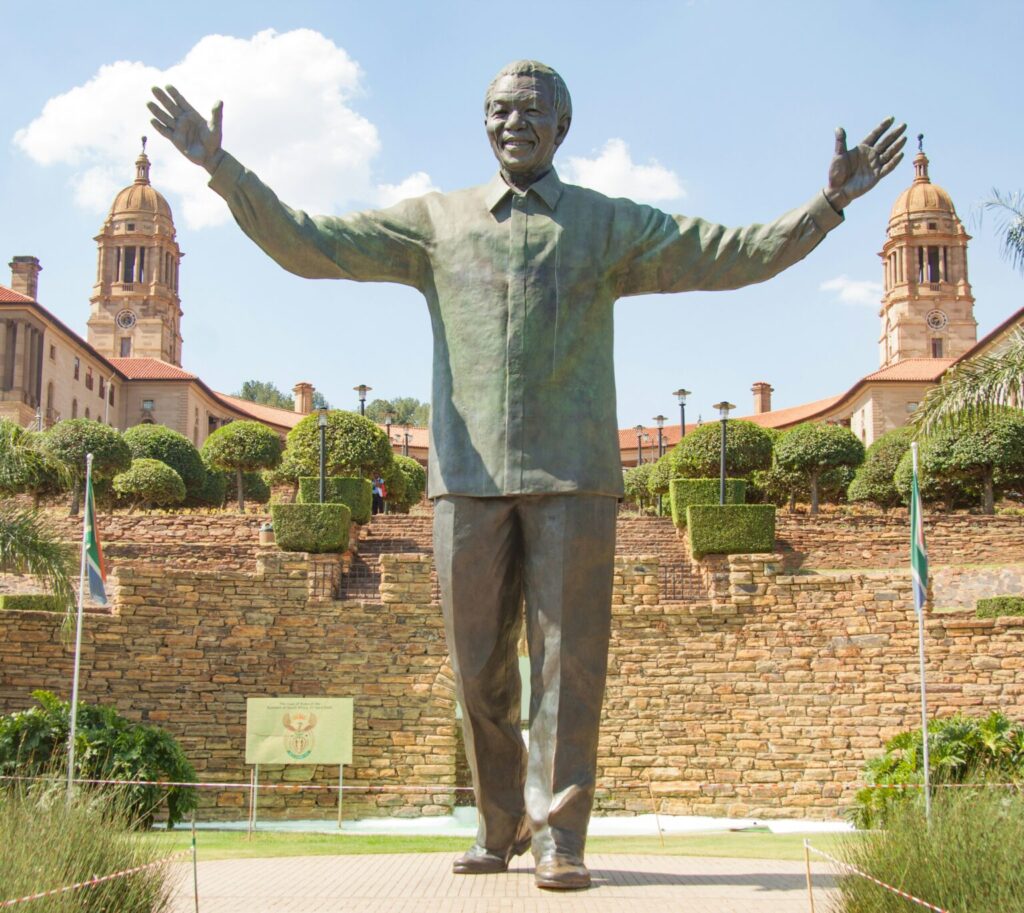
More than a decade after his passing, Nelson Mandela remains a role model far beyond South Africa. His legacy cannot be reduced to either the end of apartheid or his Nobel Peace Prize. His true legacy lies in a political approach: making dialogue a catalyst for change, negotiation an act of courage, and reconciliation a strategy of governance. This approach continues to inspire leaders, diplomats, and intellectuals around the world.
From political prisoner to architect of reconciliation
Nelson Mandela’s destiny seems to be part of history. Born in 1918 in the Transkei, a lawyer by training, he joined the ANC (African National Congress) at a very early age and took part in the struggle against the segregationist apartheid regime. Arrested in 1962, he was sentenced to life in prison at the Rivonia Trial and spent twenty-seven years behind bars, mainly on Robben Island.
But it was precisely during this long imprisonment that part of his legacy was forged. Far from harboring a desire for revenge, Mandela was already preparing for the future. He studied his adversaries, learned Afrikaans—one of the eleven official languages of the Republic of South Africa—to better understand the white leaders, and developed a conviction that would guide all his actions: no lasting peace can be imposed; it must be negotiated.
When he was released in February 1990, he chose to enter into talks with President Frederik Willem de Klerk. Together, they led a democratic transition that spared South Africa from civil war, culminating in the first multiracial elections of 1994 and Mandela’s election as the country’s first Black president.
Diplomacy based on listening
What sets Mandela apart from many leaders is his conception of power. For him, persuasion is more effective than conquest. Negotiation is not a compromise born of weakness, but a demonstration of political strength.
He popularized a form of leadership in which listening precedes decision-making. “If you want to make peace with your enemy, you must work with him. He then becomes your partner,” he often said.
This philosophy continues to shape diplomacy and management schools today. Many international mediators cite Mandela as a model when it comes to resolving deeply rooted conflicts. His influence extends far beyond the political sphere: it also inspires business leaders facing complex transformations or social crises.
The legacy of leadership
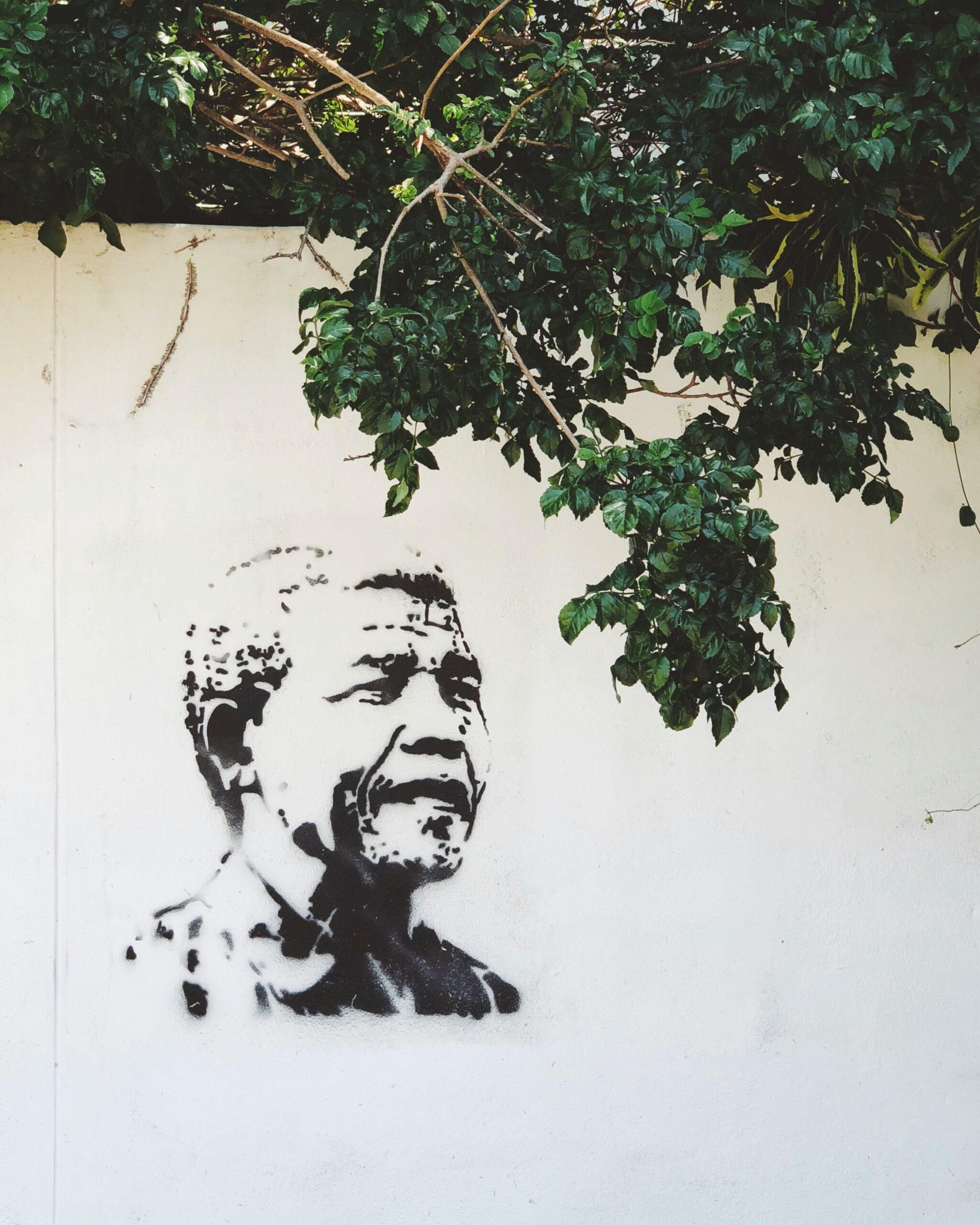
Mandela never sought to build a cult of personality. After serving a single presidential term, he chose to voluntarily step down from power in 1999 – a rare move on the African continent at that time.
His legacy also rests on this ability to inspire rather than to impose his will. Through the Nelson Mandela Foundation, the promotion of education became a cornerstone of his work. His famous quote – “B Education is the most powerful weapon for changing the worldB ”- summarizes his conviction that lasting change begins with knowledge.
The Truth and Reconciliation Commission, chaired by Desmond Tutu, also illustrates this commitment to fostering a different approach to nation-building: acknowledging crimes and listening to victims without fueling a cycle of retaliation.
An Influence That Spans Generations
Mandela’s influence remains evident among many contemporary political leaders and intellectuals.
In the United States, Barack Obama often cited Mandela as one of the figures who shaped his vision of leadership and of overcoming racial divides. In his 2013 tribute, he called him “the last great liberator of the 20th century.”
Former German Chancellor Angela Merkel regularly praised his ability to prioritize the collective good over ideological divisions. Former United Nations Secretary-General Kofi Annan saw him as the model of a leader capable of reconciling moral authority with political pragmatism.
Among intellectuals, historian Achille Mbembe emphasizes that Mandela bequeathed a vision of democracy based on inclusion rather than domination. Former U.S. President Bill Clinton and Oprah Winfrey are also among the figures who credit him with influencing their conception of public engagement.
Beyond these public figures, Mandela continues to be studied at leading business schools, institutes of international relations, and leadership training programs. His ability to combine firmness in principles with flexibility in methods remains a textbook example.
Ultimately, his legacy reminds us that a leader is not measured solely by the reforms he accomplishes, but also by the way in which he brings about lasting behavioral change. By making dialogue a strategy rather than a weakness, knowledge-sharing a responsibility, and reconciliation a political project, Nelson Mandela left behind much more than a memory: a method whose relevance continues to challenge a world still riven by identity divides and conflicts.
Read also : 100 years of Marilyn Monroe : Five milestones that gave rise to a legend
Featured photo : © Getty Images