






The Mobile World Congress (MWC) in Barcelona has established itself as the must-attend event for the global mobile technology and telecommunications industry. Phone, portable game console, Wi-Fi chip… A look back at 5 innovations that made an impression at the event.
Organized by the GSMA, the 2026 edition of the Mobile World Congress (MWC) took place from March 2 to 5 at the Fira Gran Via exhibition center in Barcelona, bringing together thousands of professionals, industrial players, and decision-makers from the sector.
Over four days, major brands including Samsung, Xiaomi, Huawei, Honor, and Qualcomm unveiled their latest innovations, ranging from next-generation smartphones to advances in artificial intelligence and outlooks on 5G and the future 6G. A true showcase of the year’s technological trends, MWC Barcelona confirms its strategic role in the global digital ecosystem.
Frog
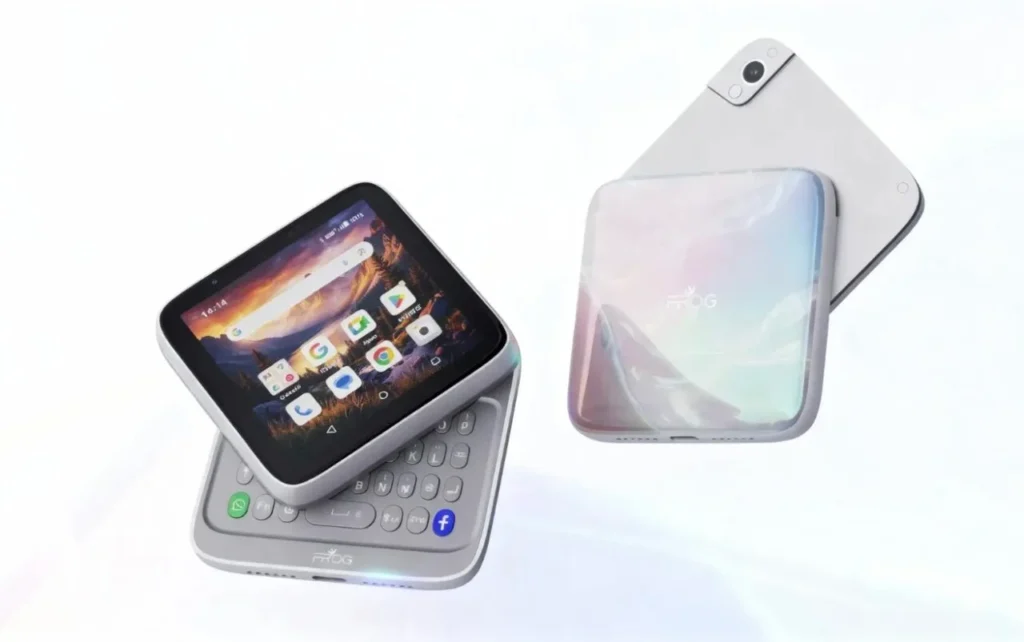
The Frog phone is part of a wave of unconventional devices seeking to stand out from classic smartphones. Going against the trend of ever-larger screens and standardized designs, this model focuses on a compact format and a distinctly retro style. Frog stands out with its miniature sliding design, reminiscent of early 2000s phones. When opened, it reveals a physical QWERTY keyboard, now rare on today’s market, as well as several buttons dedicated to popular applications. Despite this nostalgic look, the device includes modern features such as 4G connectivity, ensuring compatibility with contemporary usage. More than just a phone, Frog appears as a hybrid object, halfway between a tech gadget and a vintage product.
Light Phone
The Light Phone embodies a radically different approach from traditional smartphones. Developed by the American startup Light, this minimalist phone was designed to be used “as little as possible,” deliberately limiting sources of distraction. The most well-known model, the Light Phone II, adopts a very compact format, close to a credit card, with a black-and-white E-ink display. It only offers essential functions: calls, SMS, alarm, and a few simple tools like music or navigation. It has no social media, no web browser, no apps, and no notifications. The goal is clear: reduce screen dependency and encourage more mindful use of digital technology, in line with the “dumb phone” trend (devices that prioritize simplicity and digital well-being).
Tecno Atom
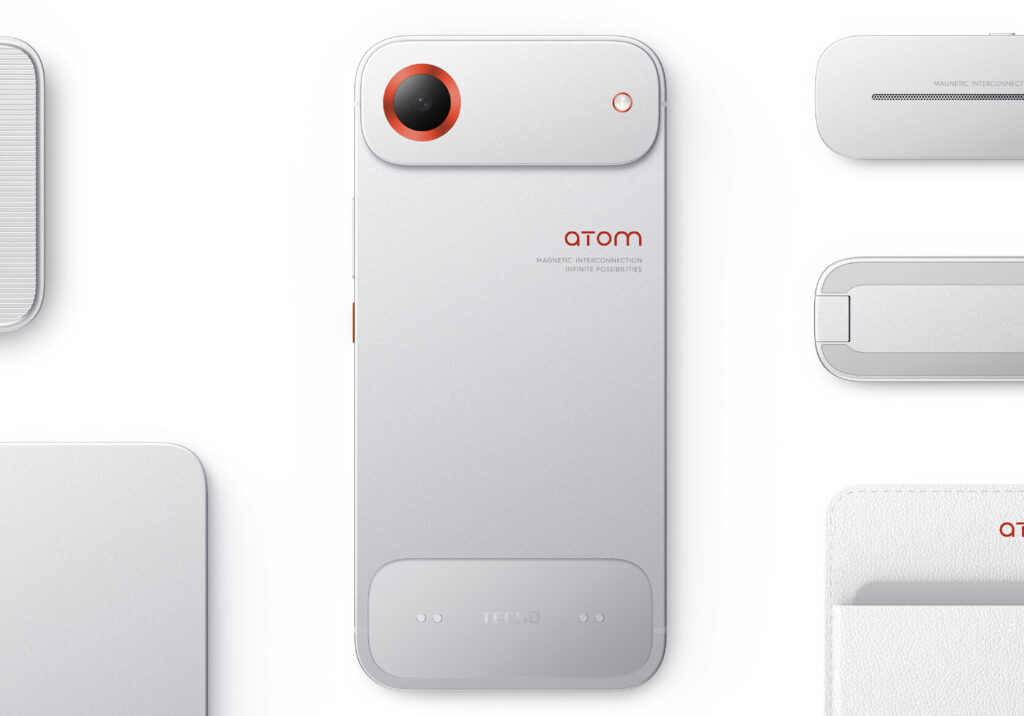
The Tecno Atom stands out as one of the most innovative concepts at the event. This experimental smartphone is based on a modular approach: instead of integrating all functions into a single device, it offers an ultra-thin base to which different modules can be added depending on user needs. Its power lies in the accessories that attach to the back via a magnetic system. These modules allow the addition of specific features such as an extra battery, an advanced camera module, a detachable camera, or audio accessories.
FastConnect 8800 and Dragonwing by Qualcomm
Qualcomm made an impression by unveiling a new generation of chips paving the way for Wi-Fi 8, the next major evolution of wireless networks. Although the standard is not yet finalized – expected around 2027 – the American company is already anticipating its adoption by preparing the hardware ecosystem. At the heart of this announcement is the FastConnect 8800 chip, designed for future smartphones, computers, and connected devices. It promises significantly higher performance than Wi-Fi 7, with speeds exceeding 11 Gb/s, nearly double the previous generation.
But the innovation is not just about speed. Qualcomm is focusing on stability and latency, two key factors in a world where uses such as cloud gaming, AI, and extended reality require reliable connections. Wi-Fi 8 is expected to offer better management of crowded environments, with response times up to 2.5 times faster and greatly improved range. Another major advancement is the integration of artificial intelligence directly into the chips. Finally, Qualcomm also introduced network platforms such as Dragonwing, intended for routers, to create intelligent Wi-Fi infrastructures tailored to future needs.
Lenovo Legion Go Fold
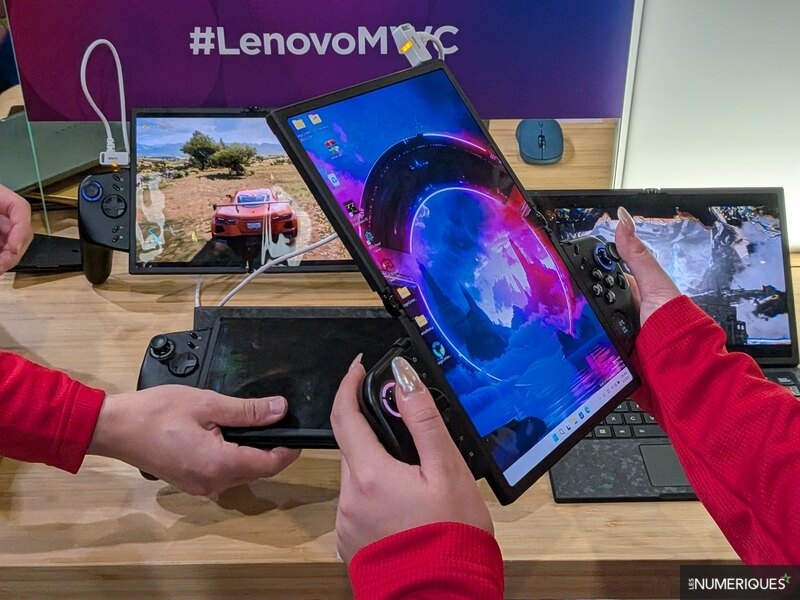
The Lenovo Legion Go Fold is a portable console concept presented at MWC 2026. It features a foldable 7.7-inch P-OLED screen that can expand to 11.6 inches when unfolded. The device runs on Windows and includes detachable controllers. It can be used as a traditional handheld console, in extended screen mode for gaming, or paired with a keyboard for a PC-like experience. This prototype highlights a hybrid format combining mobility and versatility. A release date has not yet been announced. Lenovo also emphasizes the ability to use the device in different orientations, including vertical mode or placed on a stand. This concept aims to explore new uses around portable gaming and compact PCs.
Read also : Who is Jensen Huang, the “Taylor Swift of Tech”?
Featured photo : Getty Images – Unsplash