


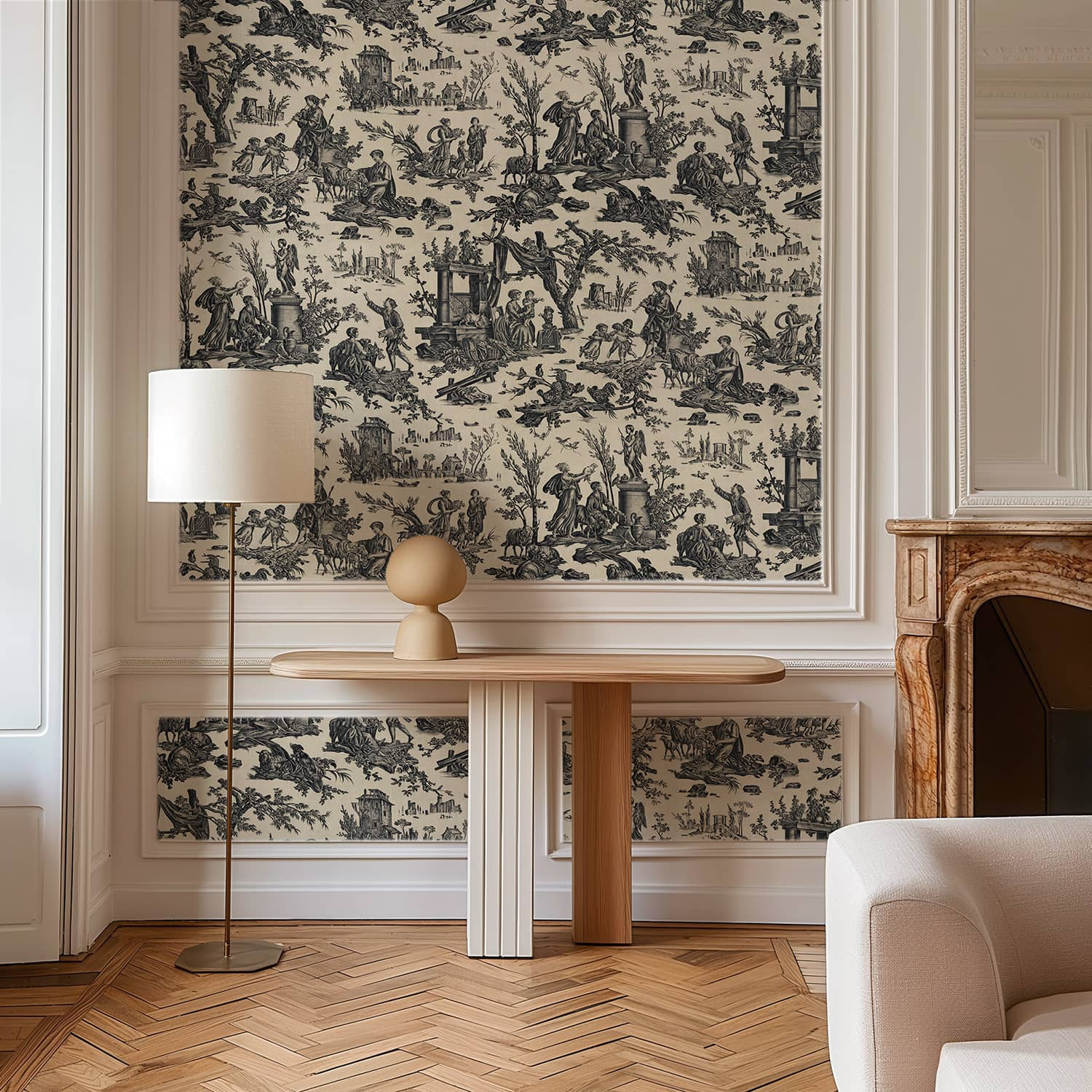




Created in the 18th century in the workshops of Oberkampf in Jouy-en-Josas, Toile de Jouy has survived the centuries without losing its soul. With its bucolic and narrative scenes, it embodies French elegance and has always fueled the imagination of an idealized, almost enchanted life. From interior design to fashion runways, cinema to contemporary arts, this heritage print has reinvented itself in every field, without ever denying its DNA, to the point of becoming permanently embedded in the collective unconscious.
From the printed fabric to the birth of toile de Jouy
“Toile de Jouy does more than just decorate: it tells a story. A true visual narrative, it embellishes interiors while reflecting a culture and taste conducive to daydreaming and storytelling. “ emphasizes Alain Montandon, professor of comparative literature at the University of Clermont Ferrand, in his book Étoffes & littérature.
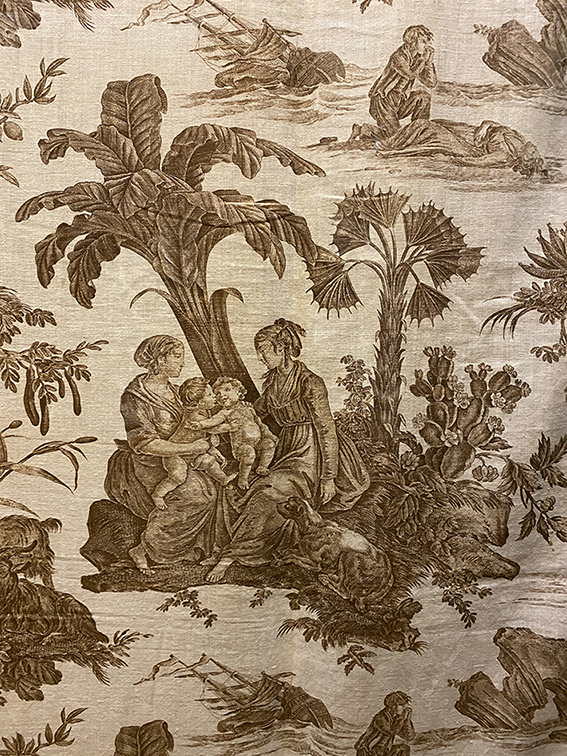
Often referred to simply as ”toile,” toile de Jouy is now considered a symbol of French textile expertise. However, its history has its roots in Indian cotton fabrics, which, from the 17th century onwards, fascinated Europe with their bright colors and delicate patterns.
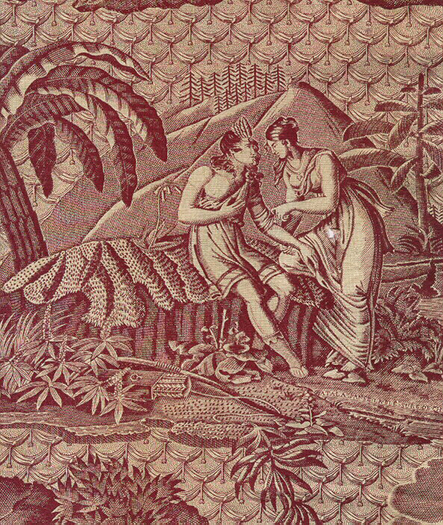
Rouen/Musée de la Toile de Jouy, inv. 983.33.5. a-b.
The history of Indian cotton fabrics remains surprising and little known. Introduced to France through the port of Marseille, they arrived as simple packaging material for goods from the East, before being repurposed by elegant women who turned them into sought-after clothing. Lightweight, affordable, and durable, these cotton fabrics quickly conquered all levels of society and launched a veritable revolution in the art of textiles.
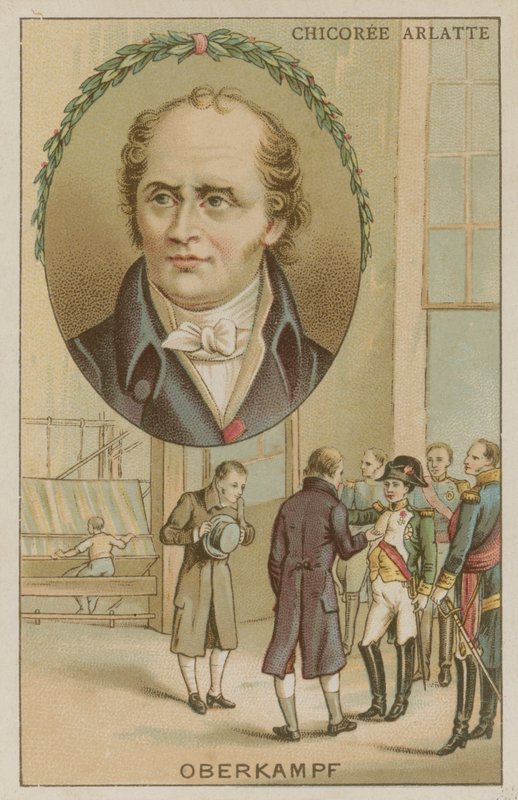
Their success was such that in 1686, Louis XIV banned their use, with Colbert seeking to protect local production. Imported and distributed by the East India Company, these lightweight, painted or printed fabrics in bright colors were accused of competing with French manufacturers and even became, through their popularity, a symbol of defiance against royal power. But their appeal remained, and when the ban was lifted in 1759, Christophe-Philippe Oberkampf, an industrialist of German origin, settled in Jouy-en-Josas, near Versailles. In 1760, he founded a factory there, ideally located on the banks of the Bièvre River, whose pure water was used to wash and dye the fabrics.
A visionary, Oberkampf perfected the printing process by adopting engraved copper plates, capable of accurately reproducing narrative scenes on cotton. Red, blue, or black on a white background, these pastoral, mythological, or contemporary compositions were hugely successful. By the 1770s, the fabric had become a mass-produced product and a marker of refinement. At its peak, the factory employed more than 1,300 workers and was known throughout Europe. Although production ceased in 1843, Toile de Jouy remains in the collective imagination as the embodiment of a textile art that is both universal and deeply French.
Interpretation and Symbolism
“ Toiles de Jouy fabrics are dream machines, transporting you to another place, but one that feels familiar despite its exoticism, a place that speaks to you, enchants you, allows you to revisit the Middle Ages, to be enchanted by troubadours and lives of yesteryear, to expand your horizons by envisioning other adventures and other countries,” observes Alain Montandon.
Initially reserved for interior decoration in aristocratic homes, toile de Jouy has become more widespread and continues to inspire fashion, design, architecture, and ceramics in France and internationally.
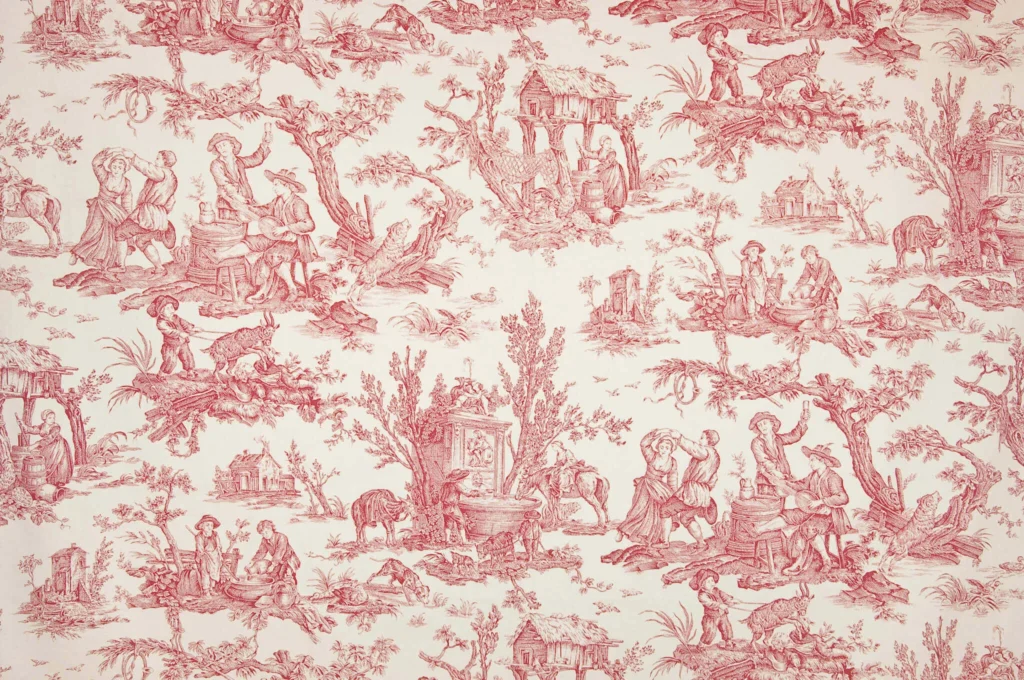
Much more than a simple decorative motif, it embodies an idealized vision of rural and pastoral life, often described as “bucolic.” Typical scenes depict elegant characters, country landscapes, peasants at work, animals, children playing, or couples in idyllic gardens, inspired by Rococo painting and the fables of La Fontaine.
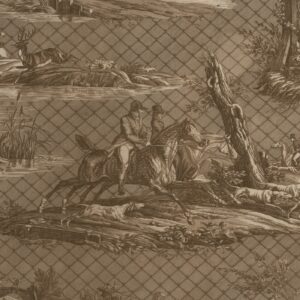
This symbolism reflects the aspiration of the bourgeoisie and aristocracy of the 18th century for a simple and harmonious life, in contrast to increasing urbanization. Some motifs incorporate mythological, historical, or exotic elements (such as chinoiserie), sometimes serving as subtle social commentary on pre-revolutionary French society. For example, some paintings depict themes of harmony between man and nature, or even veiled criticism of the nobility.
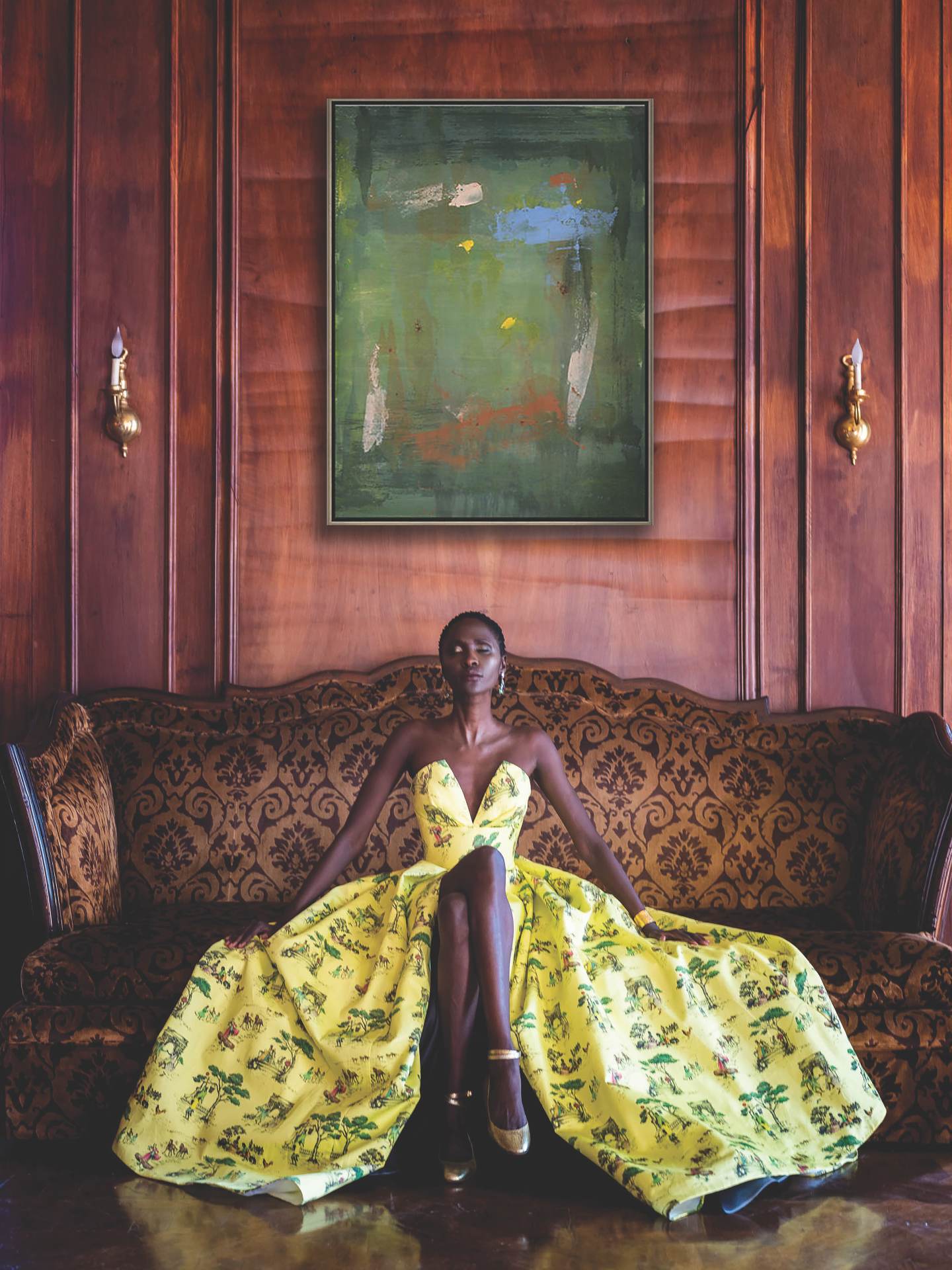
Over time, these patterns have been reinterpreted to symbolize the French art of living, timeless elegance, and a visual narrative symbolizing the connection to the rural past. Contemporary artists, such as Sheila Bridges with her “Harlem Toile de Jouy,” have adapted it to explore modern cultural themes, replacing European scenes with African American representations, thus highlighting its narrative and inclusive potential.

References in cinema and the arts
Toile de Jouy has stood the test of time as a backdrop steeped in memory, evoked in both cinema and the visual arts. As early as the 18th century, French painter Jean-Baptiste Huet laid the artistic foundations with his pastoral and mythological motifs, which still feed the contemporary imagination.
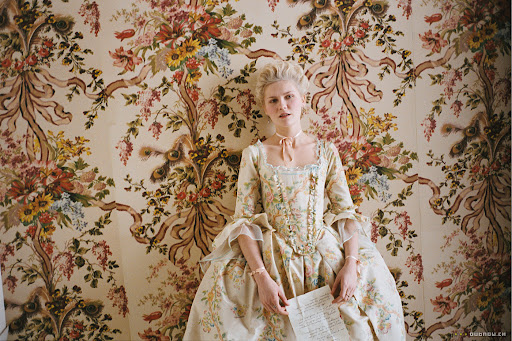
In cinema, it discreetly appears in sets to suggest the elegance of 18th-century France. In Marie Antoinette (2006) by Sofia Coppola, for example, its motifs contribute to the Rococo atmosphere, emphasizing aristocratic refinement. Documentaries and digital formats—such as Toile de Jouy: The Story Behind France’s Most Iconic Textile—also explore its history and evocative power. Often used as a secondary decorative element, the fabric acts as a subtle visual marker of luxury and authenticity.
In the plastic and visual arts, toile de Jouy drew inspiration from Rococo aesthetics—think of Jean-Honoré Fragonard or François Boucher—before inspiring modern creations. French journalist and historian Henri Clouzot contributed greatly to the rediscovery and promotion of toile de Jouy between the two world wars. In the 1920s, he devoted several studies to this iconic textile, at a time when interest in 18th-century decorative arts was revived thanks to Art Deco and the vogue for reissues. Henri Clouzot highlighted the iconographic richness of printed fabrics, which he considered not only as decorative motifs, but also as true witnesses to the society and imagination of their time. Institutions such as the Metropolitan Museum of Art in New York and the Victoria & Albert Museum in London preserve emblematic pieces of printed fabrics. Today, it fuels contemporary practices: textile installations, sculptures, conceptual photographs. Artist and collector Jill Lasersohn, for example, subverts its codes to question the female roles represented in its pastoral scenes. The motif, adapted into wall art, engravings, and even AI-generated digital creations, embodies a constant dialogue between tradition and modernity.
Current Trends

In 2025, Toile de Jouy is experiencing a revival marked by modern reinterpretations, incorporating trends such as “Covecore” (inspired by coastal nature) and bold color palettes. It has been an integral part of the history of the House of Dior since its founding in 1947. Christian Dior called on decorator Victor Grandpierre to adorn the walls of his “Colifichets” boutique at 30 Avenue Montaigne. A few years later, artistic director Maria Grazia Chiuri took up this iconic motif from its spring-summer 2019 collection, using it as fashion pieces (including a loungewear collection during lockdown in 2021) or revisiting it in tableware. Since the presentation of the 2019 Cruise show, the motif has become an essential print in Dior’s ready-to-wear collections. The Dioriviera 2025 collection uses tropical hues for resort wear.
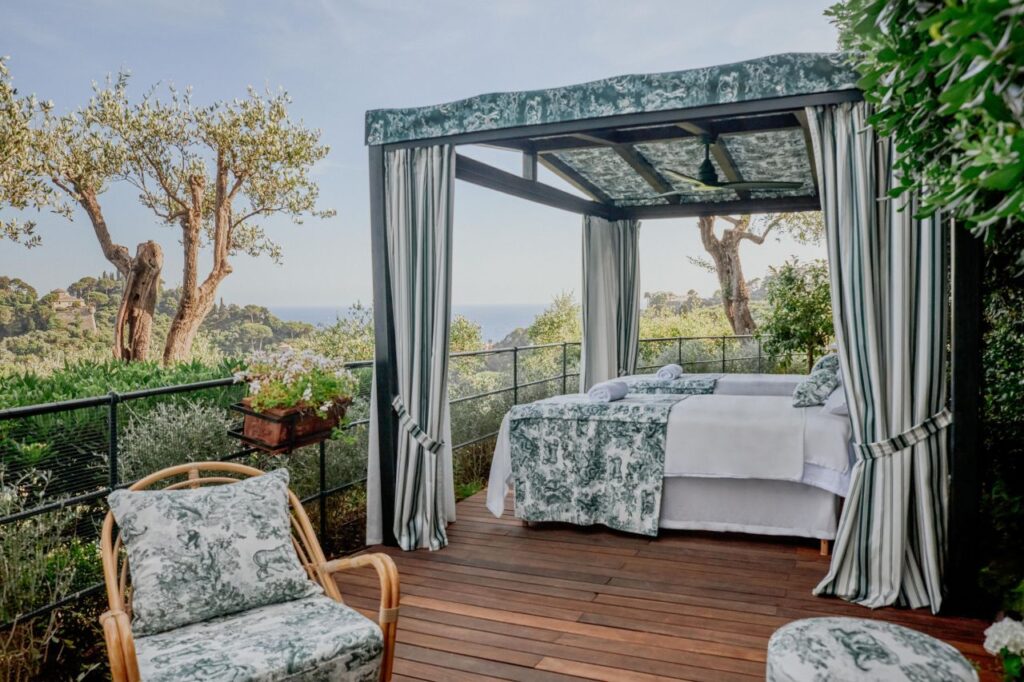
Other fashion houses such as Chloé and Oscar de la Renta have included it in their recent collections, blending tradition and contemporary style. In interior design, it is in line with 2025 trends such as verdure patterns (lush vegetation) and earthy neutrals, appearing in minimalist or maximalist interiors. On social media, such as X (formerly Twitter), designers share digital or AI-generated versions, often for handmade products (e.g., decoupage papers on Etsy). The pattern remains popular for its versatility, with eco-friendly adaptations in sustainable fabrics.

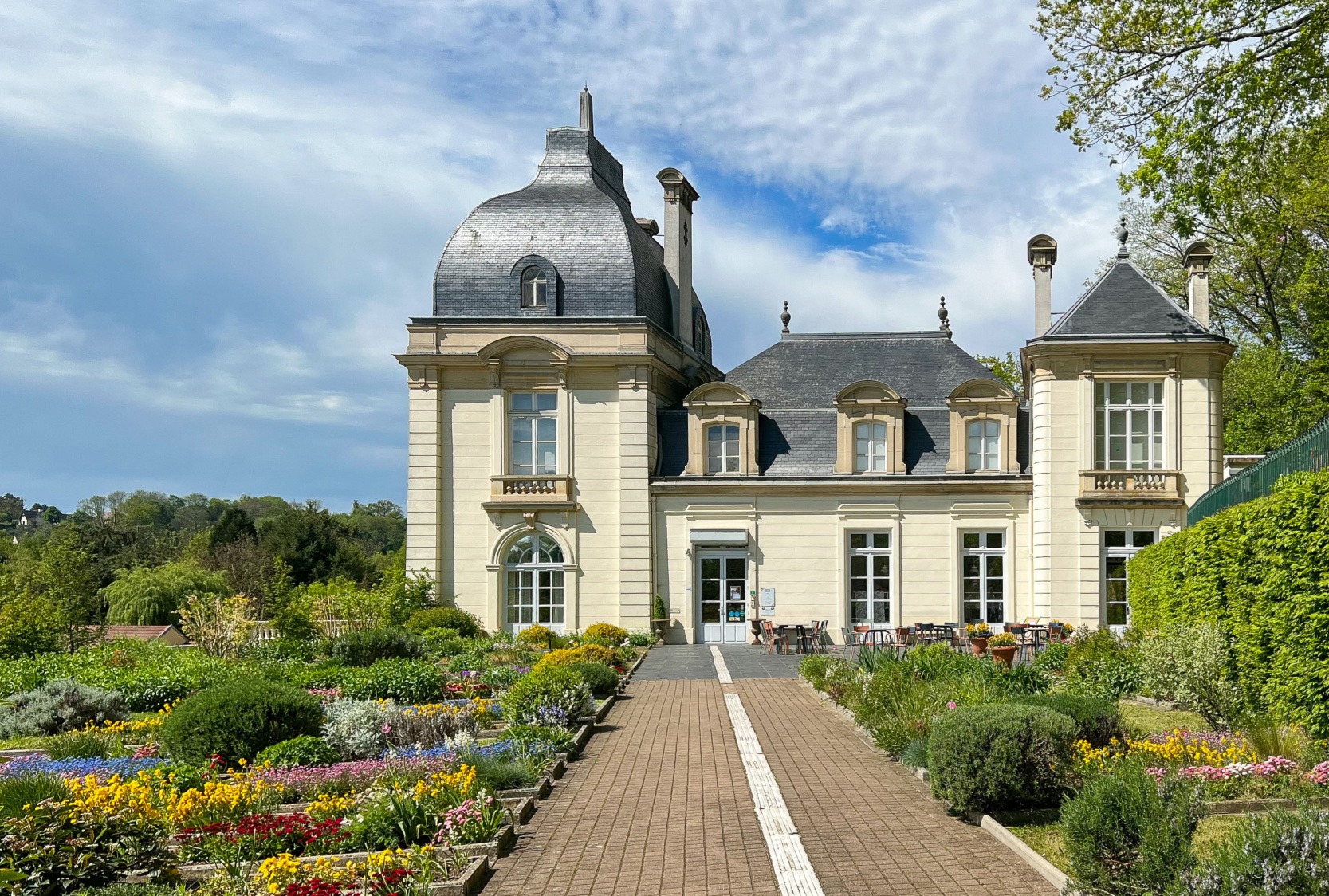
Please note that from June 20, 2025, to January 11, 2026, the Musée de la Toile de Jouy in Jouy en Josas will host the exhibition “Bulles de Jouy,” an original immersion into the graphic and narrative universe of this iconic textile.
From its inception, toile de Jouy embodied a fusion of industrial innovation, refined aesthetics, and visual storytelling. From the intimacy of aristocratic salons to the audacity of couture collections, from museum exhibitions to contemporary pop culture, it remains a vibrant and deeply meaningful motif. Universal, adaptable, and constantly reinterpreted, it represents much more than a print: it is a French textile heritage with international resonance, combining tradition and modernity.

Read also > Duralex, the 100% French-made glassware that is as durable as ever
Featured photo: © Koziel