





The 2026 edition of Roland Garros will go down as one of the most unpredictable in recent years. The early exits of the favorites reshuffled the deck and paved the way for two first-time champions in Paris : Alexander Zverev and Mirra Andreeva. A look back at one of the most unpredictable tournaments in recent years.
This weekend, after two weeks of competition, Alexander Zverev finally claimed his first Grand Slam title, while Mirra Andreeva emerged as the new queen of clay at just 19 years old.
A tournament marked by the fall of the favorites
From the very first sweltering days of the 2026 edition of Roland Garros, the men’s draw was shaken up by the early exits of several top seeds. World No. 1 Jannik Sinner exited the tournament in the second round, while Novak Djokovic was eliminated in the third round. At the same time, the absence of Carlos Alcaraz, who withdrew before the tournament, opened up the race for the title even further.
This situation created an unprecedented scenario : for the first time in several years, none of the usual top favorites made it to the final four. The men’s tournament thus saw the emergence of a new generation of contenders, including João Fonseca, already a sensation last year and a winner over Djokovic, Rafael Jodar, the touted successor to Rafael Nadal, and the unfortunate finalist Flavio Cobolli.
On the French side, there was plenty of excitement as well with the run of Moïse Kouamé, 17, who established himself as one of the sensations of the first week by reaching the third round in his first appearance in the main draw. In the women’s draw, following Loïs Boisson’s surprise run in 2025, it was Diane Parry this year who carried French tennis hopes into the second week thanks to her run to the round of 16, notably after eliminating sixth seed Amanda Anisimova.
The tournament was also marked by the run of Matteo Arnaldi. The Italian had reached the semifinals after a five-and-a-half-hour marathon in the round of 16, before being forced to withdraw due to illness just before his match against Cobolli.
Among the dark horses, Casper Ruud also looked poised to pull off an upset. A finalist in Paris in 2022 and 2023, the Norwegian had regained his form on clay before seeing his run come to an end in the round of 16 against Fonseca. Félix Auger-Aliassime was also among the players to watch. Coming off a strong season that had propelled him into the world’s top 10, the Canadian had high hopes in Paris, which were cut short by his quarterfinal exit.
The 2026 edition was also marked by its intensity. No fewer than 31 matches went to five sets in the men’s draw, a figure that speaks to the extreme competitiveness of this fortnight in Paris. Another equally surprising statistic : there were no fewer than ten retirements and three withdrawals this year.
Alexander Zverev finally rewarded
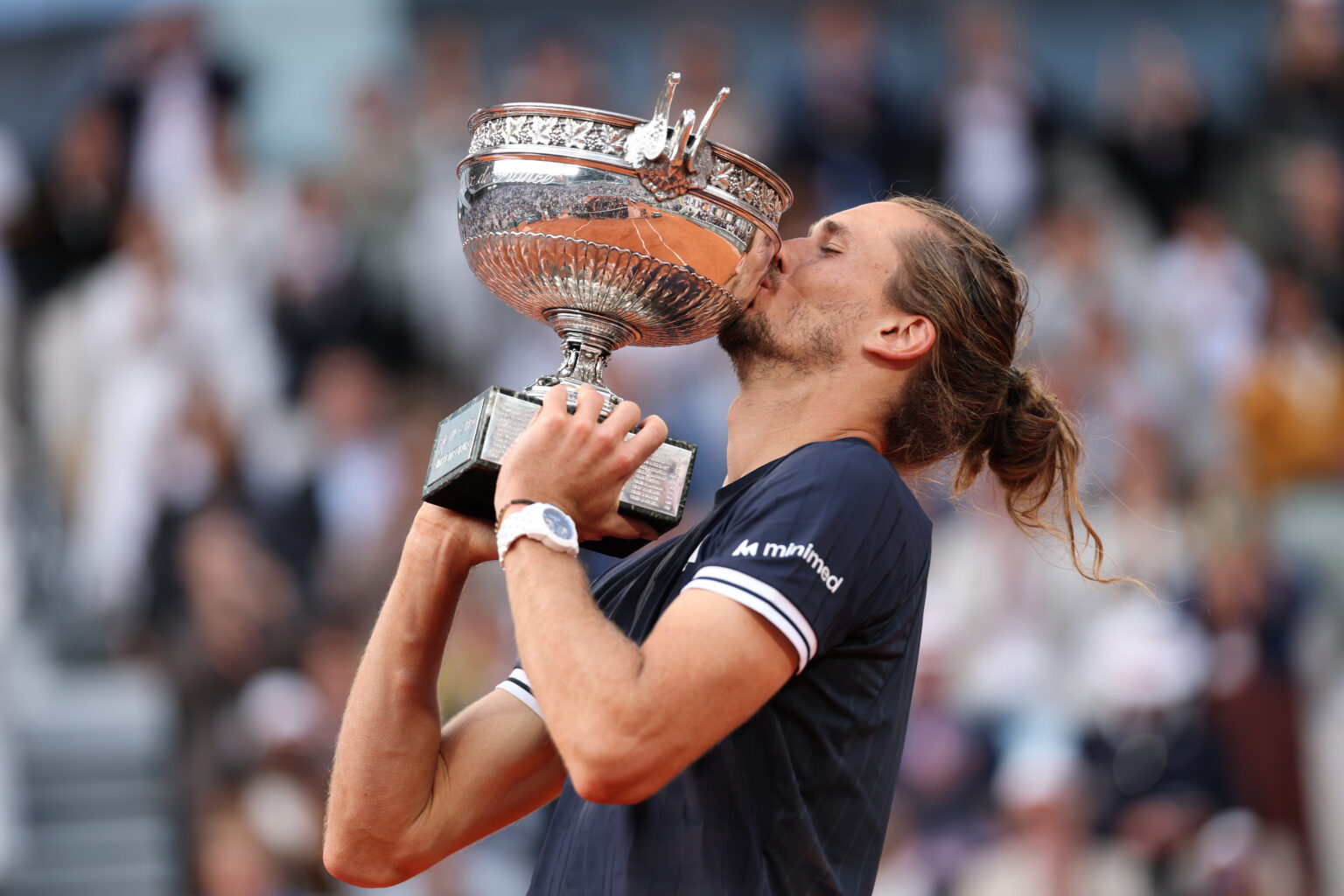
At 29, Alexander Zverev ended a long wait. After several failures in Grand Slam finals and numerous disappointments, the German won the first major title of his career in Paris.
In the final, the world No. 2 dominated Italy’s Flavio Cobolli in a five-set battle : 6-1, 4-6, 6-4, 6-7, 6-1. After letting the fourth set slip away in a tiebreak, Zverev found his form again in the decisive set to secure the victory.
Voir cette publication sur Instagram
Four years after his serious ankle injury on Court Philippe-Chatrier and following several lost Grand Slam finals, he finally lifted the Coupe des Mousquetaires and became the first German to win the tournament in the Open Era. Facing him, Flavio Cobolli had the best tournament of his career. The Italian player, seeded 10th, confirmed his progress by reaching his first major final.
Mirra Andreeva, the confirmation of a prodigy
The women’s draw marked the definitive arrival of Mirra Andreeva, who became the youngest Roland-Garros champion since Monica Seles in 1992.
Voir cette publication sur Instagram
In the final, the Russian defeated Poland’s Maja Chwalinska 6-3, 6-2. Displaying impressive maturity throughout the fortnight, she dropped only a single set in the entire tournament.
The women’s final also told another inspiring story : that of Chwalinska. Coming through the qualifiers, she had to win three additional matches just to make it into the main draw, before stringing together six more victories to reach the final. Her journey resonated all the more with the public because it was accompanied by very real financial difficulties. Ranked 114th in the world at the start of the tournament, with no major equipment sponsor or guaranteed income, the Polish player revealed during the fortnight that she didn’t know if she could afford to extend her stay in Paris, as tournament prize money is paid out only after the competition. A Polish sponsor eventually stepped in to provide financial support to cover part of her expenses.
The first qualifier to reach the Roland Garros final in the Open Era, she secured over 1.4 million euros in prize money—more than the total earnings she had accumulated throughout her career up to that point.
Record attendance at Porte d’Auteuil
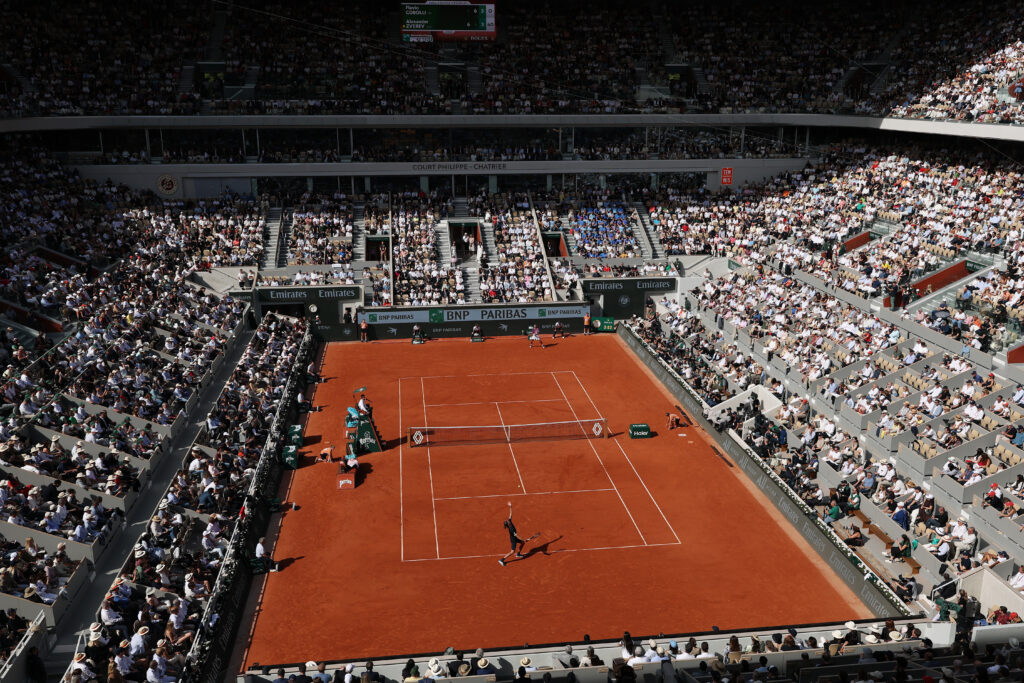
Popular success went hand in hand with sporting success. Even before the main draw began, Roland-Garros had recorded historic attendance during Opening Week, which drew 138,000 spectators.
Over the course of the tournament, more than 727,500 people entered the stadium during this 2026 edition, setting a new record, announced Roland-Garros director Amélie Mauresmo.
After three weeks full of twists and turns and memories to last a lifetime for hundreds of thousands of spectators, Roland-Garros leaves Paris on a high note of surprises, emotions, and renewal. Now, all eyes turn to Wimbledon at the end of June, where the breakout stars of these two weeks in Paris will aim to confirm their rise, while the fallen favorites will seek to reclaim their place at the top of world tennis…
Read also > [LIFESTYLE] The little story of Luxury… Rolex, the Keeper of time in tennis
Featured photo : © Getty Images