

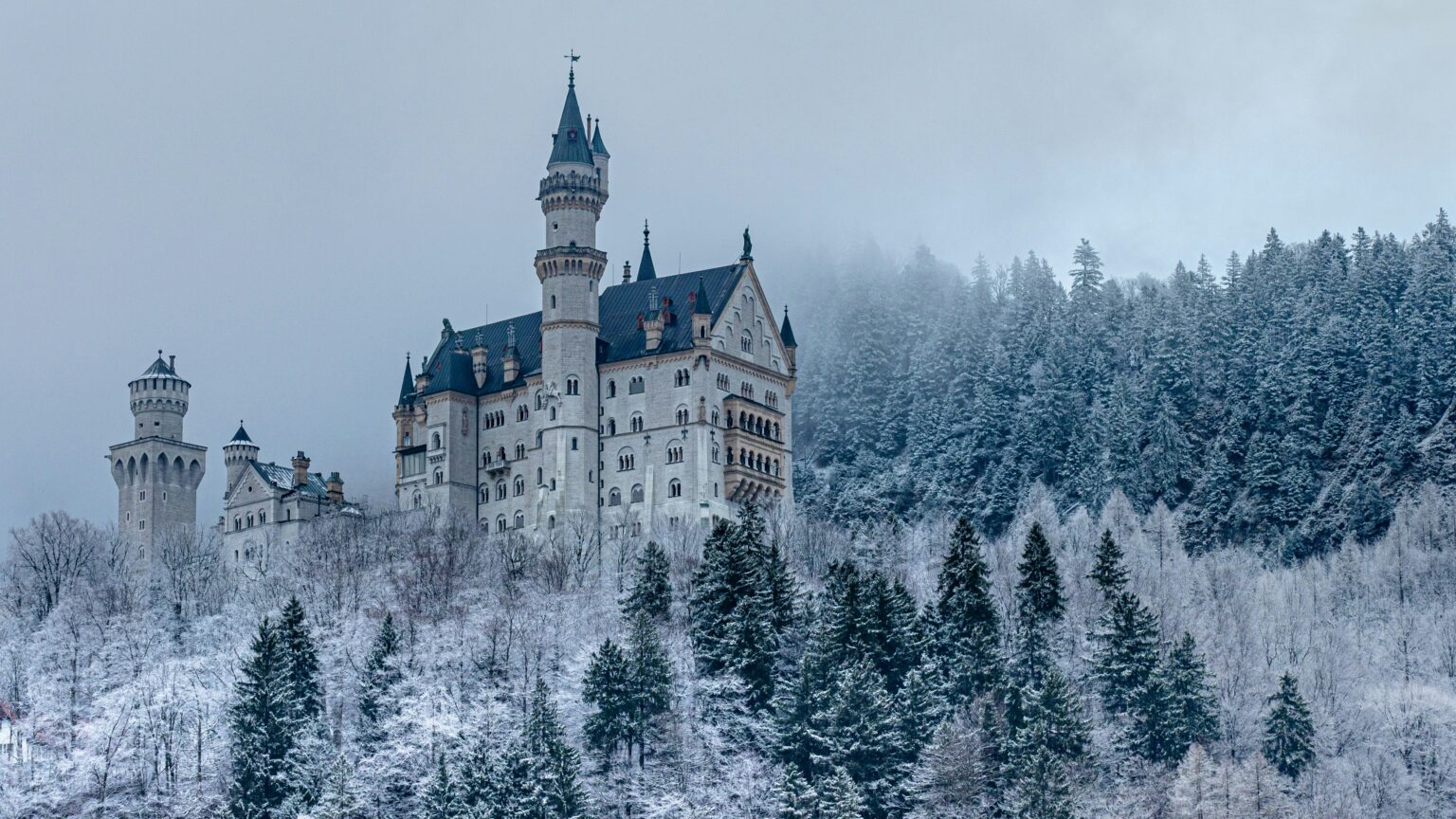




A source of inspiration for Disney when creating its animated film Cinderella (1950), Neuschwanstein Castle in Bavaria is a German gem that was added to the UNESCO World Heritage List last July.
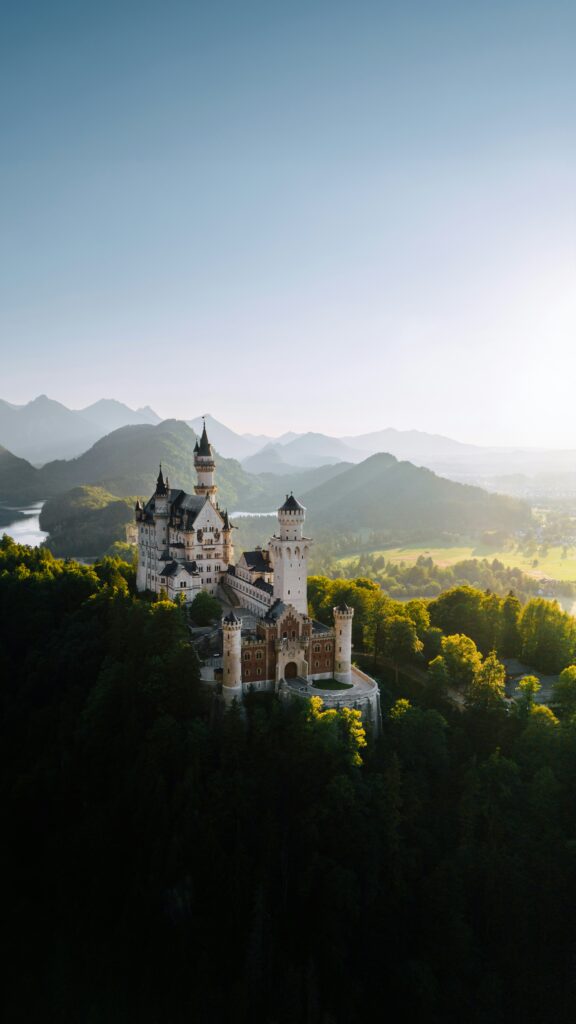
Perched on a rocky spur in the Bavarian Alps, near the town of Füssen and Lake Alpsee, Neuschwanstein Castle was built starting in 1869 by King Ludwig II of Bavaria, nicknamed the “Fairy-Tale King.” Passionate about medieval legends and Wagner’s operas, Ludwig II dreamed of an intimate refuge where art and imagination would blend with the spectacular surrounding nature.
A Fairy-Tale Castle
Neuschwanstein was inspired by his father’s summer residence, Hohenschwangau Castle, which was designed by theater set designer Domenico Quaglio the Younger and which he was able to explore during his childhood. For his own castle project, the last king of independent Bavaria initially considered naming it Neu Hohenschwangau (New Hohenschwangau). He ultimately chose to invoke a Bavarian knightly legend, that of the Swan Knight. The current castle was built on the ruins of two ancient fortified castles, those of Vorderhohenschwangau and Hinterhohenschwangau.
Familiar with Wartburg Castle (Thuringia) and responding to Napoleon III’s invitation to visit Pierrefonds Castle in France, Ludwig II had the idea of combining Neo-Romanesque and Neo-Gothic styles in the architecture of his castle. Its forest of twenty slender towers, pinnacles, and immaculate white facades offer a spectacular view of the Hohenschwangau valley and the Alpsee and Schwansee lakes. Every detail of Neuschwanstein (literally “new swan rock”), from the Marienbrücke bridge to the arcades, contributes to the fairytale atmosphere envisioned by the king, giving the impression of a castle straight out of a fairy tale.
Inside, the decorated rooms tell stories and reflect Ludwig II’s passions. The Throne Hall with its golden frescoes, the Singers’ Hall, a veritable ode to chivalric tales, and the private apartments adorned with carved woodwork and legendary paintings all demonstrate the king’s desire to evoke the medieval imagination. Passionate about Richard Wagner, whose works he financed out of his own pocket, he had a plaster cave built near his office, inspired by the Venus Grotto in the opera Tannhäuser. The castle was equipped with the greatest comforts of the time, from an intercom and telephone to electricity, running water, and even the precursor to central heating.
The mysterious death of Ludwig II, who was found drowned in Lake Starnberg in 1886, fuels the theories and legends surrounding the castle. Some say that the king wanted to disappear into his imaginary kingdom, which adds to the myth of Neuschwanstein. At the time of his death, the castle was not finished: of the 200 rooms planned, only about 15 were completed. The incomplete parts were left as they were, preserving the impression of an unfinished dream. That same year, the site was opened to the public, immediately becoming a romantic symbol and tourist attraction.
Worldwide Influence, from Disney to UNESCO
The castle is not only fascinating for its architecture and history. For many French people, it immediately evokes Cinderella’s castle (released in 1950), the classic Disney film that can be found at the entrance to Magic Kingdom Park in Orlando, Florida. Its numerous turrets, resembling a forest of dungeons, directly inspired the American creators. After World War II, in 1945, when Bavaria was under American occupation, many American soldiers and tourists discovered the castle. So much so that today, some visitors from the United States still think that Neuschwanstein is a copy of the Disney castle, when in fact the opposite is true.
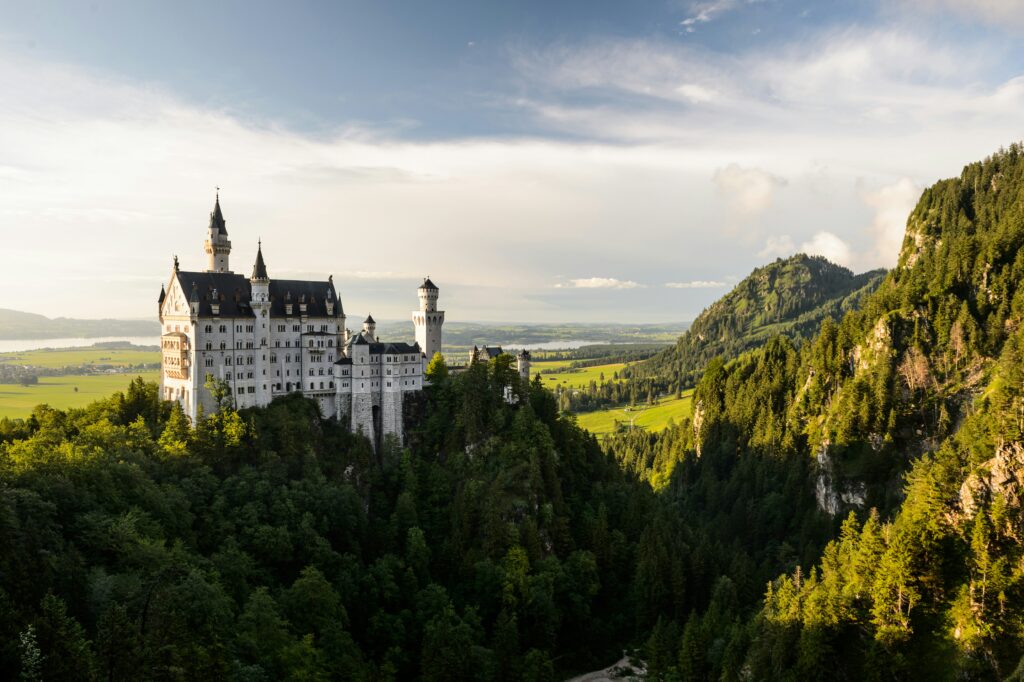
Every year, more than a million visitors come to lose themselves in its corridors and admire the spectacular view from the Marienbrücke bridge, making it one of the most visited places in Germany. And in 2025, the castle and Ludwig II’s other royal residences—Linderhof, Herrenchiemsee, and Schachen Palace—were listed as UNESCO World Heritage Sites, alongside other prestigious sites such as the Carnac megalithic alignments in France. This recognition highlights the castle’s universal value, both for its romantic architecture and its cultural and historical significance.
Neuschwanstein Castle continues to inspire awe, proving that some dreams – even those of an eccentric king – can transcend centuries and touch hearts around the world. The toy leader, Lego, has just released a box in its Architecture collection dedicated to this fairytale castle.
Read also : What are the travel trends for 2026?
Featured photo : Unsplash