






From the kitchen of a German cabinetmaker to the most prestigious concert halls in the world, Steinway & Sons embodies excellence, passion, and the history of music. For more than 170 years, each piano has told a story, each note has been a signature, and each artist an ambassador of this legend.
The story begins in 1797 in the German Harz Mountains with Heinrich Engelhard Steinweg, a young man with a visionary gaze. By the age of 20, he was already making his first stringed instruments. In 1836, in his kitchen, he assembled his first grand piano, experimenting with bold techniques such as the one-piece bridge. This piano was not merely an instrument; it was a promise – to create an exceptional sound.
In 1850, Heinrich emigrated to the United States with his family. In New York, he Americanized his name—Steinweg became Steinway—and in 1853 he founded Steinway & Sons with his sons. The family business immediately stood out for its obsession with quality, innovation, and reliability, values that would bring it worldwide renown.
Innovation and global conquest
As early as 1857, Steinway filed its first major patent: the one-piece cast-iron frame, guaranteeing unprecedented power and stability. At the same time, the overstringing system was developed, laying the foundations for the legendary harmony of Steinway pianos.
Production accelerated in the 1860s. The Park Avenue factory increased output from 500 to 1,800 pianos per year. In 1865, a grand prize at the Universal Exhibition crowned the company’s quality. The following year, the firm opened Steinway Hall, the second-largest concert hall in New York, now closed, transforming the brand into a true cultural symbol and proving its marketing audacity.
Europe was not left behind: in 1870, a factory opened in Hamburg, making it possible to conquer the Old Continent. From 1871 onward, the brand produced one piano per hour and launched its Steinway Artist program, a visionary idea that would make history: the most famous pianists received instruments free of charge in exchange for their musical loyalty. Anton Rubinstein inaugurated the list, performing 215 concerts in 239 days. Meanwhile, the historic founder withdrew from business, making way for a new generation of entrepreneurs.
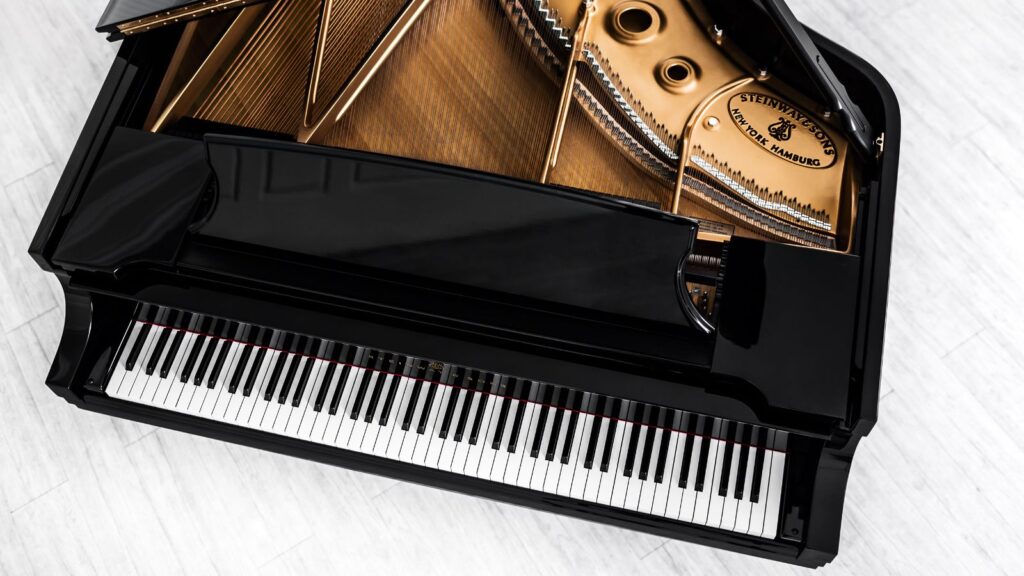
Vladimir Horowitz, Arthur Rubinstein, and Glenn Gould all forged an intimate bond with their Steinway, like an extension of their body and soul. In jazz, Duke Ellington, Bill Evans, and Thelonious Monk found in Steinway the harmonic richness necessary for their improvisations, while in the contemporary world, Lang Lang, Billy Joel, and Tori Amos have carried on this tradition.
A post-World War II monopoly
Although competition had been fierce, a turning point came after the Second World War. As pianist Michel Dalberto explained on Radio France, “many wood reserves were destroyed during the Liberation. Bechstein’s wood reserves in Germany and Bösendorfer’s in Vienna went up in flames. On top of that, Bechstein’s widow was a strong supporter of Hitler, so they had to keep a low profile after the war for about fifteen years. Blüthner, which made magnificent pianos, was in Leipzig, behind the Iron Curtain. Yamaha was in Japan, but after the war the country was thinking about other things than making pianos. It is sad to talk about French brands, but they also gradually disappeared. So there was only one choice left. There was an extremely favorable set of circumstances for Steinway.”
Moreover, the brand’s dominance is reinforced by the quality of its pianos. “Steinway’s monopoly comes from the reliability of its action but above all from the balance of its registers. You move from the bass register to the low middle, to the treble and extreme treble in a perfectly homogeneous way. I would also say: an extremely light action compared to other brands, […] and of course the Steinway sound, that tone which practically invented a certain form of vibrato in the upper middle and extreme treble, provided the piano is well maintained and regulated to the millimeter,” explains Philippe Cassard, pianist and producer at France Musique, on Radio France.
Craftsmanship at the heart of excellence
“At Steinway & Sons, time is a key word: the woods dry and mature for an average of two years, and it takes almost another year before a piano leaves the factory,” the brand explains on its website.
Each instrument is crafted 80% by hand, assembled with the meticulousness of a watchmaker. The Steinway sound is the result of this patience, this expertise, and this obsession with detail, offering a perfect balance between deep basses, rich midranges, and crystalline trebles.
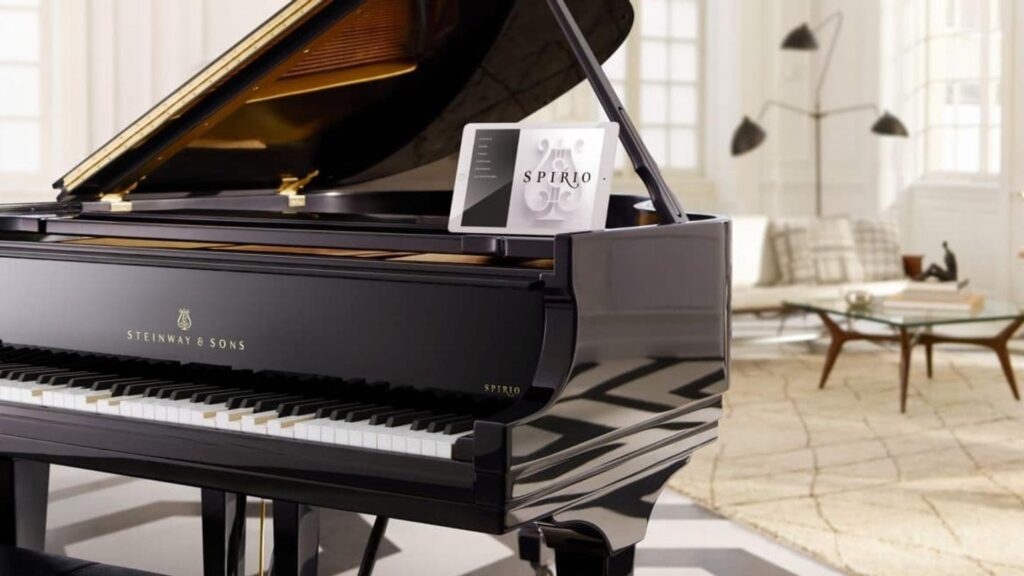
Modern living-room models such as the Model A and Model B accompanied the rise of jazz and popular music in the mid-20th century, while the B211, at 211 cm, remains an iconic choice for recording studios, conservatories, and the homes of enthusiasts.
In the 2000s, the brand once again pushed boundaries with the Steinway Spirio, a high-definition self-playing piano, proving that tradition and modernity can coexist without ever betraying the soul of the instrument.
Since its creation, Steinway has filed nearly 140 patents and continues to dominate the global music market. More than a piano, a Steinway is a lifelong companion, an instrument that transcends time and genres, connecting craftsmen, artists, and music lovers through a shared passion: music.
Read also : Duralex, the 100% French-made glassware that is as durable as ever
Featured photo : Steinway