






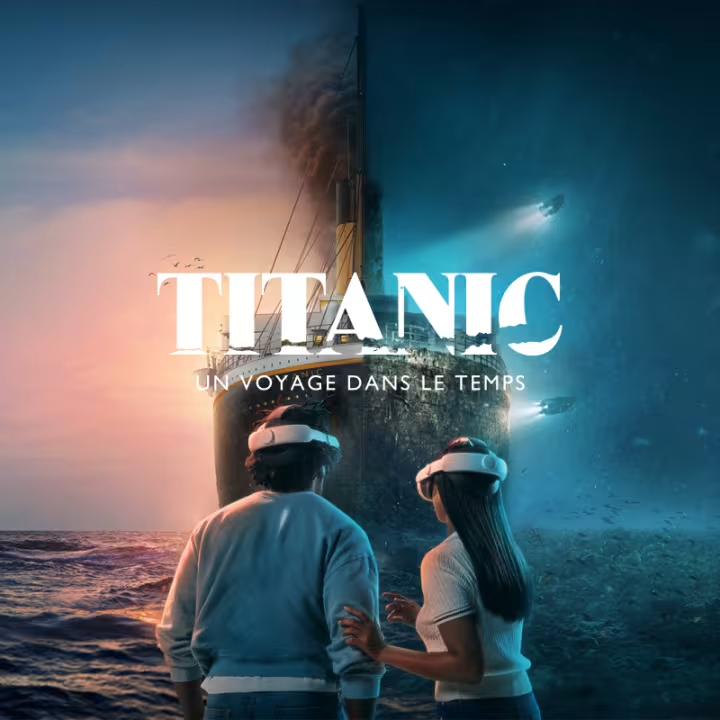
Head to the 11th arrondissement of the capital to discover the new virtual reality experience based on the Titanic. Immerse yourself in this maritime legend that sank to the bottom of the North Atlantic on the night of April 14-15, 1912, with a journey into the heart of the ship and the stories of its passengers.
Just put on a virtual reality headset and time becomes an illusion. With “Titanic: A Journey Through Time”, history leaves the textbooks and documentaries behind to become an experience you can live. It all takes place in the 11th arrondissement of Paris, at Fever Hub Paris, the Center for Immersive and Sensory Experiences. For 45 minutes, this virtual reality experience, developed in collaboration with experts from Musealia, invites you to rediscover the most famous ocean liner and the largest of its time (269 meters) from a new perspective.
A VR experience
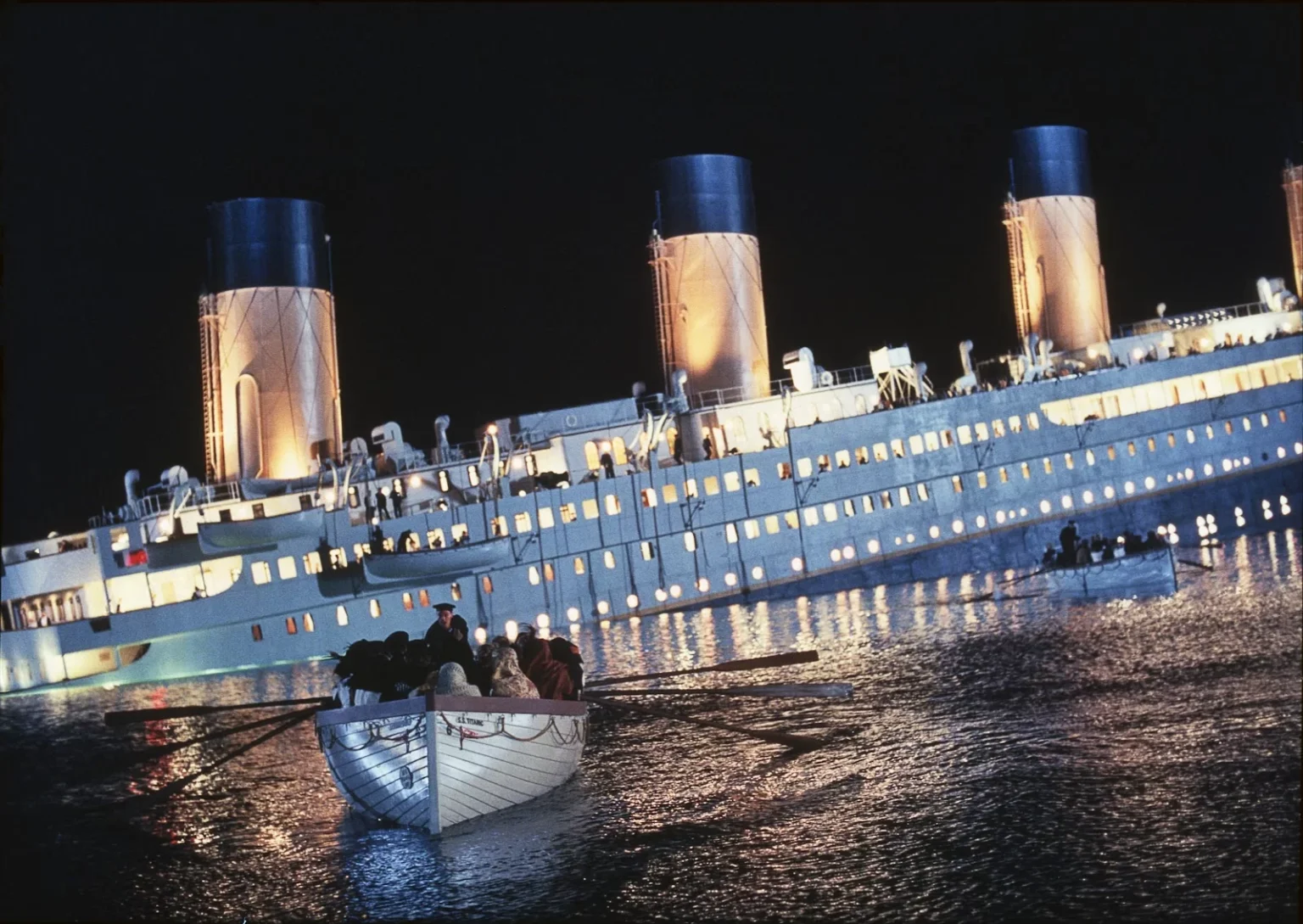
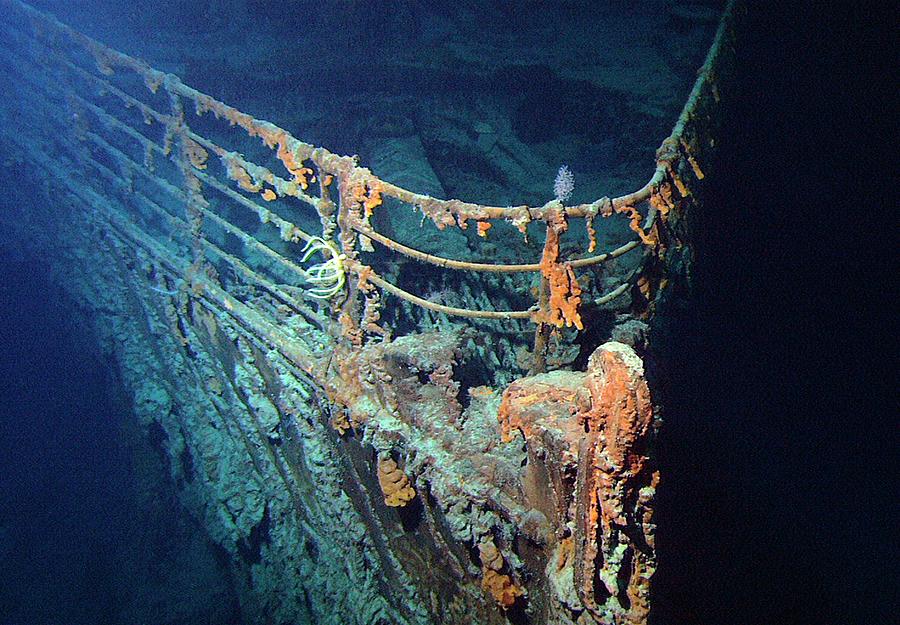
The immersion begins in the depths of the Atlantic Ocean, where the Titanic has lain for over a century at a depth of 3,821 meters. The wreck appears, silent, majestic, and fragile at the same time. Then, without any abrupt transition, the setting changes. Visitors are transported back to April 1912, to the heart of the proud luxury liner of the White Star Line, as it was between its departure from the Harland & Wolf shipyards and its fateful departure from the port of Southampton. The Grand Staircase stands tall, the salons come alive, the decks open onto the horizon. Virtual reality erases distance, giving the uncanny illusion of actually walking around on board, as did the passengers, but also Jack and Rose in James Cameron’s film Titanic (1997), which perfectly captured the atmosphere of the ship and etched it into the collective imagination.
The experience also has a narrative purpose, like a duty to remember. Throughout the visit, voices emerge, inspired by the 1,316 passengers and 885 crew members who were on board on the night of the sinking. Without ever falling into the spectacular, the narration chooses modesty, leaving room for emotion and reflection. Suitable for ages eight and up, the tour is as educational as it is entertaining. “Titanic: A Journey Through Time” perpetuates the legend of the seas that has marked entire generations and continues to fascinate the general public and specialists alike. So much so that other players are currently offering immersive virtual reality experiences based on the Titanic.
In the 8th arrondissement, another VR experience revolves around the same themes and issues: “Titanic, the sunken dream” by The Gate., taking place from the passenger cabins to the decks offering a view of the sea, passing through the engine room.
A legend as fascinating as it is profitable
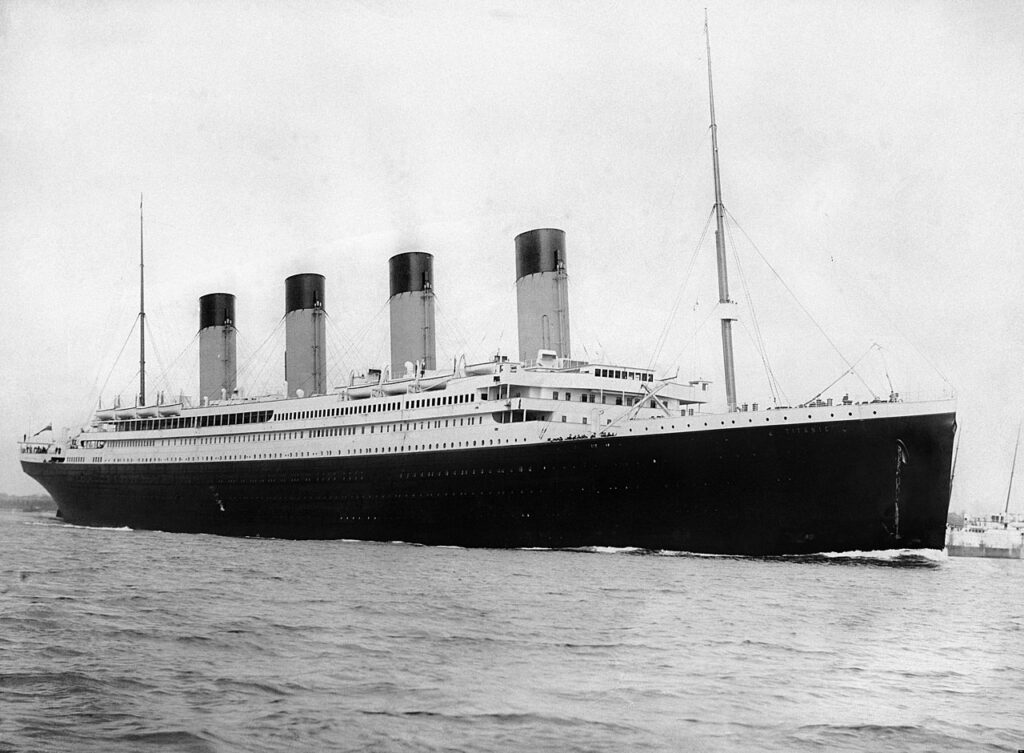
More than a century after its sinking, the Titanic continues to haunt the collective imagination. On April 14, 1912, this giant of the seas, touted as unsinkable, disappeared into the icy waters of the North Atlantic (-2°Celsius on the night of the tragedy) during its maiden voyage. The disaster claimed more than 1,500 lives (with 700 survivors) and marked a turning point in maritime history. Very quickly, the Titanic transcended historical fact to become legend. Stories of courage, silent sacrifice, and musicians playing until the very end fuel a deeply emotional collective memory. The sinking became a universal tragedy, recounted, rewritten, and passed down from generation to generation.
Rediscovered in 1985, the wreck still fascinates people today. Films, books, exhibitions, and works of art keep the story alive, which has become legendary. In 1997, James Cameron directed Titanic, an iconic work of cinema starring Kate Winslet and Leonardo DiCaprio. This period romance set against the backdrop of a disaster movie went on to gross more than $2.2 billion at the box office.
Books tell the story of the ship in words, while exhibitions extend the immersion. Around the world, museums and cultural centers display objects recovered from the wreck, reconstructions of cabins, and immersive displays. The legend continues on the internet thanks to content creators who popularize the ship’s technical and innovative features, recount its dramatic fate minute by minute, and flood the web with anecdotes of all kinds, including alleged curses that struck the cruise ship.
According to some estimates, the total revenue generated by the legend of the Titanic (films, books, documentaries, exhibitions, merchandise, tourism, and other licenses) could be between $10 billion and $15 billion since 1912.
Read also > The Rétromobile Show celebrates 50 years of automotive history
Featured photo: © 20th Century Fox – Paramount Pictures