




The Longines Prix de Diane will take place this Sunday, June 14, at the Chantilly Racetrack. While this event is a must-see in the world of horse racing, it is even more so for the tribute it pays to elegance and its signature accessory: the hat. Let’s take a look back at the history of the hat’s presence on the racetrack.
Elegance contest
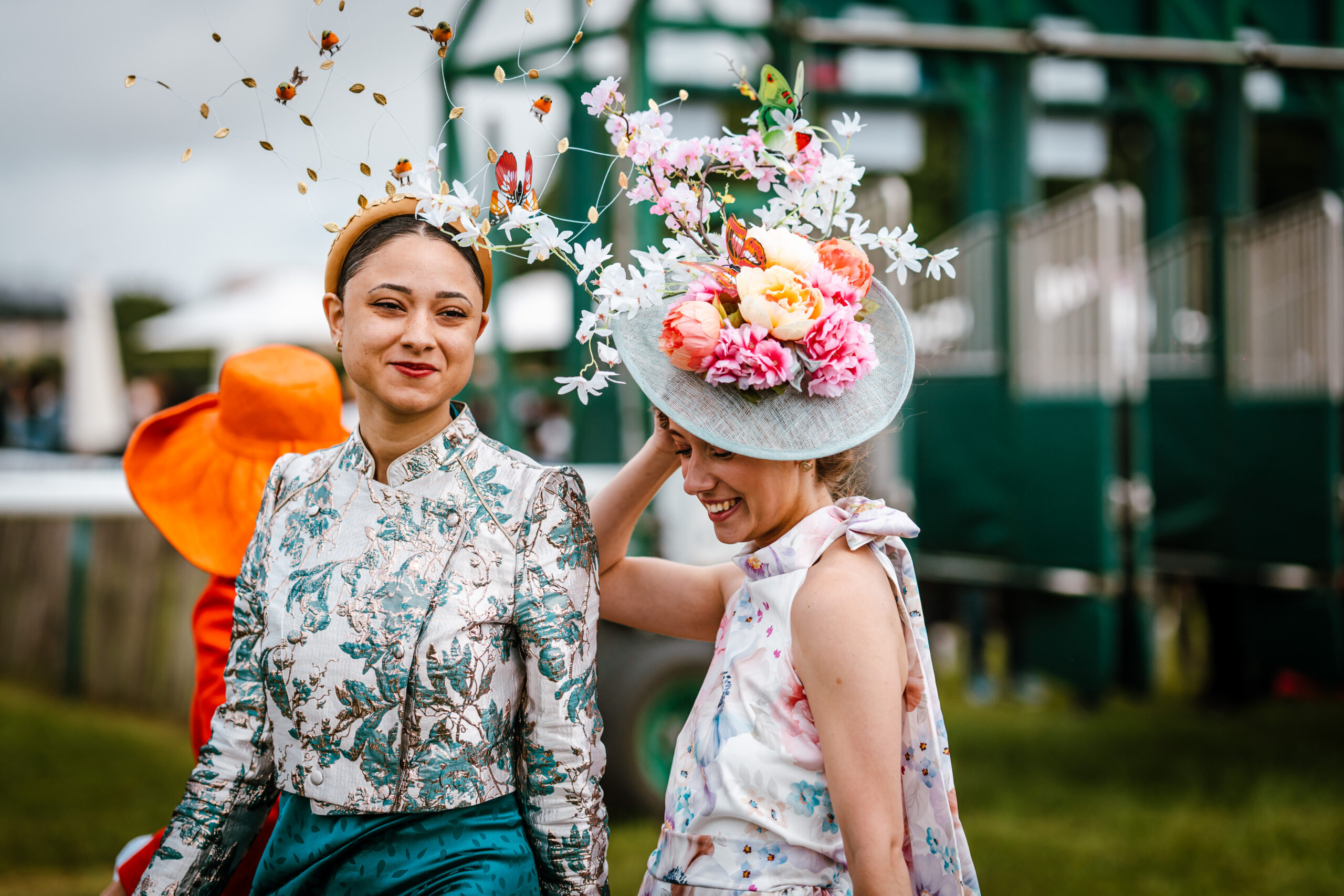
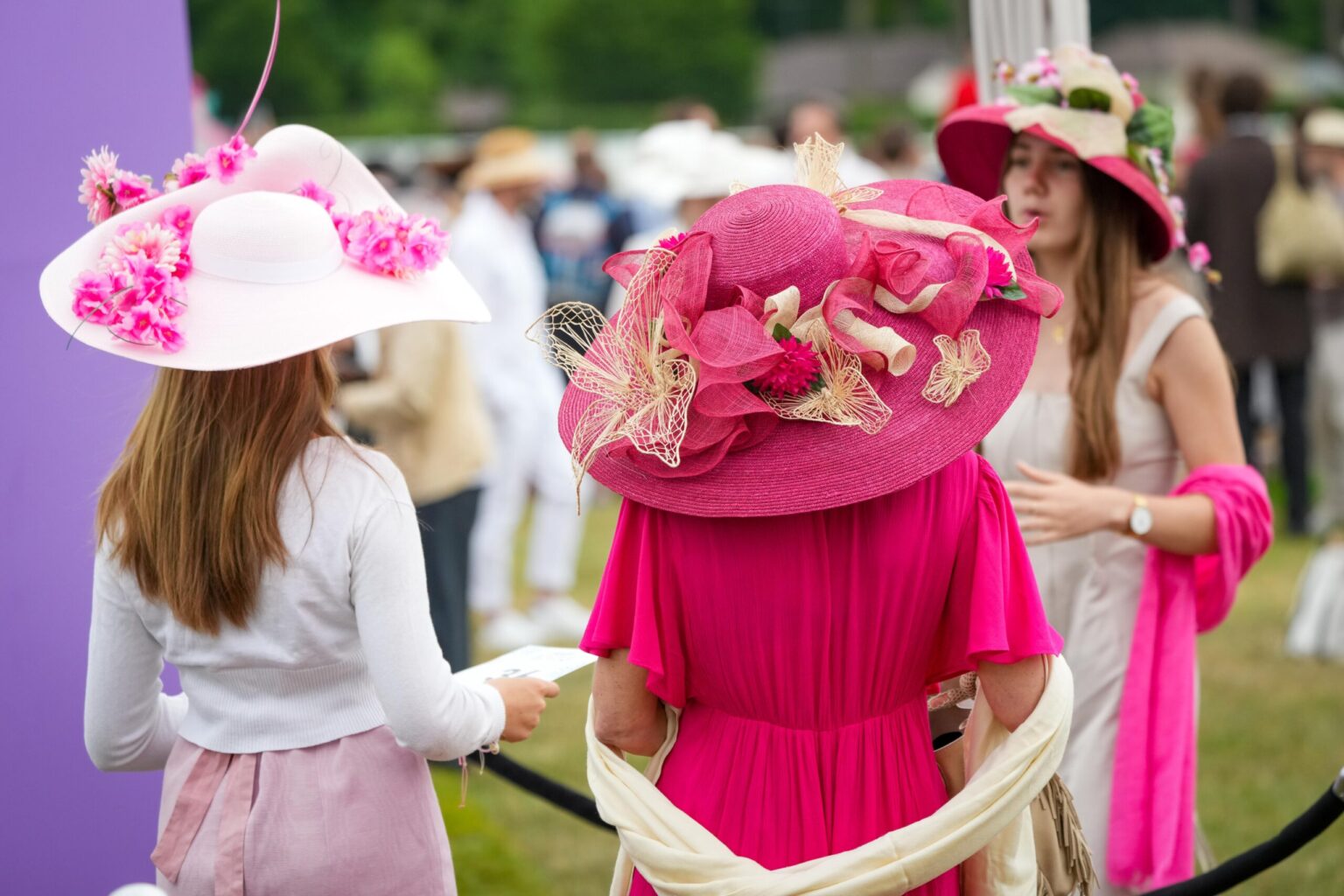
“Don’t forget to wear a hat, the essential accessory for this chic and glamorous Garden Party.” It’s written in black and white. On the website for the Longines Prix de Diane, taking place this Sunday, June 14, the dress code is strict: “pull out all the stops with a chic outfit” and come equipped with your finest headwear. “Whether it’s designer, small, large, embellished, extravagant, original, or personalized… All styles are welcome and will fit perfectly into the event’s atmosphere,” it states.
Hats and a commitment to elegance have become essential to the race, so much so that an elegance contest has been organized on the Prix de Diane’s social media channels. The winners who submit the best-looking photo will earn a spot among the finalists of this same contest, which will take place on race day.
To understand the origins of this accessory’s deep-rooted tradition, we must go back to the second half of the 19th century, when the upper classes of society gathered for this social event. First held in 1843, the Longines Prix de Diane saw the emergence of this passion for hats from its very first editions. Beyond its primary function of protecting spectators from the sun, it established itself as a symbol of elegance and social status in the highest echelons of society.
A hat for every occasion
Before the Prix de Diane comes Royal Ascot. Founded in 1711, this British race has always been renowned for its strict dress code. As the event’s reputation grew, its sartorial requirements naturally influenced racing enthusiasts worldwide, who draw inspiration from the elegance and refinement of the royal guests.
According to the current rules of Royal Ascot, each hat has its own designated area. In fact, there are four different enclosures for race spectators: the Royal Enclosure (the most prestigious), the Queen Anne Enclosure, the Village Enclosure, and the Windsor Enclosure. For the Royal Enclosure, for example, women must wear a headpiece with a minimum diameter of 10 cm. Men, on the other hand, must wear a black or gray top hat.
In the Queen Anne Enclosure, women may wear a fascinator, a bolder variation of the bibi. Men, however, are not required to cover their heads.
Horse racing: a reflection of fashion trends
While hats at horse races have become a must-have, serving as markers of personal style and social status, they have also allowed us to observe the evolution of fashion and social customs across the ages.
During the Edwardian era in the United Kingdom—which corresponded to the Belle Époque in France and the rest of Europe—women favored large hats adorned with feathers, often accompanied by sophisticated veils. These were then replaced by the flapper style during the 1920s and 1930s, a symbol of the joyful identity of women who wished to express their freedom through bold and modern outfits.
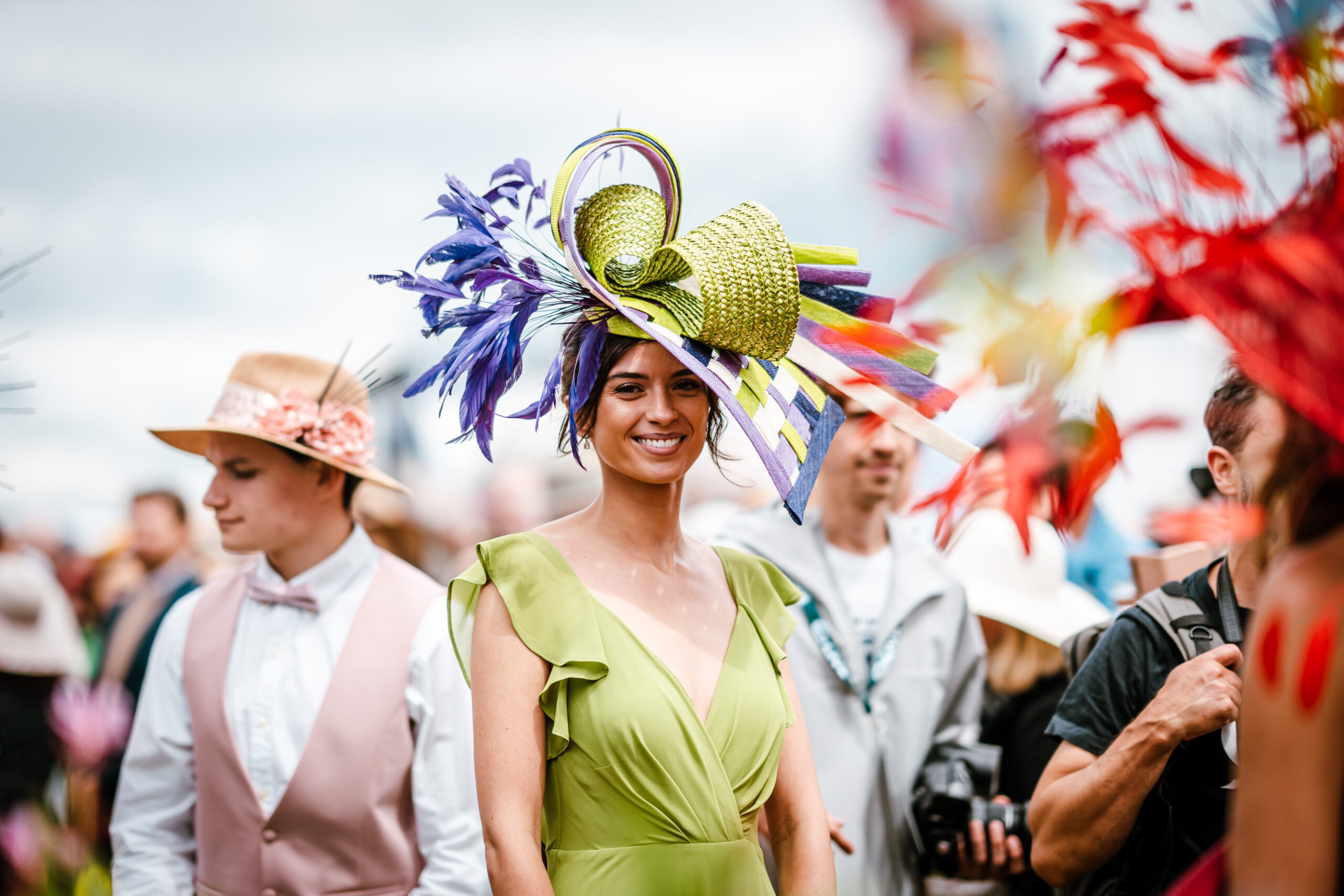
In the 1950s, racetracks saw the emergence of the bibi, a small hat worn to the side of the head. It is characterized by its elegance and its veil that covers the upper part of the face. Whether to honor tradition or to showcase one’s taste for fashion and extravagance, the hat will remain an essential element of the horse racing spectacle.
Read also : A Brief History of the mini-skirt : fashion and emancipation
Featured picture : © Pierre Costabadie