

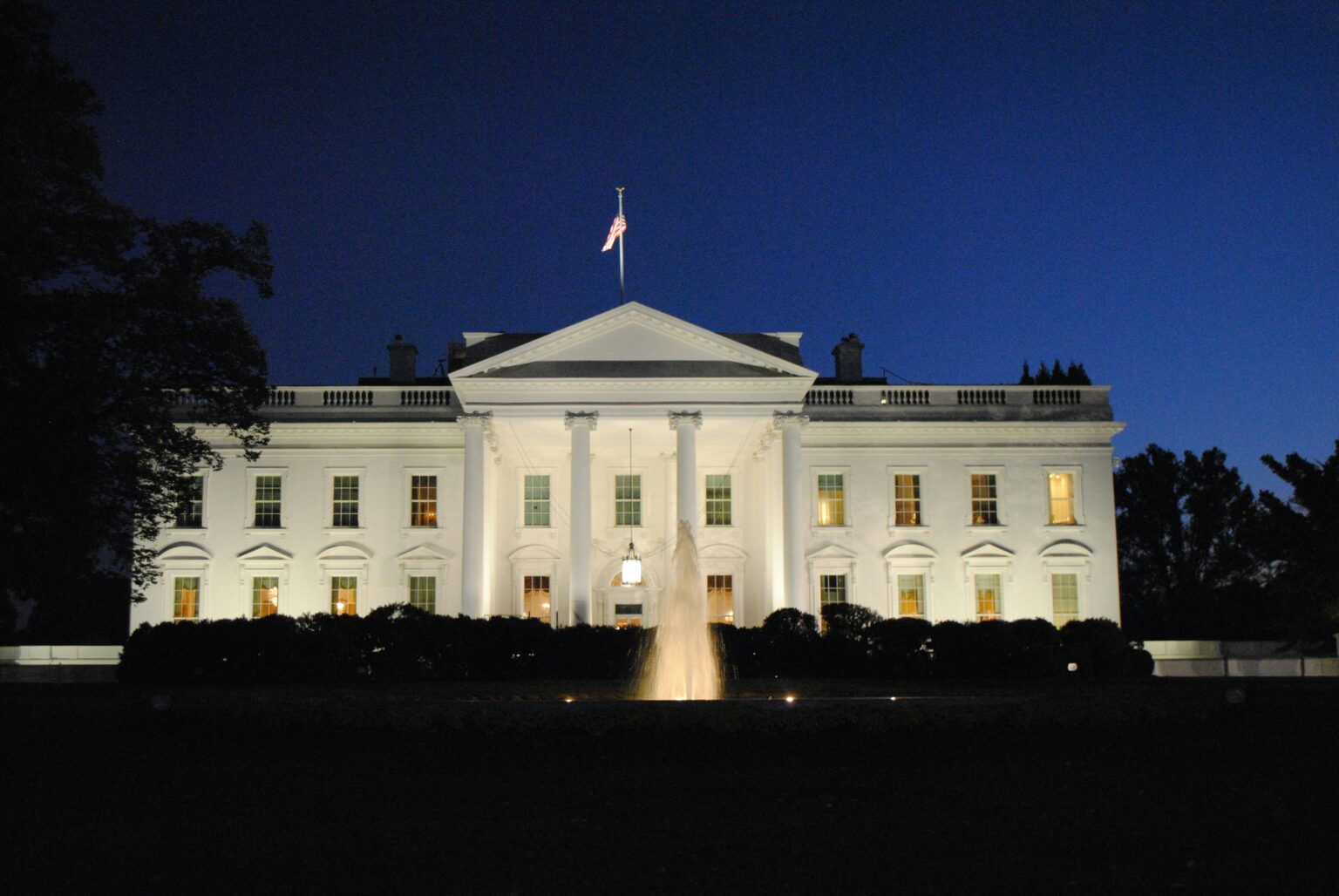




Envisioned as a flagship symbol of American prestige, the future ballroom desired by Donald Trump at the White House is now at the heart of a heated controversy. Between legal obstruction, architectural criticism, and political questions, this extraordinary construction project goes far beyond a simple presidential renovation. Following the shooting at the Correspondents’ Dinner on the night of April 26, the project has taken on a new dimension.
And that makes five…
With the incident on April 26, when gunshots were heard during the traditional Press Gala at the Hilton Hotel in Washington, Donald Trump has survived five assassination attempts in ten years! This is unprecedented in American presidential history, reinforcing the need to strengthen national security.
Prevented by the Secret Service—the special forces responsible for his security—from returning to the room in the midst of an exfiltration procedure, the 47th President of the United States was unable to present to the world’s cameras the resilient and combative image he had displayed during the assassination attempt he suffered in Pennsylvania in July 2024, in which he was wounded in the ear. A few minutes after the attacker’s arrest, while congratulating law enforcement for their bravery and denouncing the failed attack by a “crazy lone wolf”, Donald Trump took the opportunity to emphasize the necessity of his White House ballroom project.
It was meant to embody the grandeur and revival of grand American receptions, but for several months now, this project has been a focal point of tension. Paused by the courts, criticized by architects, and shrouded in mystery, this extraordinary construction project tells a story far beyond a simple expansion: it speaks to how Trump conceives of power… and the setting that accompanies it.
A scene of chaos
On the evening of April 26 at 9 p.m. (3 a.m. Paris time), Donald Trump was scheduled to address the state of the war in Iran. A solemn address that was to take place during the traditional Correspondents’ Dinner at the Hilton Hotel in Washington. This annual social event, which brings together media professionals and celebrities, is also one of the rare moments on the official calendar when several key figures in American politics are gathered in one place.
That evening, in attendance were U.S. President Donald Trump, U.S. Vice President JD. Vance, Secretary of State Marco Rubio, Secretary of Defense Pete Hegseth, and FBI Director Kash Patel. Aside from the FBI Director, it was these top officials of the Trump administration—including current President Donald Trump—that a 31-year-old mechanical engineer from California planned to eliminate.
Heavily armed (with an assault rifle, two handguns, and knives), Cole Thomas Allen, having booked a room the night before at this luxury hotel, managed to breach the security system on the hotel’s mezzanine level.
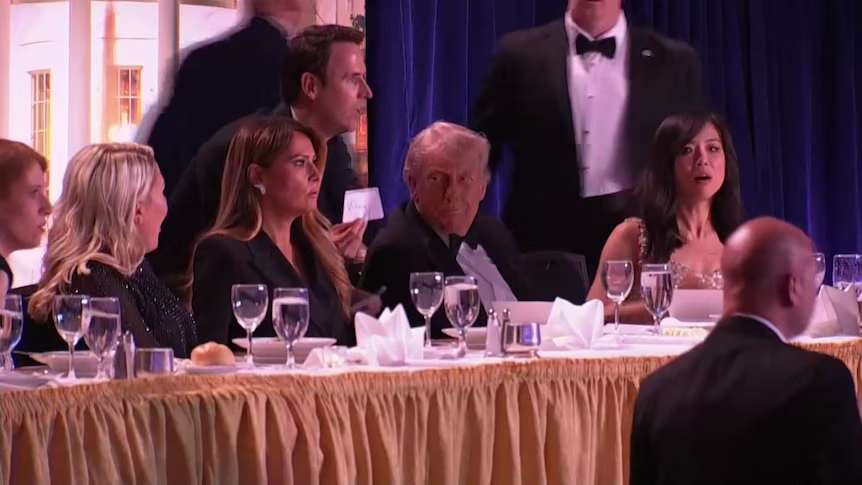
A few minutes before the ceremony began, gunshots rang out, barely audible to the guests in the hotel ballroom where the gala was being held as the orchestra played and dinner began to be served. A few meters away, the assailant had just wounded a security guard.
In accordance with security protocol, the Secret Service rushed to bring the Vice President and the President of the United States to safety, while law enforcement officers ordered the guests in evening attire to get down on the ground. The layout of the room, with a high density of tables very close together, complicated the operation, forcing some agents to step over tables.
After managing to take refuge on the floor directly above the room, the assailant was finally apprehended. No guests were injured.
Failed security measures?
Were there flaws in the security measures surrounding the President of the United States? On social media, the answer is clear: although he did not manage to enter the ballroom, how was an individual able to bring in heavy weapons and get so close to the President?
Several witnesses expressed surprise at the lack of security checks inside the hotel, with guests reporting that they were required to present nothing more than what amounted to a simple ticket, without any prior screening, as the security checkpoints were located further along the route, immediately adjacent to the ballroom.
The Washington Post also highlighted a gray area within the building itself. Specifically, the Secret Service considered that only the ballroom fell under its responsibility, while the Washington police were tasked with closing roads and directing traffic around the hotel.
Keeping his cool and clearly less shaken by the incident than his wife Melania, Donald Trump took the opportunity to bring his White House ballroom project back to the table. “This incident would never have happened with the Top Secret ballroom currently under construction at the White House,” the U.S. president was quick to write on social media in a post published on Sunday.
8,000 m², 1,000 guests
On paper, the idea is appealing: a vast hall capable of hosting up to a thousand guests, designed to replace temporary tents deemed unworthy of state dinners. Donald Trump, true to his taste for spectacle, envisions a space on par with the great diplomatic capitals.
But reality has caught up. At the end of March 2026, a federal judge ordered the suspension of construction, recalling a fundamental principle: the White House is not private property. Behind this decision, a deeper criticism emerges – that of a project launched without clear congressional approval, in a legal gray area that raises questions about the limits of executive power.
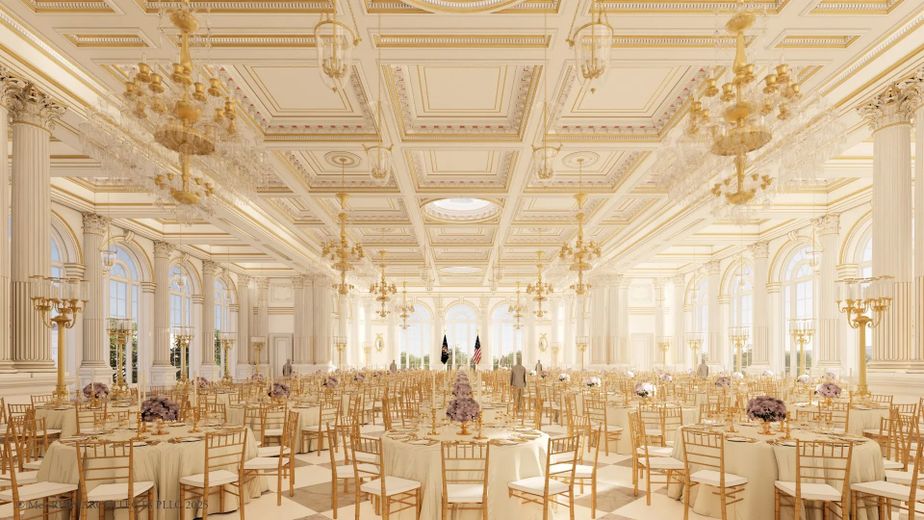
The ballroom project proposed by Donald Trump at the White House stands out for its exceptional scale. Planned over an area of around 8,000 m², the building would include a vast main hall of nearly 2,000 m², capable of accommodating up to 1,000 guests. With a height of about 12 meters, the space would be designed to rival the largest official reception halls in the world.
But it is not just a hall: the project includes a full complex featuring a large reception area, administrative offices – including for the First Lady – as well as a renovated cinema. The entire structure is to be built in place of the East Wing, demolished in 2025.
Up to $400 million in investment
The cost is equally striking. Initially estimated at $200 million, it is now said to reach around $400 million, largely financed by private funds. As often with Trump, the promise of a project “at no cost to taxpayers,” funded privately, does not quell concerns. On the contrary, it fuels suspicions of influence and conflicts of interest. As a result, the ballroom, intended to embody American prestige, has become a contentious issue at the heart of Washington.
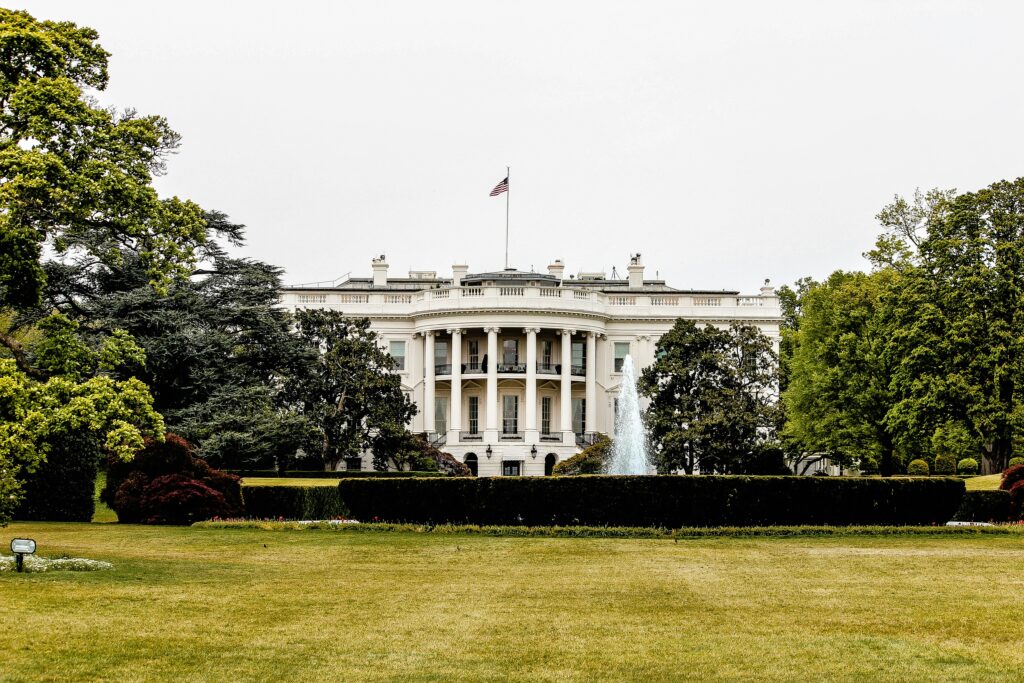
Adding to this is a more opaque dimension: Donald Trump claims that a “massive military complex” is also being built beneath the hall. This further blurs the line between the staging of power and strategic reality.
Read also : The Jeffrey Epstein case: the fall from grace of former Prince Andrew
Featured photo : Unsplash