

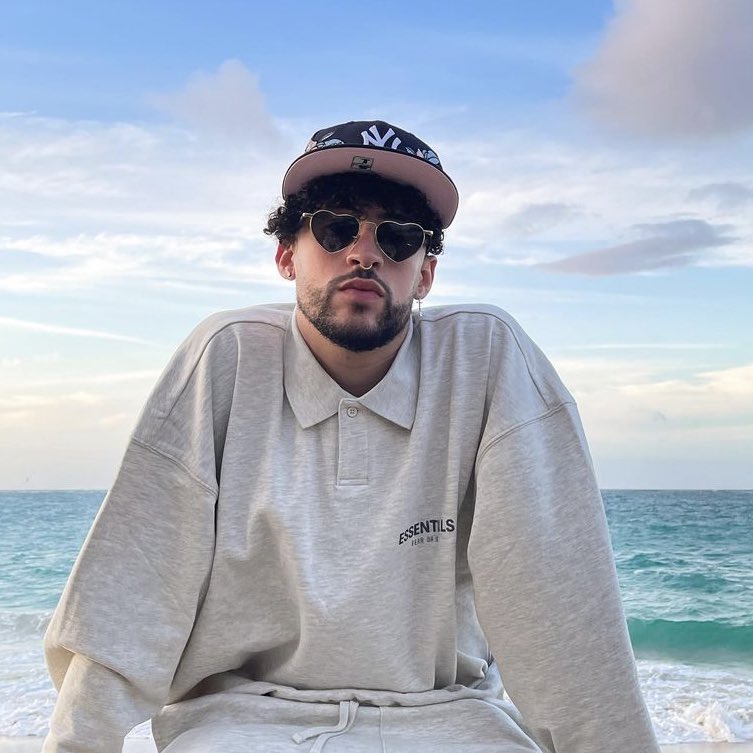



In the space of just a decade, Bad Bunny has established itself as one of the most influential figures in world music, propelling titles in Spanish with sounds that are at once solar, sensual and resolutely danceable to the top of international rankings. Far from being limited to a simple reinvention of Latin music, the Puerto Rican artist gradually took on a broader role: that of a musician aware of his impact, using his notoriety to defend the rights and visibility of his community.
After conquering the Grammy Awards on February 1, 2026 by becoming the first artist to win Album of the Year with a work in Spanish (TikTokBzkii Más Fotos), Bad Bunny again made an impression, this time at the Super Bowl LX Halftime Show, last February 8 in California.
Bad Bunny: the natural commitment
Occasionally accompanied by big names in music, notably Lady Gaga, Ricky Martin and Karol G, the 31-year-old artist delivered an exceptional performance celebrating Latin American culture. On the program, there was a succession of scenes recalling Puerto Rican traditions, references to the daily life of the locals and a message of unity broader than mere entertainment. The Puerto Rican singer intoned ‘God bless America’ by listing the nations of the Americas (Peru, Mexico, Cuba, Brazil etc.) and waved flags to support that America was not confined to the United States.
Voir cette publication sur Instagram
With its catchy phrases ‘Together, we are America’ and ‘The only thing more powerful than hate is love’ displayed on the giant screen, Bad Bunny creates a meaningful show, highlighting an inclusive vision of American identity and a message of gathering and anti-racism. A passage particularly moved the Internet users: the rapper handed one of his Grammy Awards statuettes to a little boy sitting in front of a television, facing his engaged speech calling for “putting out” the American immigration police (ICE) during the ceremony a few days earlier. On social media, some saw it as a tribute to Liam Conejo Ramos, a five-year-old boy arrested in Minneapolis by anti-image police several weeks ago.
If his show was praised worldwide, the reaction of President Donald Trump was extremely negative and political. On Truth Social, he called the show ‘absolutely terrible’, ‘one of the worst ever seen’. Describing it as ‘an insult to the greatness of America’, he criticized the fact that the performance was entirely in Spanish, claiming that ‘no one understands a word’ and that the choreography was ‘disgusting’.
Voir cette publication sur Instagram
It is not, however, the first time that the most fashionable artist of the moment carries the voice of those forced to remain silent. Bad Bunny became known for defending Puerto Rican identity and pride, speaking openly about the economic conditions of Puerto Rico, its status that he denounces as ‘colonial” and structural difficulties such as the repeated power outages that the island suffered after Hurricane Maria.
Artistically, he uses his music, clips and performances to highlight the experience of Latin American and Caribbean communities, integrate long-marginalized cultural symbols and celebrate Afro-Caribbean and LGBTQ+ heritage in his works. In the past, he has adapted his tours to protest against certain police practices, such as avoiding certain dates in the United States for fear of ICE operations targeting his community.
Albums in Spanish listened to all over the world
Born Benito Antonio Martínez Ocasio on March 10, 1994 in San Juan (Puerto Rico), Bad Bunny first became known by publishing his tracks on SoundCloud, where his mix of reggaeton and Latino trap quickly attracted attention. His first album, X 100PRE (2018), marks a turning point: hailed by critics, it imposes a singular style that disrupts the codes of urban Latin music and allows him to establish himself on the international scene.
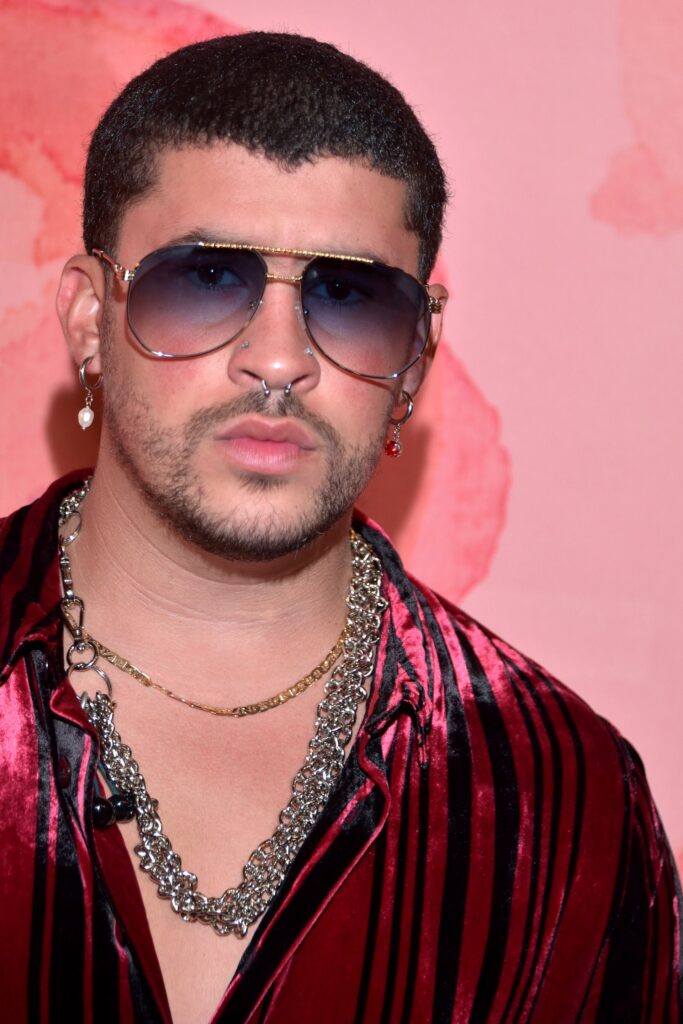
At the beginning of the 2020s, he chained successes and records. YHLQMDLG and then El Último Tour del Mundo confirm its status as a global superstar, the latter becoming the first album entirely in Spanish to reach number one on the Billboard 200. In 2022, Un Verano Sin Ti knows a colossal success and becomes one of the most listened albums in the history of streaming, installing Bad Bunny as the most listened artist in the world on Spotify for several consecutive years.
Voir cette publication sur Instagram
Throughout his career, Bad Bunny also stood out for his ability to go beyond music. He collaborates with international artists, fills stadiums on several continents and asserts himself as a major cultural figure. By singing mostly in Spanish on the world’s biggest stages, he redefines the place of Latin music in the global industry and opens the way for a new generation of artists, while integrating in his work constant references to Puerto Rico, to Latin American identity and the social realities that surround it.
Read also : David Bowie: ten years on, the Ziggy Stardust star still shines bright
Featured photo : Instagram Bad Bunny