

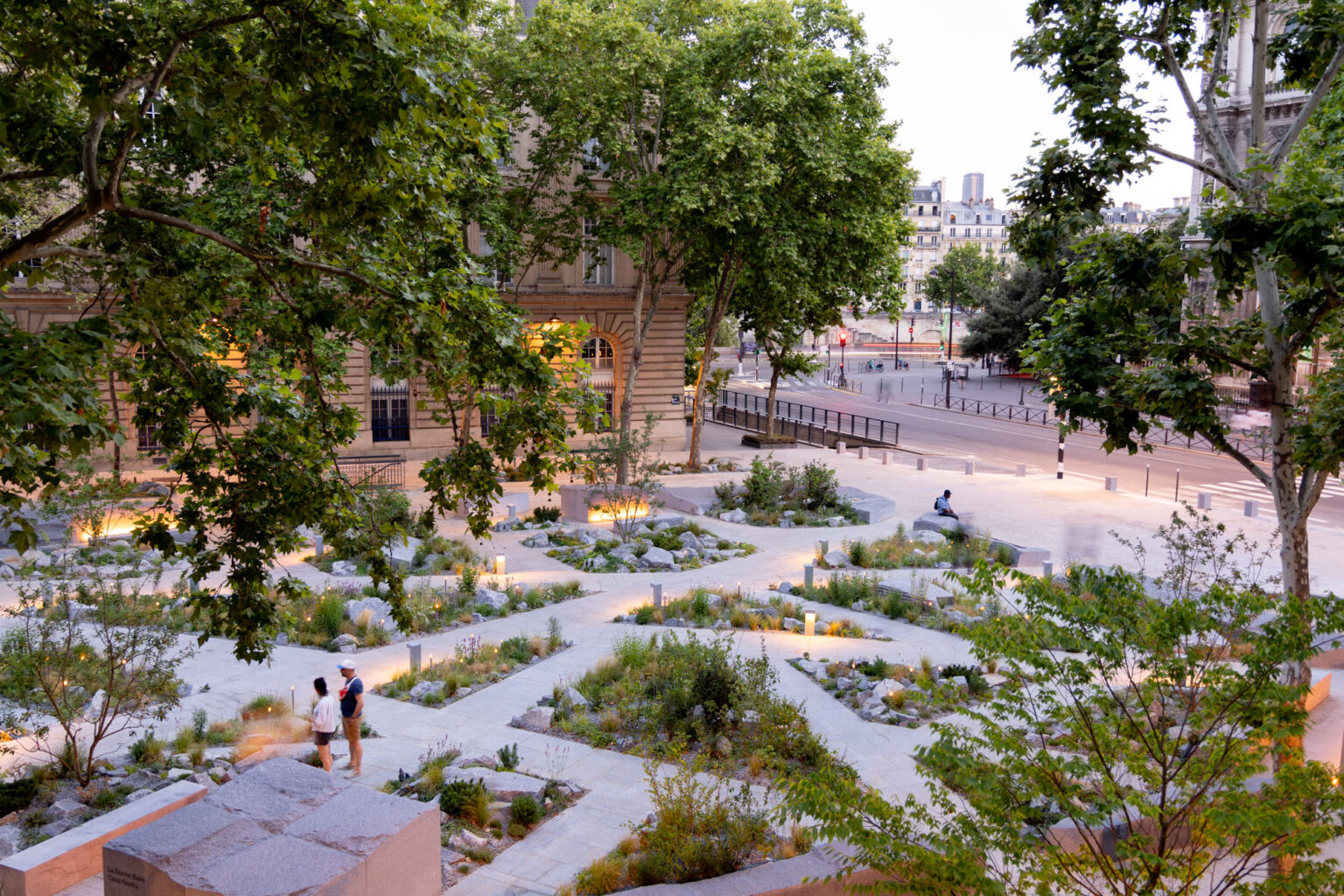




Ten years ago to the day, France and Paris were plunged into mourning by a wave of deadly terrorist attacks that struck at the heart of the City of Light, targeting its youth, freedom, and festive spirit. To pay tribute to the survivors and the 132 people murdered on that fateful evening of November 13, 2015, the Paris City Council today inaugurated a place of remembrance in the center of Paris: a memorial garden on Place Saint Gervais (Paris IVe).
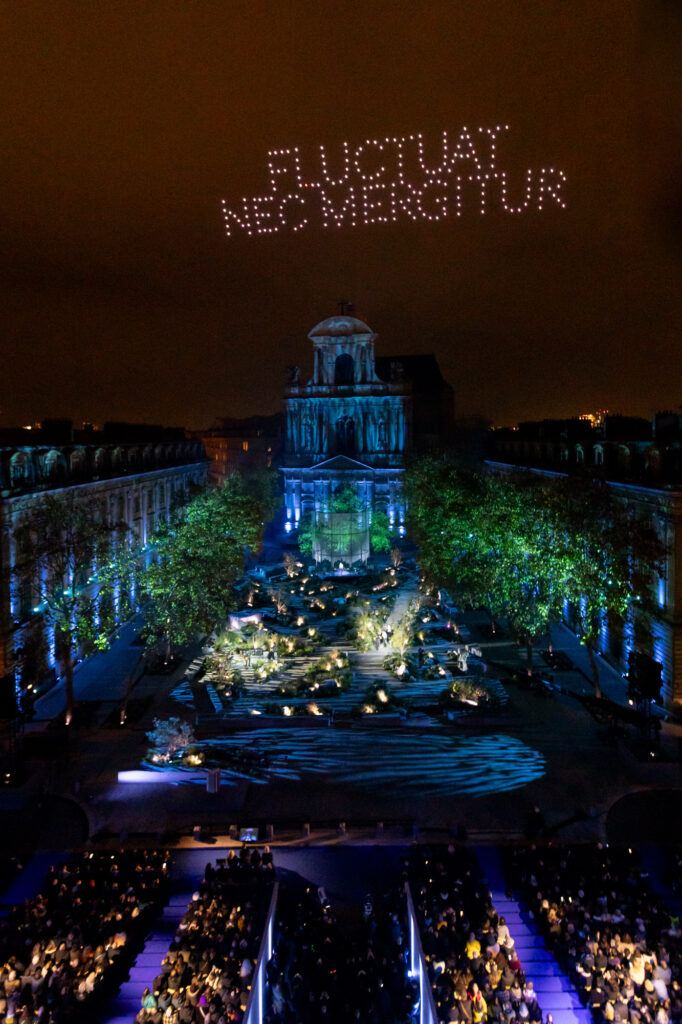
Fluctuat Nec Mergitur.
The motto of the city of Paris, which means “It is beaten by the waves, but does not sink,” evokes resilience, the ability to rise up in the face of adversity and, even more so, in the face of the horror of November 13, 2015.
That evening, three waves of terrorist attacks in the capital left 132 people (including 2 suicides after the attacks) dead and nearly 500 wounded. To preserve the memory of those who died and help the living to heal, the Paris City Council has just officially opened a memorial garden on Place Saint-Gervais, behind the town hall.
It is in this new memorial site that the ceremony commemorating the 10th anniversary of the attacks of November 13, 2015, will be held tonight at 6 p.m. in the presence of 1,500 guests, including a choir composed of 44 survivors of the Bataclan. The event is broadcast live in France on TF1 and France 2.
Over the past forty years, Paris has been plagued by several waves of terrorism, including the attack on Rue des Rosiers in 1982, the double attack on Galeries Lafayette and Printemps Haussmann in 1985, the attack on Rue de Rennes near the Tati store in 1986, the attack on the RER B train at Saint-Michel station in 1995, and the attack on the Charlie Hebdo newspaper offices in 2015. The latter took place 10 months before the attacks of November 13.
The six neighborhoods affected are represented
The Paris City Hall, in consultation with victims’ associations, chose Place Saint-Gervais, a neutral place of remembrance “that was not scarred by the attacks,” according to the press release. It is thus “a different place in the very heart of Paris, and a synthesis of the six places struck by terror on November 13, 2015.”
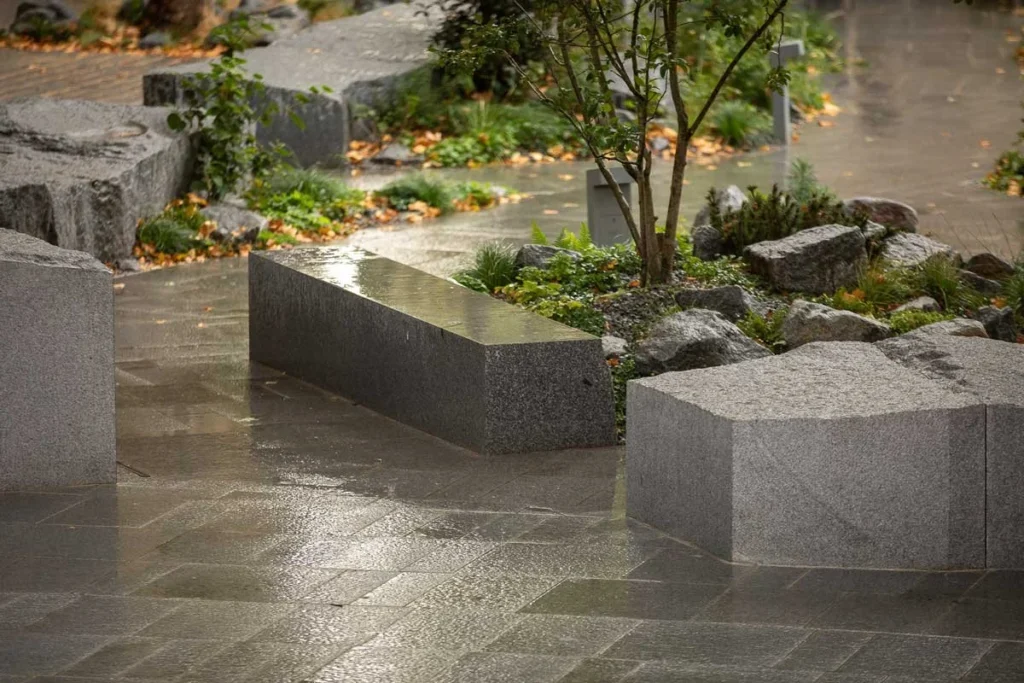
All of the locations of the attacks are mentioned on six granite blocks, namely the Bataclan concert hall and the Stade de France, as well as the terraces of the bars and restaurants Le Carillon, Le Petit Cambodge, La Bonne Bière, Le Casa Nostra, La Belle Équipe, and Le Comptoir Voltaire.
“The six sites are treated equally, without any hierarchy in terms of pain or memory, because they were all wounded in the same way.”
Each of the steles is engraved with the names of the victims, while the street map is displayed on the ground.
“The layout of the six attack sites is inspired by the geography of the city and structures the composition of the garden. From a fragmented and disturbed ground, a peaceful place conducive to contemplation is born,” reads the website of landscape design agency Wagon Landscaping, which designed this memorial garden.
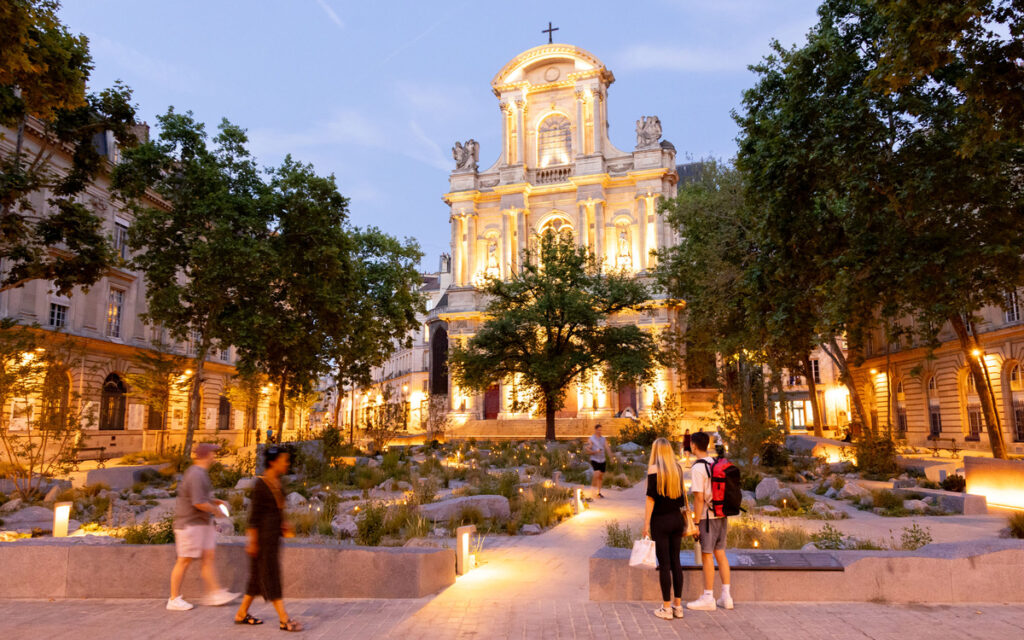
The main guidelines for this garden, which was inaugurated today but has been discreetly open to the public since June, were defined in collaboration with victims’ associations. The latter wanted “a garden, a living space that keeps alive the memory of the victims who were injured, killed, or survived the attacks of November 13, 2015: a place that brings people together and allows them to reflect.”
Bringing the living and the dead together
Nature and life are integral parts of the tribute paid by the memorial garden, which combines minerals and plants. As the Paris City Hall points out on its website: “the stone elements recall the harshness of this ordeal and the lives that were shattered, while the garden allows life to flourish within this memory.”
Among these living witnesses is an elm tree. Standing 30 meters tall, this symbol of justice protects the garden. The tree is also at the heart of the scenography for tonight’s commemorative ceremony. All along the path of this stone memorial enclosure, there are also beds of seasonal flowers, currently featuring asters recognizable by their white and mauve hues. “In the fall, Christmas roses, cyclamens, anemones, and dogwood fruits will provide a welcome change from the flowers we usually see in November,” said Mathieu Gontier, the landscape architect from the agency that won the project.
In addition to plants, there are also other signs of life nestled among the stone blocks: water. The latter “helps to support the development of biodiversity in the garden, making the tribute perpetual and alive,” the press release adds.
Read also > November 11: the Bleuet de France, unwavering support for veterans, war wounded, and victims of terrorism
Featured photo: © Jean-Baptiste Gurliat/Paris City Hall