


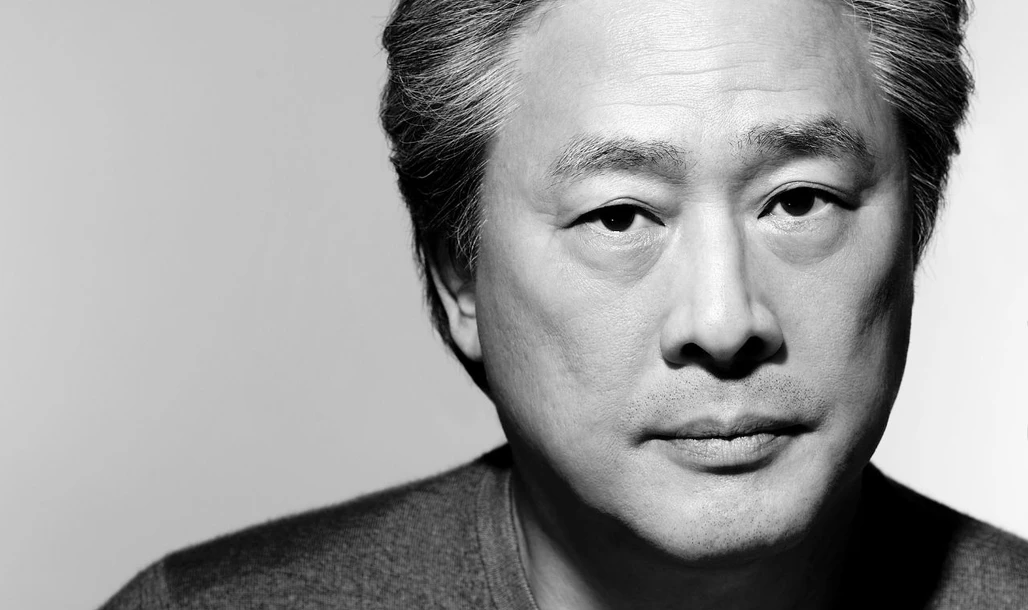




The South Korean director, screenwriter, and producer behind the cult classic *Oldboy*, known for his socially conscious films featuring striking visual styles and unsettling worlds, is the president of the jury at the 79th Cannes Film Festival. As the Festival opens its doors today, here’s a look back at five feature films to (re)discover Park Chan-Wook’s work.
With twelve films to his credit and a creative spirit that never ceases to amaze, Park Chan-Wook is the new president of the feature film jury at the Cannes Film Festival. A regular at the festival, the 62-year-old South Korean director and leading figure of the K-pop wave (Hallyu) has made his mark on the global film scene with masterful works such as Oldboy, winner of the Grand Prix at the 2004 Cannes Film Festival, or films featuring sublime heroines like The Handmaiden in 2016.
“Visceral, subversive, baroque”—these are just some of the adjectives that help us rediscover Park Chan-wook’s work through five films. Throughout his career, the director, screenwriter, and producer has developed at least three obsessions: revenge and its consequences, an ambiguous morality, and a particularly stylized aesthetic.
A figure of the strange, he follows in the footsteps of other previous directors who have presided over the Festival, such as David Lynch (2004) and Tim Burton (2010). Quentin Tarantino, a great lover of Asian cinema and himself president of the jury at Cannes in 2004, is said to have drawn inspiration from Oldboy for his Kill Bill Vol. 1 and its sequel, if only for the stylized violence and fight choreography. The South Korean director counts Akira Kurosawa, Ingmar Bergman, Luchino Visconti, and Alfred Hitchcock among his idols.
Park Chan-Wook is part of the growing media spotlight on Asian cinema and its actors, the most recent being his fellow director and screenwriter Bong Joon-Ho, winner of the Palme d’Or at Cannes in 2019 for his film Parasite and president of the jury in 2021.
Oldboy, the classic
Released in 2003, Oldboy is undoubtedly Park Chan-Wook’s most famous film. The story follows a man held captive for fifteen years, suddenly released and searching for answers.
Grand Prix at the 2004 Cannes Film Festival, the film explores the themes of revenge, manipulation, and memory. It has been elevated to classic status by film buffs, who admire its sideways long-take fight scene, reminiscent of video games.
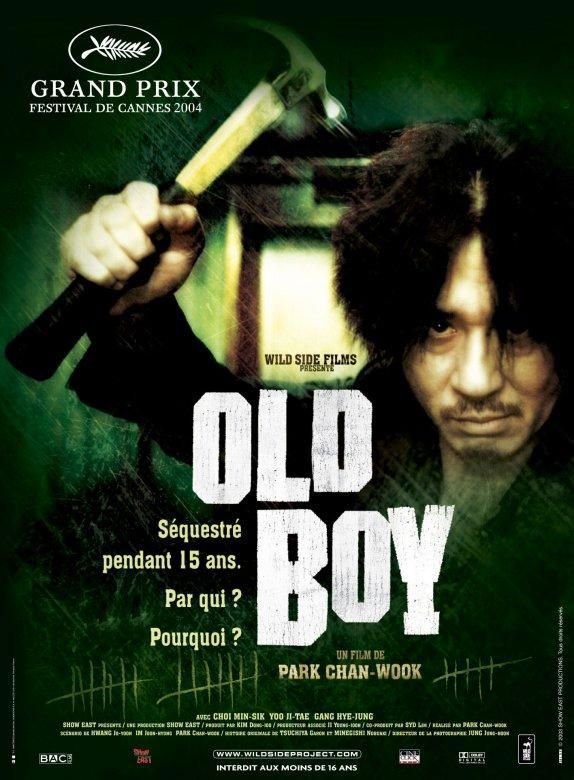
One of the possible parallels with the film Kill Bill Volume 1 lies in the use of bladed weapons by the Army of 99 Madmen, or even group fights against a single character. That said, while everything in Kill Bill is exaggerated and stylized, in Oldboy, the hero is anything but invincible—rather, he is vulnerable and takes his lumps, not hesitating to use a hammer as a formidable weapon.
In addition to Quentin Tarantino, Spike Lee was particularly inspired by Oldboy, for which he directed an American remake. More indirectly, the film, released the same year as Kill Bill Volume 1, is also said to have served as a reference for Nicolas Winding Refn (Drive) and Denis Villeneuve (Blade Runner 2049, Dune, Cleopatra…).
The Handmaiden, the most refined
Released in 2016, The Handmaiden—known in France as “Mademoiselle”—is a psychological-erotic thriller inspired by a British novel, “Fingersmith”(” Fingersmith”) by Sarah Waters (2002),transposed to 1930s Korea under Japanese occupation, rather than 1860s London.
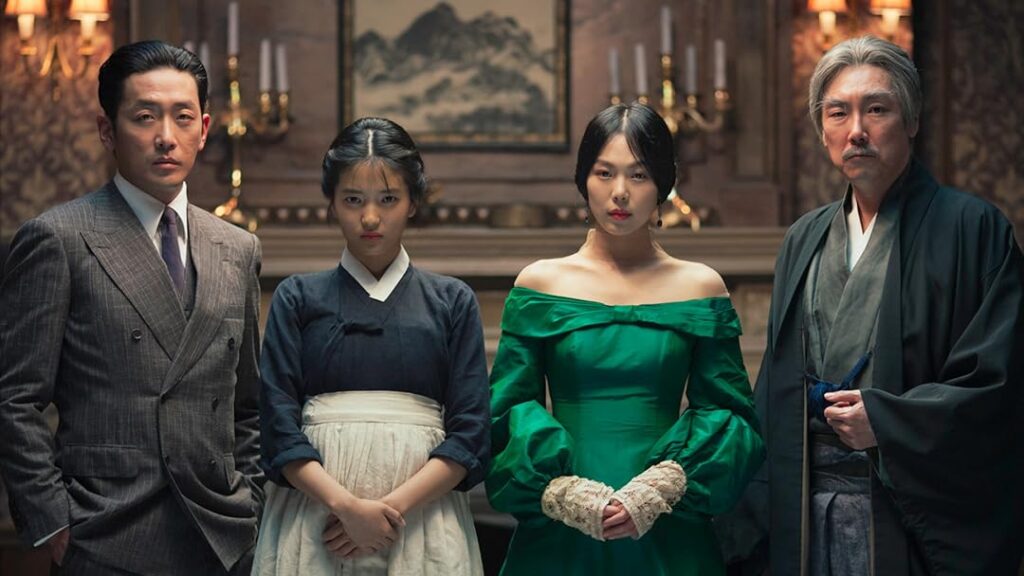
Cast from among 1,500 applicants, Kim Tae-Ri plays Sookee, a young thief, who is hired as a maid by a Japanese heiress in order to swindle her with the help of a con artist. Here, Park Chan-wook explores the themes of manipulation, desire, and power.
Sympathy for Mr. Vengeance, the most brutal
In this 2002 feature film, a woman, unjustly imprisoned for years, is released from prison and meticulously plots her revenge against the man responsible for her downfall. The first installment of Park Chan-Wook’s revenge trilogy, the film offers a cold and realistic vision of revenge.
Lady Vengeance, the most baroque
Released in 2005, this final installment of the revenge trilogy tells the story of a woman who has also just been released from prison and is planning a methodical revenge.
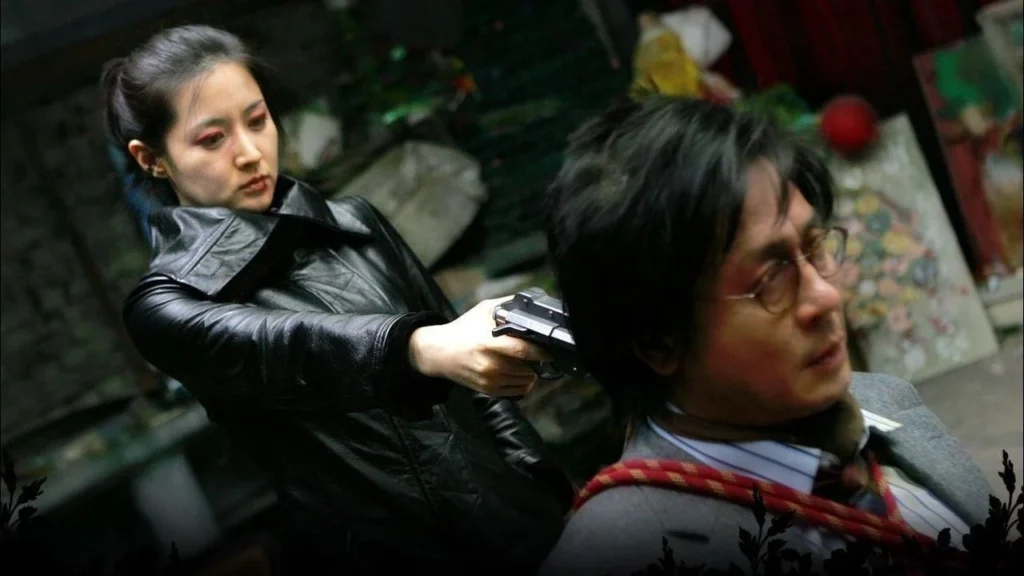
With its highly stylized, almost baroque visual style, the film once again explores themes such as justice and redemption.
Decision to Leave, the most melancholic
Much more recent, Decision to Leave earned the South Korean director the Best Director Award at Cannes in 2022.
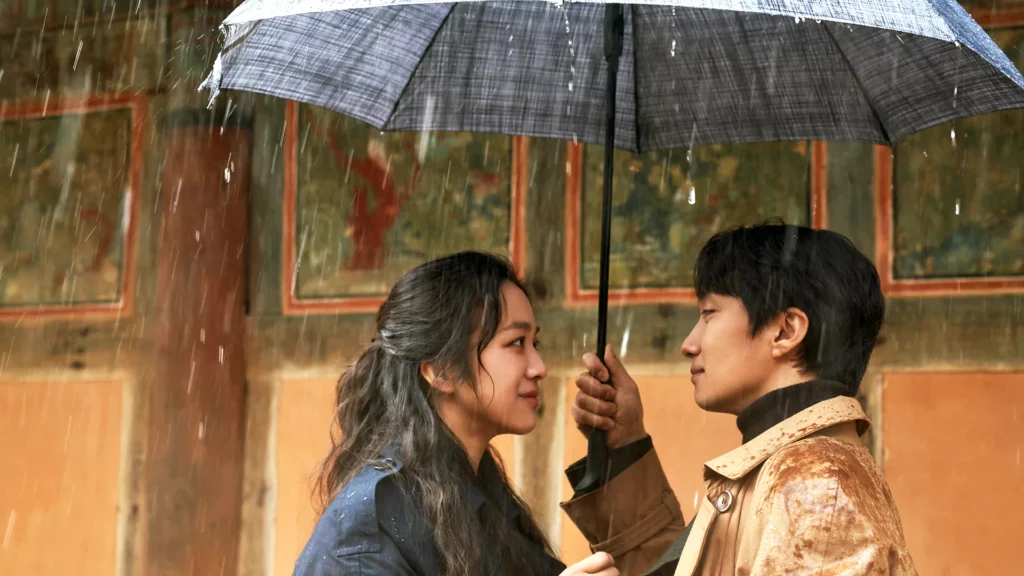
In this romantic thriller full of subtlety, a police officer investigates the suspicious death of a man and becomes interested in his wife… who quickly becomes both a suspect and an object of fascination. Here, a criminal investigation turns into a troubled and obsessive love story.
BONUS: No Other Choice, the most recent
A social satire on the world of work and the spirit of competition released in 2026, No Other Choice (Aucun Autre Choix in French) follows You Man-su, an executive at a paper factory who is fulfilled in his professional, romantic, and family life until the day he is fired. Eager to maintain his social status, he has no choice but to eliminate his competitors one by one.
Read more > Who is Iris Knobloch, President of the Cannes Film Festival?
Featured photo: © Cannes Film Festival