

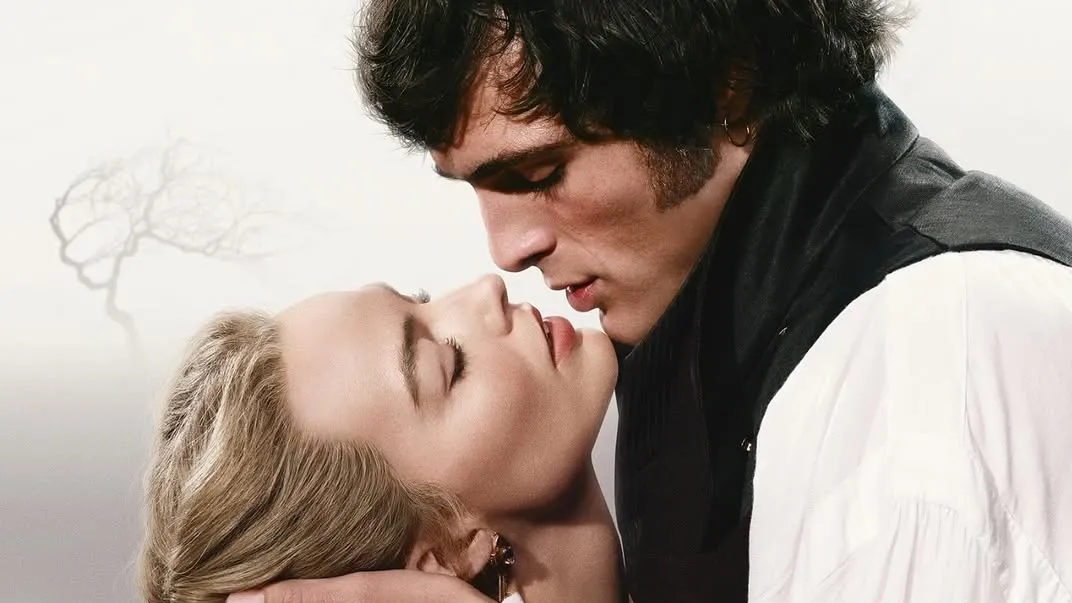




Nearly 180 years after its initial release, Emily Brontë’s *Wuthering Heights* returned to the big screen in 2026 and is expected to be a major talking point at the 2027 Oscars. Both adored and criticized, Emerald Fennell’s highly publicized adaptation of Wuthering Heights has achieved box office success, driven by the iconic performances of Margot Robbie and Jacob Elordi.
Wuthering Heights, published in 1847, is Emily Brontë’s only novel, written under the pseudonym Ellis Bell. Before this work, Emily, who had primarily published poetry, led a quiet life in Yorkshire with her sisters Charlotte and Anne, who were also writers.
The new adaptation by Emerald Fennell, who previously directed Saltburn (2023), takes on a unique flavor against the backdrop of the Dark Romance literary trend, the return of sensuality to cinema, and the censorship of major works in the United States—a challenge the original novel has already faced—since Donald Trump’s second term began in January 2025.
A twisted love story… and one of hate
A seminal work of Gothic fiction, the novel tells the story of the tragic and destructive obsession between Heathcliff and Catherine Earnshaw in the wild moors of Yorkshire. A foundling from hard-working Liverpool, taken in by the impoverished aristocrats, the Earnshaws, Heathcliff and his intense love for Catherine, the family’s daughter, clash with social barriers when she marries the refined Edgar Linton in order to maintain a certain standard of living. Humiliated and wounded, he disappears and then returns, rich and determined to seek revenge. The complex narrative, woven from interwoven stories, traces how passion—intertwined with hatred, revenge, and social class—affects two generations of the families—the Earnshaws and the Lintons.

Upon its release, the novel was met with hostility by Victorian critics,who labeled it “crude” or “immoral”, with some contemporaries shocked by the brutality of the characters and the emotions depicted. But over time, *Wuthering Heights* has been reevaluated as a literary masterpiece, combining poetic power, emotional intensity, and a profound exploration of human passions.
Wuthering Heights Beyond Time
While Emily Brontë’s novel continues to fascinate nearly 180 years after its publication, *Wuthering Heights* has been adapted for the big and small screens some fifteen times. As early as 1939, William Wyler’s *Wuthering Heights* presented a romantic, Hollywood-style take on the classic. In 2011, it was Andrea Arnold’s turn to offer a rawer, more naturalistic interpretation.
Emily Brontë’s work has also made its mark in the music world with Kate Bush’s song Wuthering Heights. The iconic track from the Netflix series Stranger Things is also the one that launched the pop star’s career, against her record label’s advice. The singer reportedly wrote her hit just a few hours after watching the 1991 film adaptation. In the highly stylized music video, she appears as the ghost of the novel’s heroine, dressed in a scarlet outfit—a detail that has become an essential part of her fans’ attire on Kate Bush Day (July 30, her birthday as well as the novelist’s), also known as The Most Wuthering Heights Day Ever.
After decades of adaptations, the book found a new incarnation in 2026 with Wuthering Heights, directed and written by Emerald Fennell, an actress well-known to fans of the series The Crown (for her role as Camilla) who stepped behind the camera with Promising Young Woman (2020) and, most notably, Saltburn (2023).
The sets, costumes, and soundtrack (featuring music by Charli XCX) give the film an almost glamorous aesthetic, designed to appeal to the TikTok generation and could very well lead to Oscar wins in 2027.
Is the Marketing Too “Dark Romance”?
The marketing surrounding the film has been massive: global campaigns, Margot Robbie appearing in spectacular 19th-century—or even 18th-century—inspired outfits following the method dressing approach, both in the city and at prestigious premieres (such as at the Grand Rex in Paris), star interviews, teasers and trailers widely shared online, and even promotional strategies playing on the main duo’s “fusional” friendship to create buzz.
On social media, the phenomenon even gave rise to its own “moorecore” micro-trend, a nod to the cinematic eroticism of the 1990s and 2000s. The last time an aesthetic was this powerful was in 2023 with Barbie, again starring Margot Robbie.
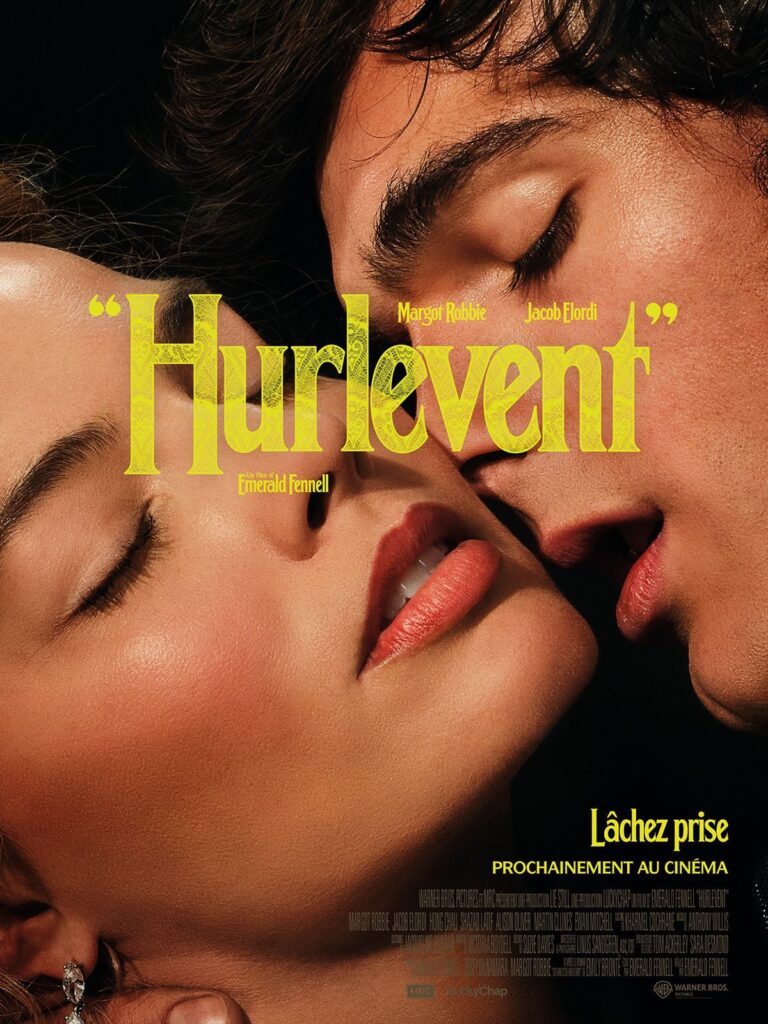
But, as is often the case with highly publicized films starring popular actors, the reception has been mixed and has sparked a series of controversies. Among critics, the film has received a wide range of reviews. Some praise the visual boldness and the energy of the performances, accepting the differences between the book and the film as a matter of creative freedom and modern reinterpretation.
Others criticize the adaptation for being too watered-down, sexualized, and far removed from the book, deemed more seductive than emotionally profound. Criticisms specifically point to the lack of historical or narrative fidelity, a failure to capture the novel’s psychological violence, a production style overly focused on costumes and the beauty of the visuals, and a marketing approach deemed too tailored for social media, with scenes designed to go viral. Not to mention the whitewashing the film faces, as the novelist envisioned her cruel hero as a person of color—more specifically, as a “dark-skinned Gypsy.”
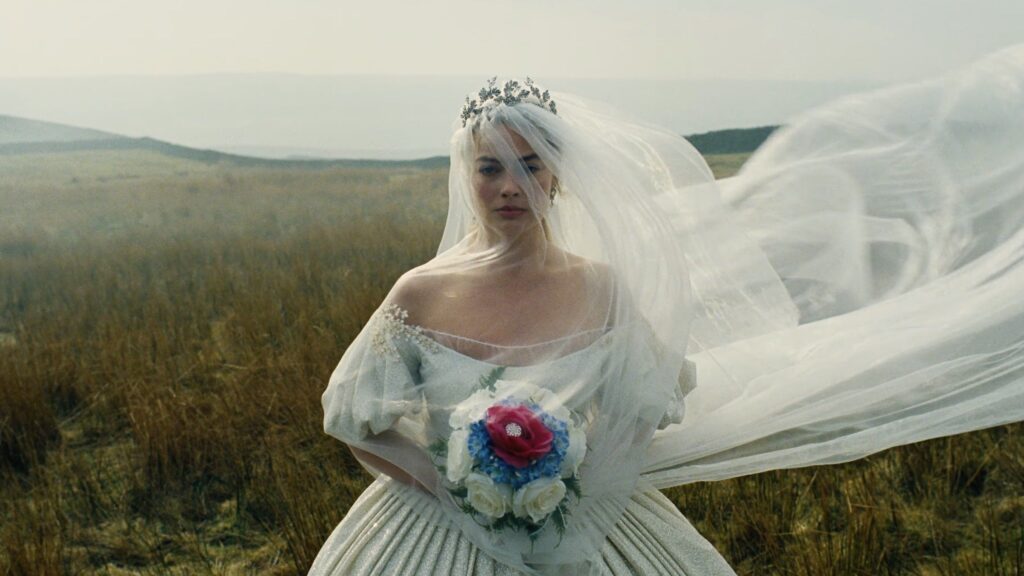
At the box office, Wuthering Heights is a hit nonetheless, grossing $34 million in its first weekend in the United States alone. A symbol fora literary work that, since Donald Trump’s reelection in 2025 and the rise of conservatism, has beencensored or even banned in many U.S. states due to its violence, its implied sexuality, its complex—and sometimes immoral—human relationships, and its critique of the social norms of the time.
Nevertheless, the film seems to be part of the trend toward a resurgence of erotic films after a decade of lean times. In fact, in March 2024, producer Stephen Follows noted a 40% decline in sexual content in films compared to the 2000s, the genre’s golden age alongside the 1990s (Basic Instinct, Cruel Intentions…). The post-#MeToo formalization of the role of intimacy coordinators in Hollywood may partly explain this cultural shift, as may the emergence of female directors offering a different vision of romantic desire for a female audience—the rise of the female gaze.
Pending possible confirmation at the 2027 Oscars, the film has been a resounding success, driven by a predominantly female audience. As of March 22, 2026, Wuthering Heights had grossed $83 million in the United States and Canada, $151 million in other countries, for a total of $234 million. For its part, Warner Bros., with its $80 million budget, is rubbing its hands with glee.
Read also : The 10 Most Anticipated Movies of 2026
Featured photo : DR