

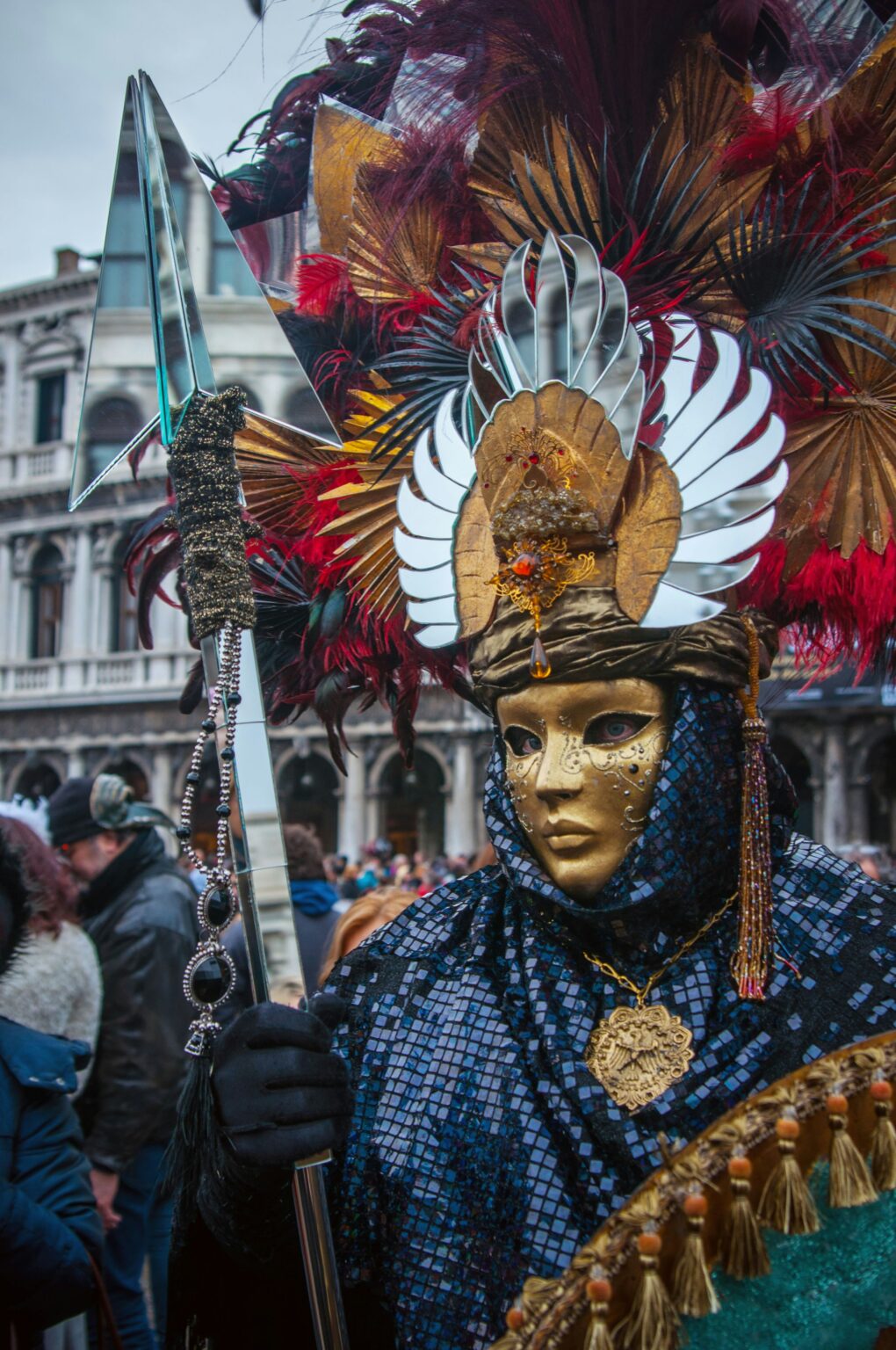




The Venice Carnival transforms every winter the city on the water into a living theater, where masks and costumes mix history, mystery and festive sparkle. From its medieval origins to the canals today, the festival reveals centuries-old traditions and sumptuous shows.
While winter covers Venice with its last cold coat and the canals sparkle under the low sun, a national event warms the city and hearts: the famous Carnival. Scheduled from February 7 to 17, 2026, this celebration makes the city of the Doges radiate around the world. This festival, symbol of the Serenissime, finds its origins in the 11th century, with the first official mention in 1094, when an edict of the doge Vitale Falier authorized public celebrations before Lent.
A few decades later, in 1269, the Venetian Senate established Mardi Gras as a public holiday and allowed masks and costumes to be worn, laying the foundation for a unique social ritual. But this period was not just a reason to party. It allowed all the classes to meet and temporarily suspend hierarchies. Nobles, merchants and artisans mingled behind the masks, opting for anonymity and freedom of expression.
Mix and bypass social hierarchies
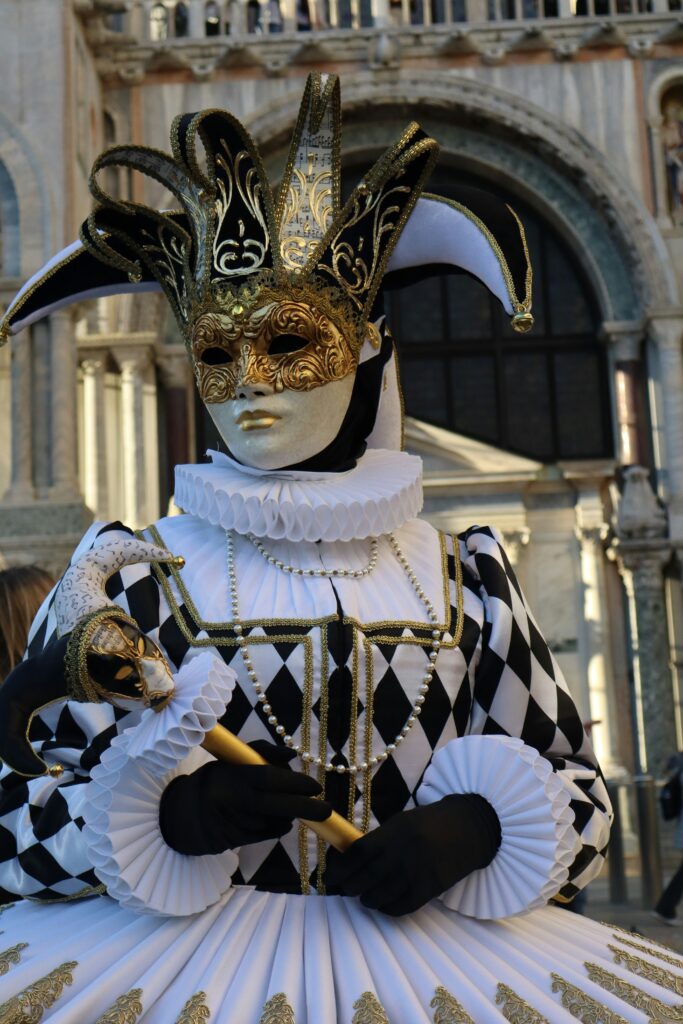
Over the centuries, costumes became more elaborate, incorporating figures from the Commedia dell’Arte such as Arlequin, Colombina, and Pantalone, and iconic masks such as the bauta (a white Larva mask covering the entire face but with a square jaw that allows the wearer to speak, eat, and drink, often worn with a tricorn hat and black cape) or the moretta – from the Italian “moro,” meaning dark (a small round black velvet mask with two large eye holes). Not to mention the crow’s beak mask, directly inspired by the infamous attire of the 14th-century plague doctor (“Medico della Peste”), which has become the symbol of the Venice Carnival.
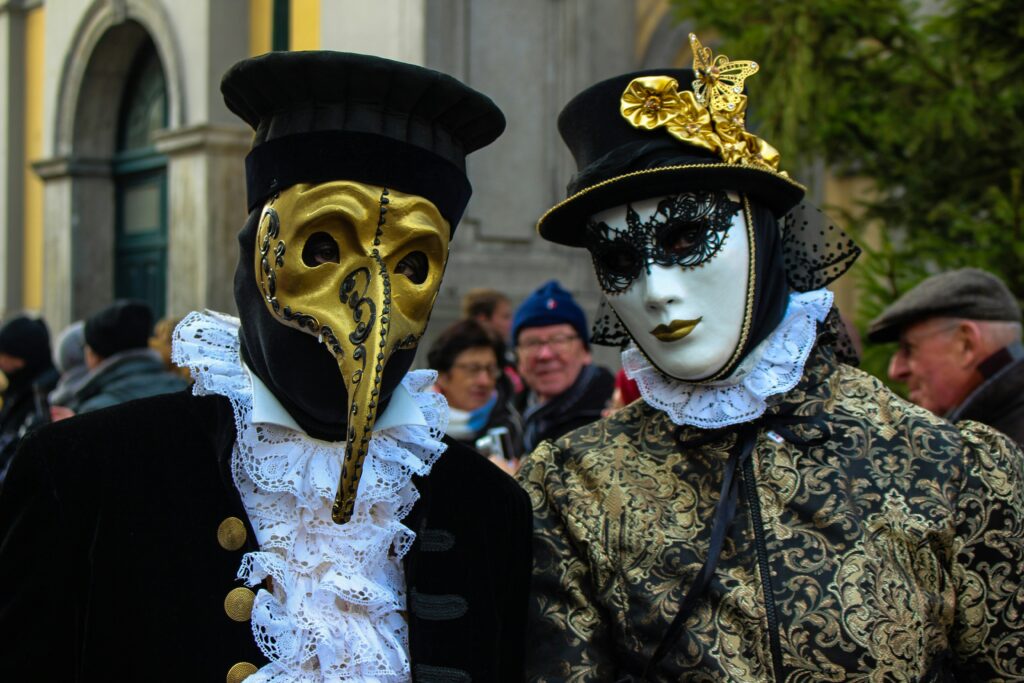
In the XVIIIth century, a period marked by libertinism and the escapades of Giacomo di Casanova, the Carnival reached its climax with sumptuous balls, operas and various public shows. The European aristocracy becomes passionate about the event, making Venice a cultural showcase in the Baroque era.
The tradition came to an end in 1797, when Napoleon banned the festivities to avoid any social unrest. Under the Austrian domination in the 19th century, the festivals almost completely disappear. It was only from the 1970s, thanks to students and cultural associations, that the tradition was reborn. It is officially restored in the early 1980s, anchoring the celebration in the modern era without changing its ancestral codes and its sumptuous atmosphere of yesteryear.
The party today
The festivities always begin with an opening show: the Flight of the Angel. Suspended by a cable above the crowd, a figure descends from the campanile of Saint-Marc to Saint-Marc square. Traditionally, it was a chosen person in the city who inaugurated the Carnival. Today, this role is often entrusted to a celebrity or media personality.
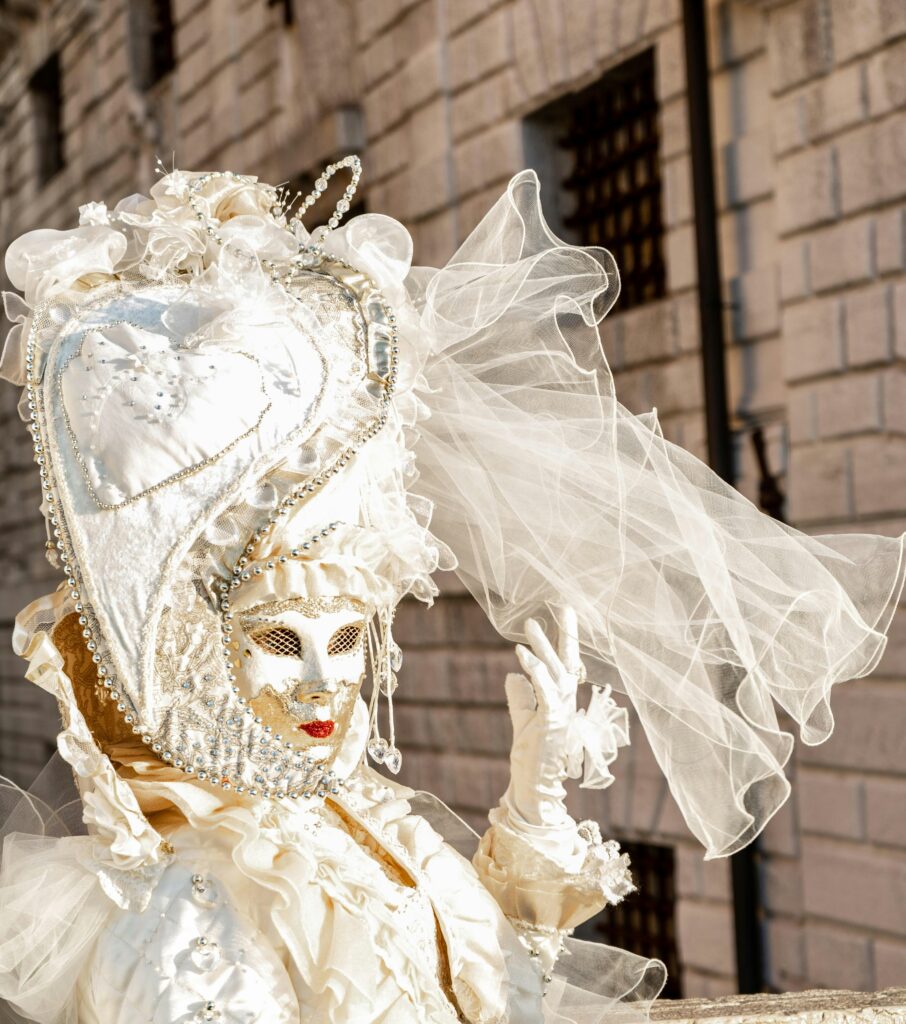
Another highlight is the Festa delle Marie (Feast of Mary) which commemorates the liberation of twelve young Venetian women abducted by pirates in the Middle Ages. In our time, young girls dressed in traditional dresses roam the city, alongside parades, shows and private balls organized in the surrounding palaces.
Parades on the canals, with decorated gondolas and flamboyant costumes, make the carnival an event both on land and on water. Mask competitions also reward creativity.
Considerable revenues for Venice
Today, the Carnival takes place over about ten days before Ash Wednesday, culminating on Fat Tuesday. The streets and canals are filled with thousands of spectators and tourists, including more than 150,000 on the first weekend. The event thus attracts a few million visitors per edition.
This popularity generates considerable revenue for Venice, up to 70 million euros spent by 567,000 foreign visitors on average according to the municipality. But as the city is mistreated by decades of over-tourism and needs to be preserved due to its fragile environment, the issue of tourist overcrowding remains a priority for the locals. Covid has also allowed residents to reclaim the event without travelers.
The Venice Carnival remains a unique blend of history, spectacle and culture, a celebration where age-old masks, costumes and traditions continue to captivate visitors from around the world, perpetuating its festive, elegant and inclusive spirit.
Read also : The little story … of the Parisian bistro
Featured photo : Unsplash