

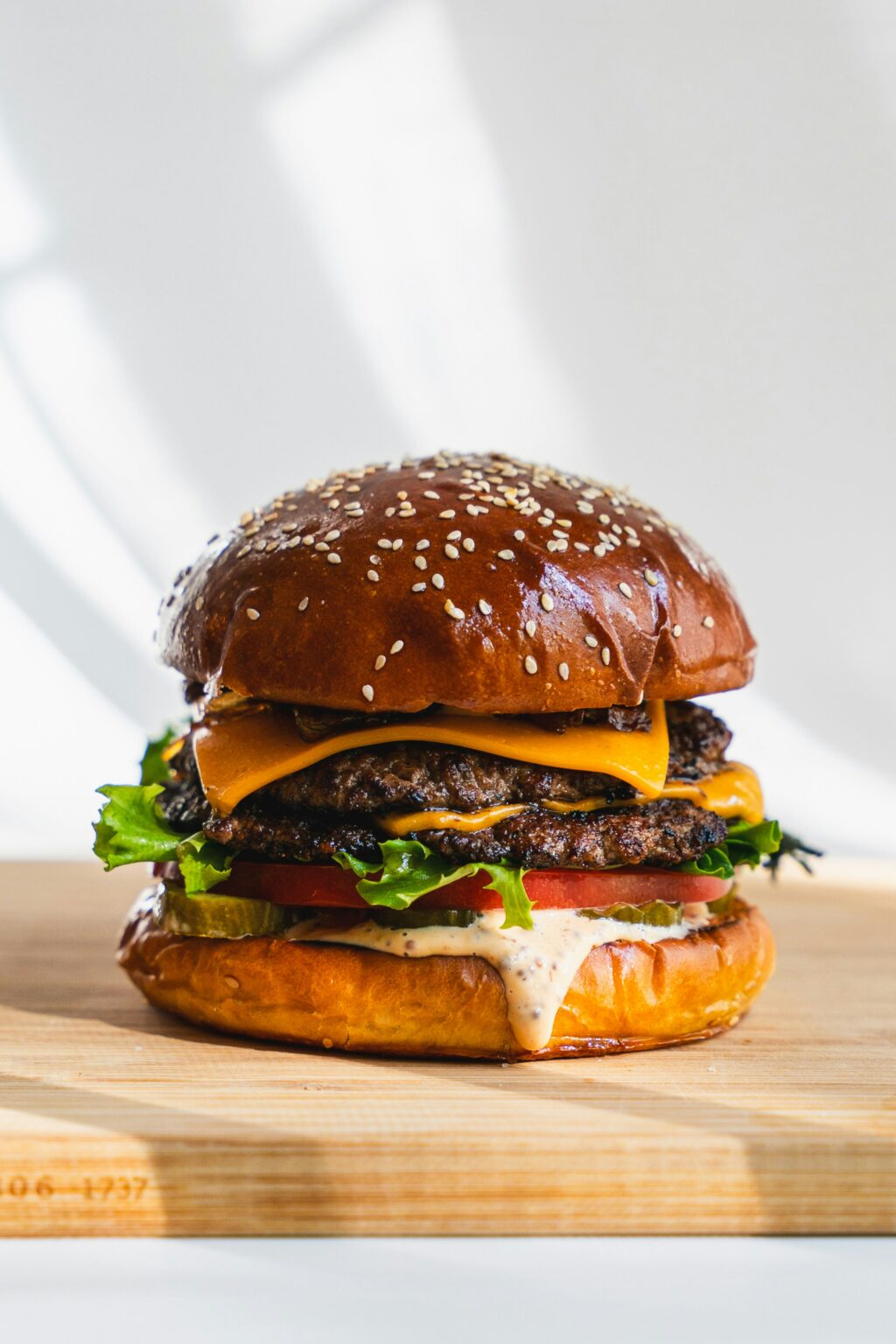




From the Hamburg steak of the 19th century in Hamburg to global franchises such as McDonald’s, in just a few decades the burger has become a symbol of fast food and a universal dish. Now available in everything from fast food to fine dining, tens of billions of burgers are consumed worldwide every year.
Among pizzas, sushi, and fried chicken, one dish clearly stands out: the burger. This hot sandwich, consisting of a round bun cut in half and filled with protein, cheese, sauce, and raw vegetables, was the most ordered item on Uber Eats in 2025. A flagship fast-food product, it can be found everywhere: from small neighborhood shops to restaurant giants, not to mention gourmet restaurants. In just a few decades, the burger has conquered the world.
In the early 19th century, the inhabitants of Hamburg, Germany, ate Hamburg steak, a steak made from ground beef, sometimes smoked or salted. Popular with sailors for its shelf life, it crossed the Atlantic with German immigrants in the 1840s, arriving in New York, where it found its way onto menus… but often without bread, as a simple dish on a plate.
The fast-food boom
Several restaurateurs claim to have invented the modern burger: two slices of bread enclosing a grilled hamburger patty, easy to eat by hand. Among them were the Menches brothers, Charlie Nagreen, Louis Lassen, and Fletcher Davis.
In 1921, White Castle opened the first chain specializing in hamburgers, democratizing the dish with uniform portions, a fixed recipe, and affordable prices for the working class.
Two decades later, Richard and Maurice McDonald revolutionized the concept. Their restaurant proudly displayed “hamburgers” on the front window, with a limited menu, flame-grilled steaks, and simple packaging. Customers placed their orders at the counter and took their food away with them. Ray Kroc transformed McDonald’s into a global franchise in 1955, helping to make the burger a symbol of the American way of life.

The burger also appealed to more upscale circles. Hamburger Hamlet, founded in 1950 in Los Angeles, attracted celebrities such as Dean Martin, Frank Sinatra, and Elizabeth Taylor to its comfortable setting. According to urban legend, in the 1950s and 1960s, some Hollywood stars could even order a “special” burger in fancy restaurants, proof that the sandwich already had a special aura.
Europe experienced a wave of gradual expansion. After World War II, American soldiers introduced the burger to the population, who initially perceived it as an “exotic” product.
In 1961, the French, already fond of steak and fries, as Roland Barthes shows in his seminal sociological work, Mythologies, discovered the British chain Wimpy. Located in the 2nd arrondissement of Paris, it was the first hamburger restaurant to open in the country. Others followed before the chain finally packed up and left at the end of the 1960s. The very first French McDonald’s opened its doors in 1972 in the Paris region as a franchise. The chain quickly gained ground, notably by buying up struggling Parisian brasseries. In the 1980s, McDonald’s expanded rapidly in France, Germany, the United Kingdom, Italy, Spain, and the Nordic countries. After the major capitals, the American brand set out to conquer medium-sized cities, shopping centers, and suburban areas.
In the decade from 1980 to 1990, a period marked by strong geographical expansion and aggressive burger marketing, the major chains were quick to follow suit in Europe, including Burger King, Wendy’s, and KFC. The burger crossed borders and continents. A symbol of modern, convivial, and easy cuisine, the burger soon became, despite itself, the embodiment of cultural globalization and junk food. In 1999, anti-globalization activists and farmers, including José Bové, dismantled a McDonald’s under construction in Millau (Aveyron). In response to health and environmental concerns, the brand changed its offering and image, notably swapping its red and yellow logo for a green one in 2009 for certain European markets, including France.
An appealing diversification
In the 2010s, burgers made their way onto the table in a gourmet version. Artisanal bread, mature cheeses, high-quality meat… So, in 2012, Steve Burggraf, Alexandre Auriac, and Guillaume Pagliano founded the Big Fernand brand. The first location, on the Faubourg Poissonnière, already set the tone: an offbeat style and a distinctly French spirit with its slightly provocative slogan, “Stop eating burgers, eat Hamburgés!” This brand, which has become a high-end franchise, shows that burgers can be chic and promote local products. At the same time, Anthony Darré and Louis Frack, two students passionate about food culture, had the idea of promoting organic farming in a different way with the first 100% organic fast food chain: Bio Burger.
Since then, Michelin-starred chefs such as Daniel Boulud have been reinventing it to appeal to a young clientele who want to sit down and enjoy a meal, with it appearing on the menu of his restaurant DB Bistro Moderne in New York since 1993. Furthermore, playing on the nostalgia of McDonald’s frequented during childhood, the burger has found its way onto the menus of bistros and most restaurants.
In the 2010s, it wasn’t all about premiumization: Burger King, the American chain that left France fifteen years earlier due to low profitability, made a strong comeback.
The burger also comes in many versions: chicken, fish, “smash” meat (very flattened, editor’s note), vegetarian steak, or seasonal vegetables. As a result, it appeals to an ever-wider audience and crosses tastes and diets.
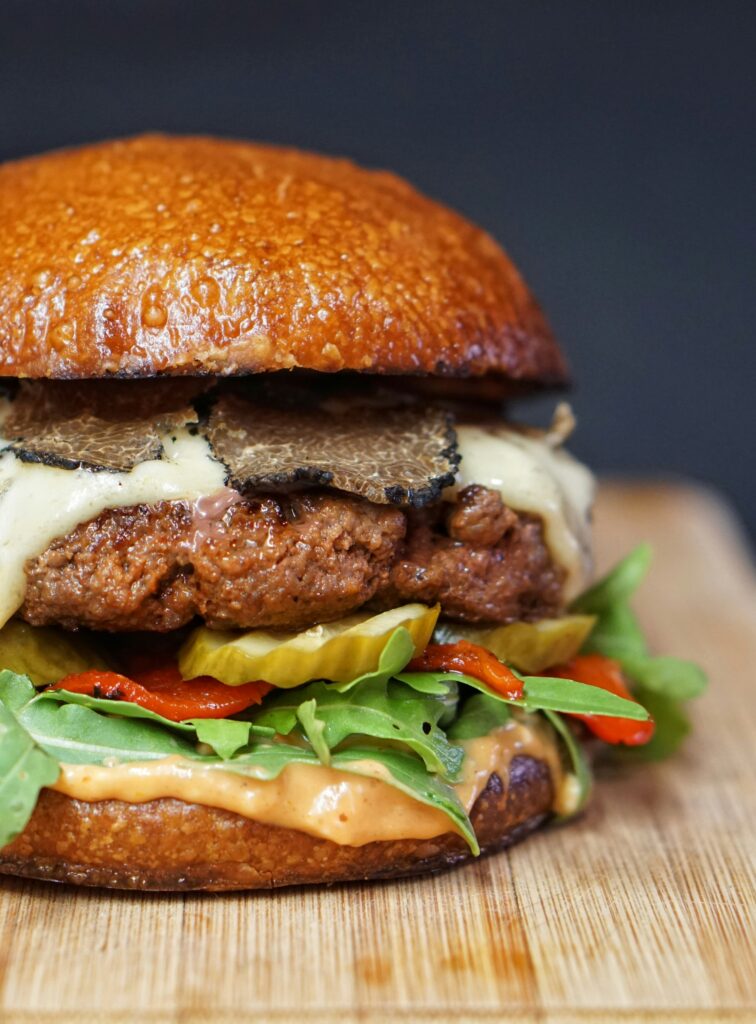
According to several sources, 75 to 90 billion burgers are consumed each year worldwide. The global hamburger market is estimated at nearly 760 billion dollars by 2026, with sustained growth expected at around 7.9 percent per year through 2035.
Read also : The little story … of the Parisian bistro
Featured photo : Unsplash