

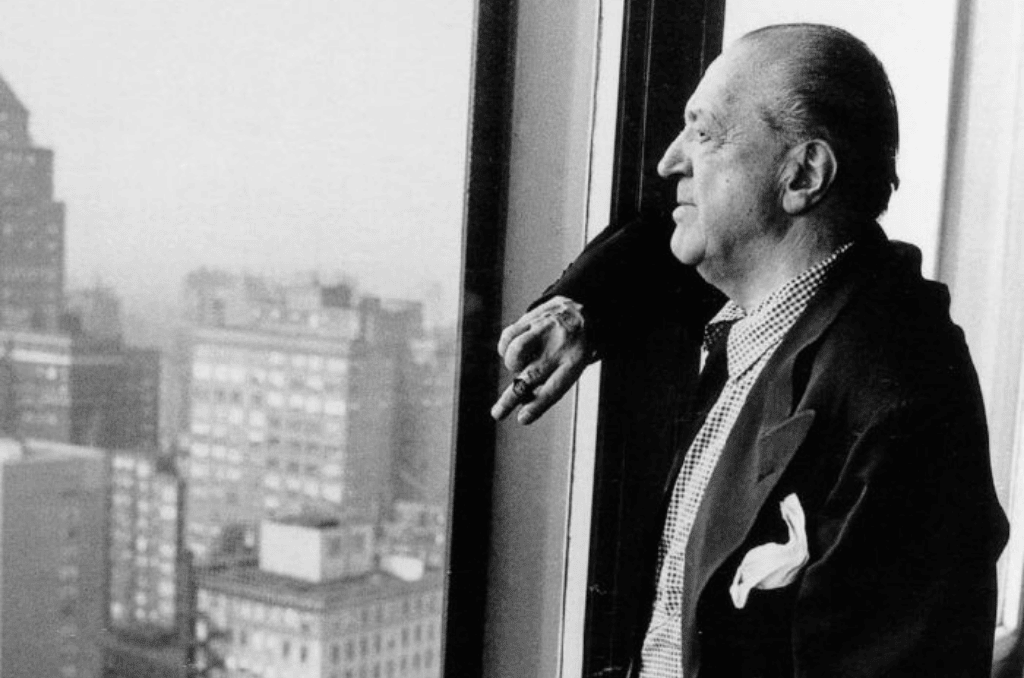




Ludwig Mies van der Rohe, a leading figure in 20th-century architecture whose name continues to resonate with astonishing modernity, was born 140 years ago. In contrast to the triumphant ornamentation of his era, “Mies” redefined interior design and luxury through simplicity, structural rigor, and an almost spiritual quest for the essential. From Berlin to Chicago, a look back at ten masterpieces by an architect who loved steel.
“Less is more” – a life dedicated to the essential
Mies said: “God is in the details” (“God is in the details”). His creations—whether buildings, houses, or furniture—are undoubtedly the most tangible proof of this.
Ludwig Mies van der Rohe remains one of the most significant figures in modern architecture. Born in Aachen in 1886, the son of a stonemason, he retained this almost mystical respect for materials throughout his life. For him, luxury lay in the quality of a joint, in the nobility of a raw material, and in the fluidity of the transition between interior and exterior. He was one of the last directors of the Bauhaus before the rise of Nazism—which forced him to emigrate to the United States in the late 1930s. There, he became director of the architecture school at the Illinois Institute of Technology (IIT) in Chicago and shaped the way we conceive of space, structure, and the relationship between interior and exterior.
For Mies, architecture had to be honest in its structure and pure in its form. His famous maxim “less is more” reflects the spirit of his approach: eliminating the unnecessary to reveal the essential. But beware, this minimalism was not synonymous with economy; his projects often cost a fortune due to the demand for perfection he imposed on workers.
His collaboration with Lilly Reich, his longtime collaborator, was essential, particularly in the 1920s and 1930s—a creative partnership long downplayed, especially regarding major projects such as the Barcelona Pavilion and its associated furniture.
Barcelona Pavilion (1928–1929) – The Manifesto of Modernism
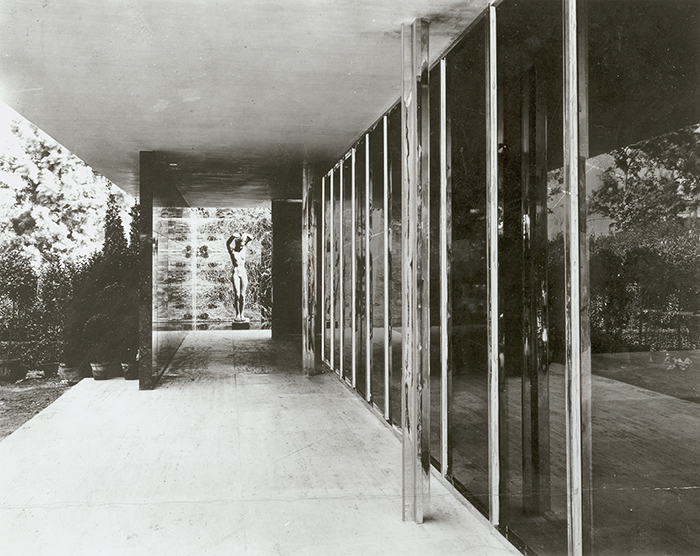
Perhaps his most instantly recognizable creation, this pavilion designed for the Barcelona International Exposition is an ode to open space, noble materials (marble, onyx, glass), and the balance of volumes. Designed in the late 1920s, the golden age of a Germany that had lost the war and was still plagued by social unrest and economic hardship, the Pavilion was intended to present a new image of the country to the world: that of a prosperous, peaceful, democratic nation at the forefront of culture. The building stood like an ancient temple on a travertine base.
A U-shaped wall delineated the southern space, which featured a large pool whose outline was defined solely by the floor slabs. On the north side, a U-shaped green marble wall bordered a patio adorned with a second, smaller pool.
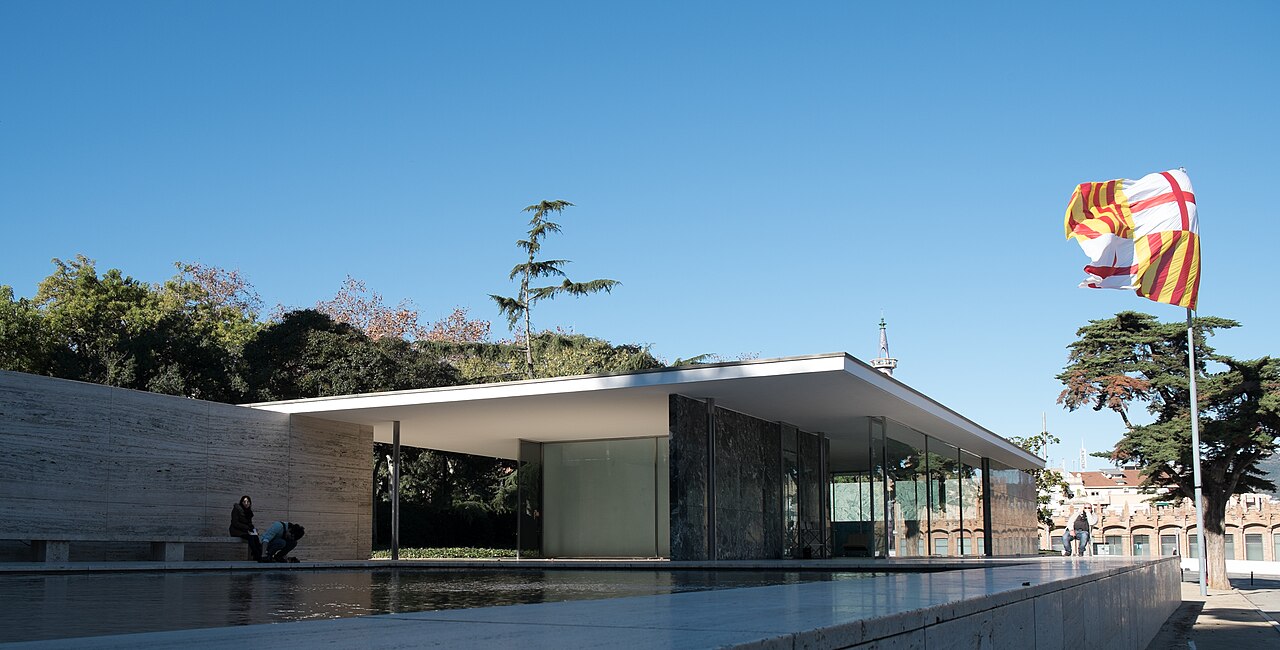
The building was dismantled at the end of the exhibition in 1930, but it left a lasting mark on history. Those responsible for its reconstruction in the 1980s sought to remain faithful to the original plans. With its limited color palette and floating planes, it is both an exercise in pure geometry and an invitation to contemplation.
A well-known anecdote: Mies and Lilly Reich designed the famous Barcelona Chair for this pavilion, which is still produced today by Knoll and has become a symbol of modern design.
Tugendhat House (1928–1930) – A Revolutionary House
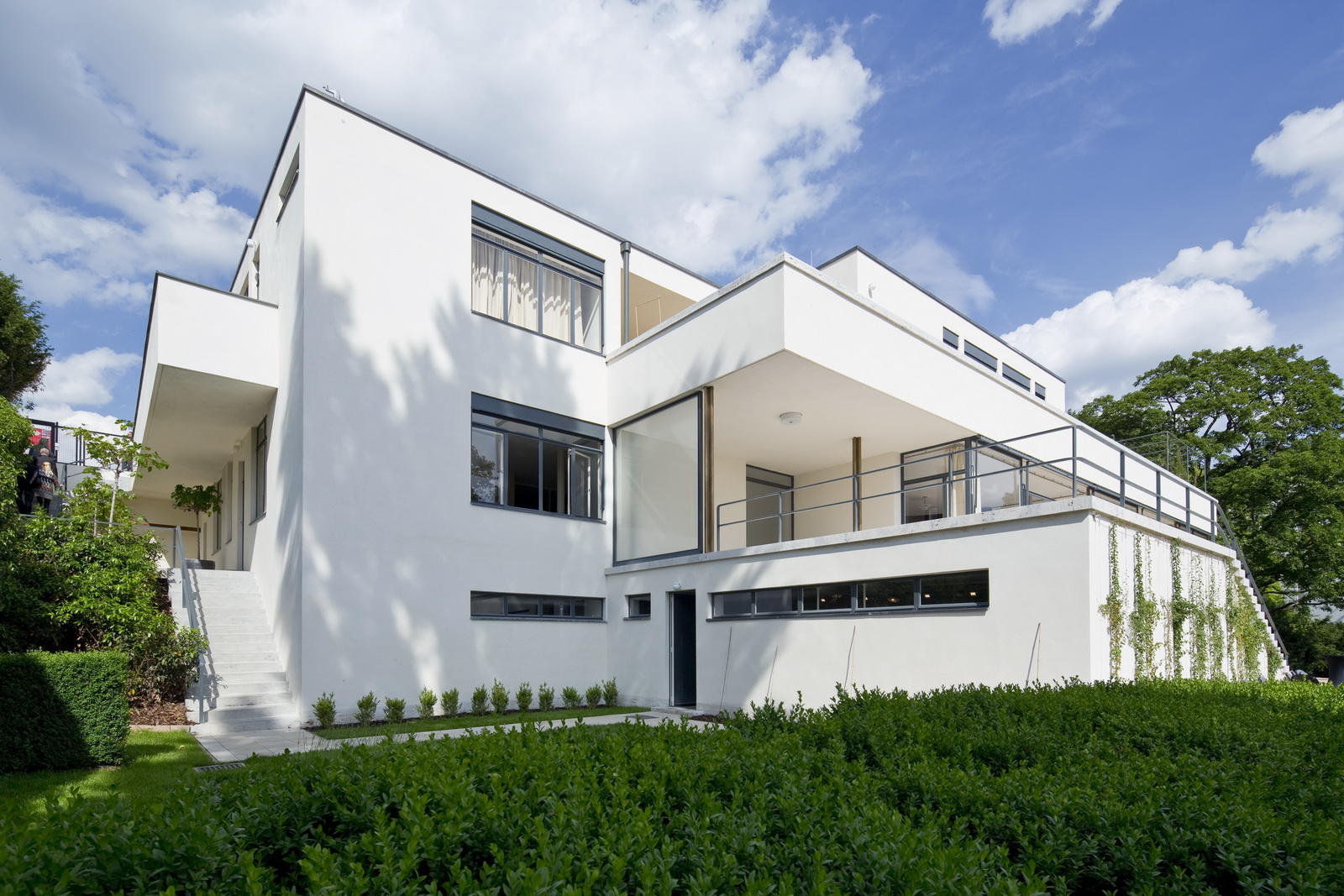
Completed in 1930 for Fritz and Greta Tugendhat in Brno, Czech Republic, this villa is one of the first examples of the industrial use of steel and concrete in a private residence. The villa is situated on a steeply sloping plot, offering an unparalleled view of Brno’s old town from the garden side. The villa’s main entrance, located on the upper floor, is shielded from outside view by a translucent glass wall that curves into a semicircle. A staircase, following the curve of the translucent glass wall, leads to the main floor of the villa.
Instead of load-bearing walls, Mies used a steel structure that allowed for an open and fluid floor plan—a concept he had already developed at the Barcelona Pavilion: the transitions between rooms are seamless, and the glass facades fully open the house to the landscape. Luxurious materials such as onyx and ebony lend an unexpected warmth to this minimalist architecture.
Farnsworth House (1941–1951) – Absolute Transparency
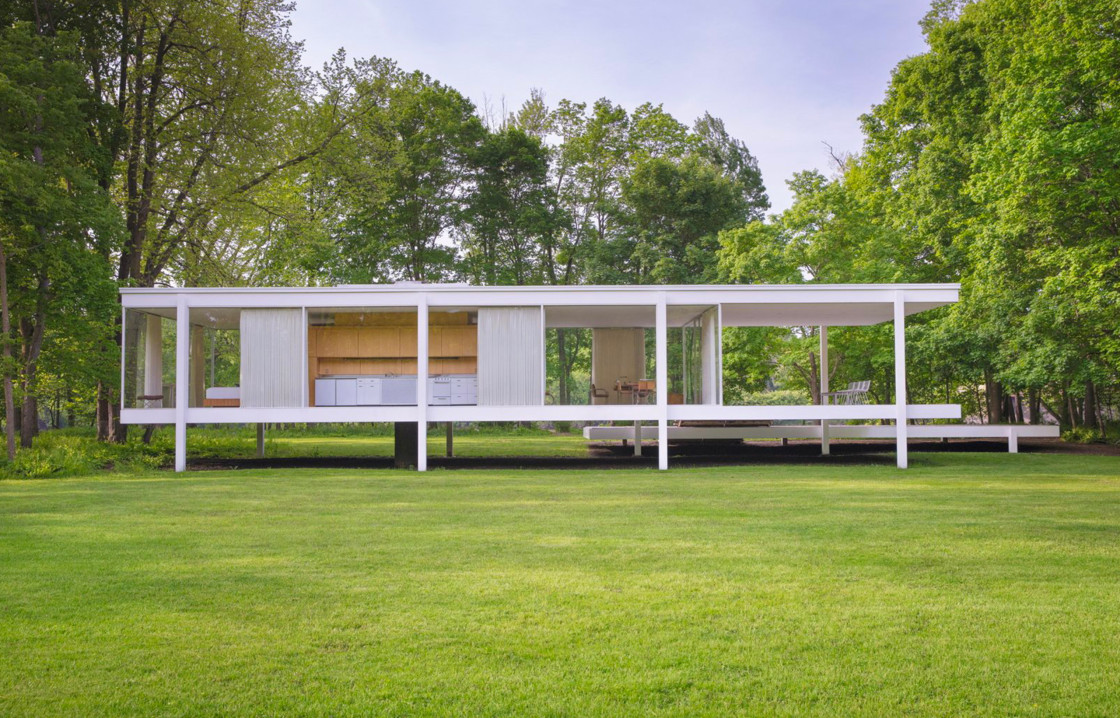
Built for Dr. Edith Farnsworth, this house located in Plano, Illinois, in the United States is a pure glass box set amidst nature, with almost no boundaries between interior and exterior. This weekend home, designed for a single occupant and situated on a wooded, secluded plot near the Fox River, is supported by eight I-beam steel columns that bear the steel roof structure as well as the floor slab. Unlike the black steel framework of the Illinois Institute of Technology (ITT), all the polished steel elements of the Farnsworth House are painted white.
Beyond its radical simplicity, the project illustrates Mies’s commitment to creating a dialogue between architecture and the environment: the steel structure elevates the house above the ground, while its transparency dissolves all partitions.
Crown Hall (1950–1956) – A Temple of Open Space
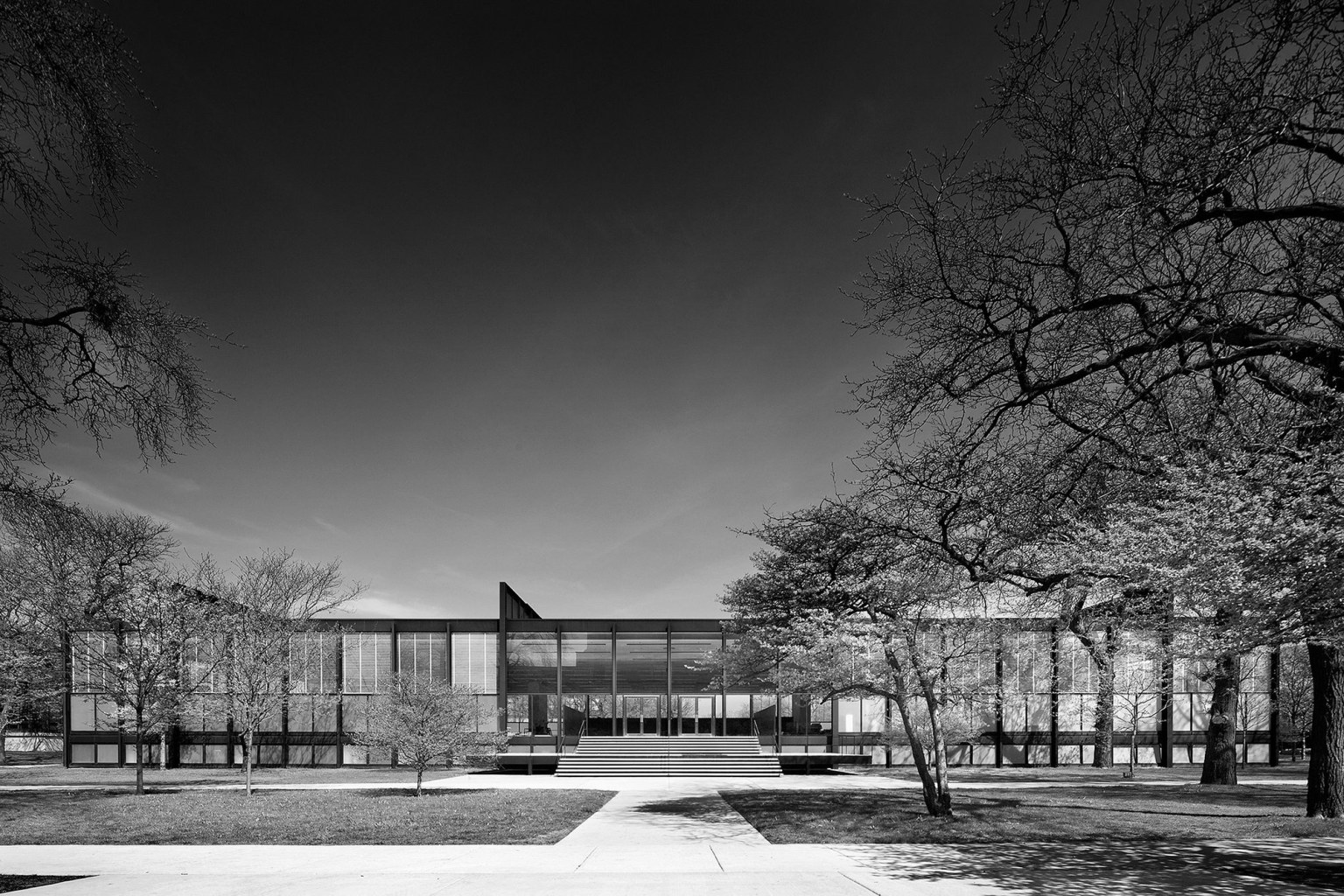
At the heart of the Illinois Institute of Technology (ITT) campus, Crown Hall (completed in 1956) is another milestone in Mies’s thinking: a single immense volume, free of any interior columns, supported solely by a steel roof structure resting on eight exterior pillars and a vast interior without load-bearing elements. Crown Hall is clad in glass on all sides to a height of 5.50 meters.
Here, space is no longer compartmentalized; it becomes a playground for light, flexibility, and education. Franz Schulze, one of Mies van der Rohe’s biographers, considered this building one of his absolute masterpieces.
Seagram Building (1954–1958) – The Icon of the Modern Skyscraper
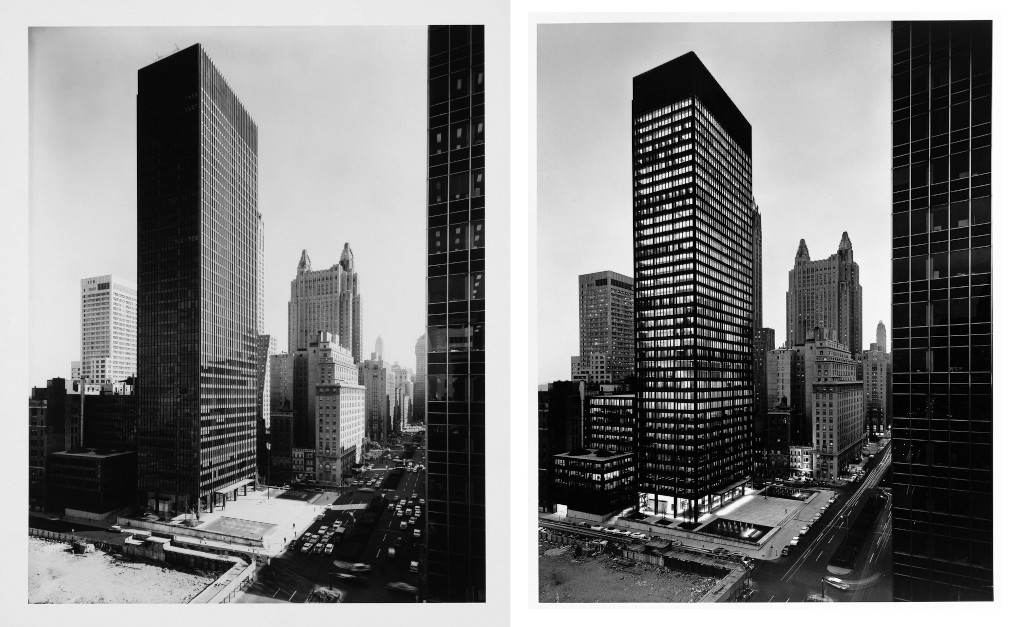
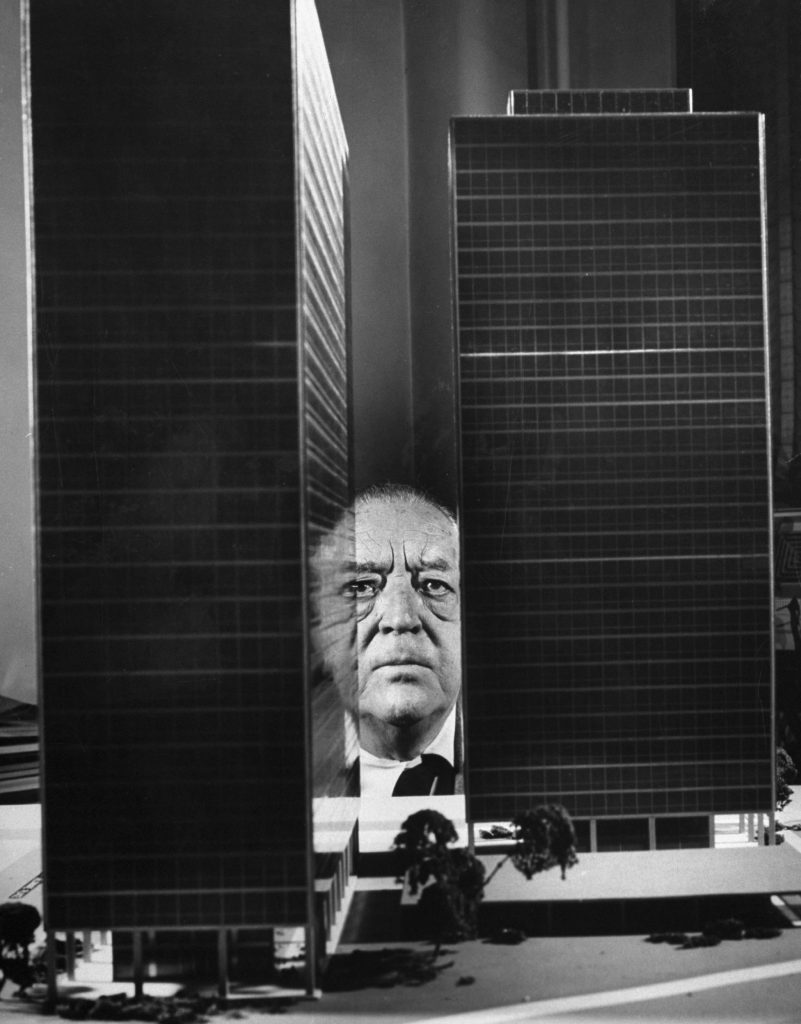
This skyscraper on Park Avenue in New York is often cited as one of the most accomplished examples of the International Style (an architectural movement that flourished worldwide from the 1920s to the late 1980s and marked the arrival of the ideas of the Modern Movement in the United States through Philip Johnson at the MoMA in New York and Ludwig Mies van der Rohe in Chicago), and has served as a model for countless office towers around the world. Mies set his skyscraper back from Park Avenue, thereby creating a vast public square, designed for the residents of my city with numerous benches and two large pools with fountains.
Its bronze façade achieves a strong visual unity thanks to the smoked-gray glass panes and, above all, the Venetian blinds, which have a limited number of positions—either raised, halfway down, or lowered. Mies added intermediate mullions, welded to the window frames, thereby accentuating the building’s verticality and contributing to the façade’s stability. This large 39-story tower was later complemented by two lower wings (two and four stories high). The Seagram Building represents the convergence of elegance, precision, and functionality in an urban setting, where every detail—down to the treatment of the joints—contributes to an impression of calm and power.
Lake Shore Drive Residential Building (1948–1951) – Two Towers, One Aesthetic
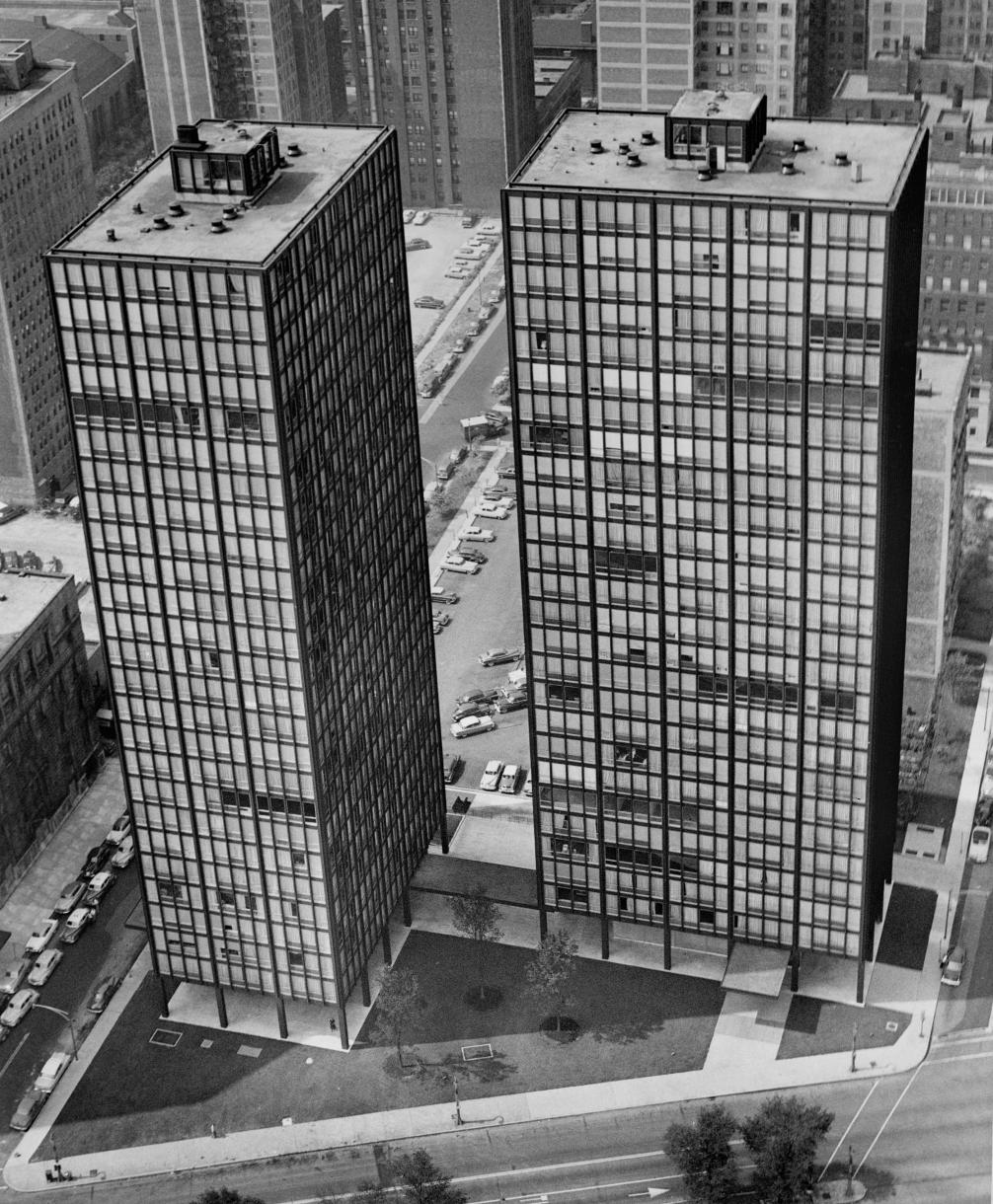
These twin residential towers in Chicago introduce into the urban landscape a clearly legible structural grid and a continuous glass-and-steel facade that would become the model for postwar modernist buildings. These were the first two residential buildings among Mies’s many skyscraper projects, which he carried out in collaboration with developer Herbert Greenwald. Since fire codes required fireproofing for the steel, Mies had to encase the load-bearing structure in 5 cm of concrete. He then clad it in metal, giving the building a facade that reflects the framework hidden behind the envelope. Furthermore, the exterior metal structure, supporting the glass rings, helped stiffen the facade and prevented the building from warping under the effects of heat or wind.
Toronto-Dominion Centre (1963–1969) – The Art of the City: Complete Edition
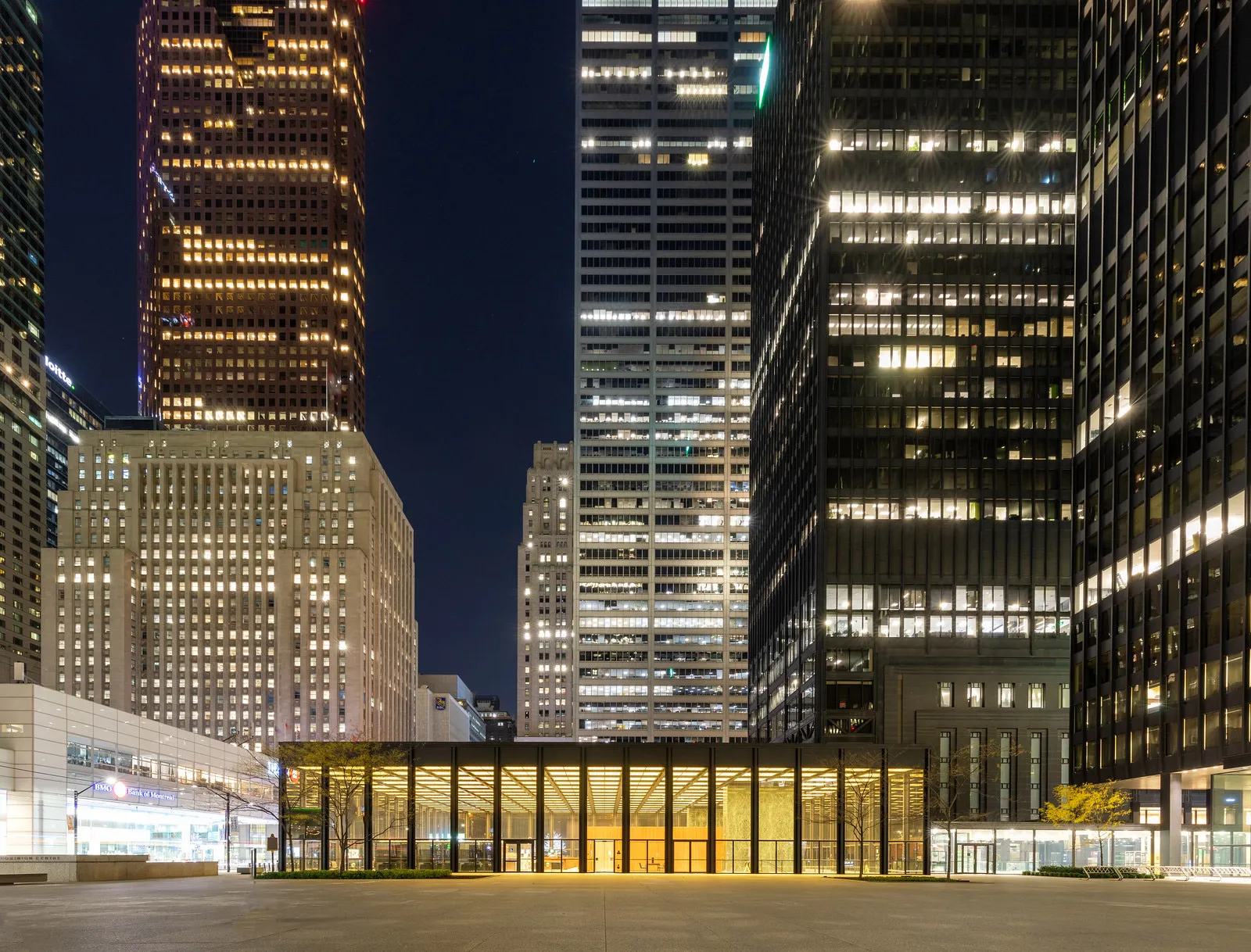
This vast complex of towers and public spaces is one of the most ambitious examples of the International Style applied to an entire city. Comprising a base topped by buildings and housing underground spaces, Mies designed all the retail spaces in the basement, beneath the base supported by pillars, and connected them to underground pedestrian walkways providing access to the public transit network. Above ground, no shops occupy the plaza; this public square situated between two immense black skyscrapers is landscaped as a park with sculptures and benches. The towers create a solid, sophisticated, and resolutely modern ensemble, which remains the heart of Toronto’s business district to this day.
Furniture as Miniature Architecture
For Mies, furniture is never merely a decorative accessory: it contributes to the space, its rhythm, and its invisible structure. Most of these pieces were designed in collaboration with Lilly Reich, an essential partner whose role is now fully recognized.
It extends the logic of the building. The same attention to detail is evident: invisible welds, precise proportions, fine materials. This consistency explains why these creations have stood the test of time without appearing dated.
The Barcelona Chair (1929)
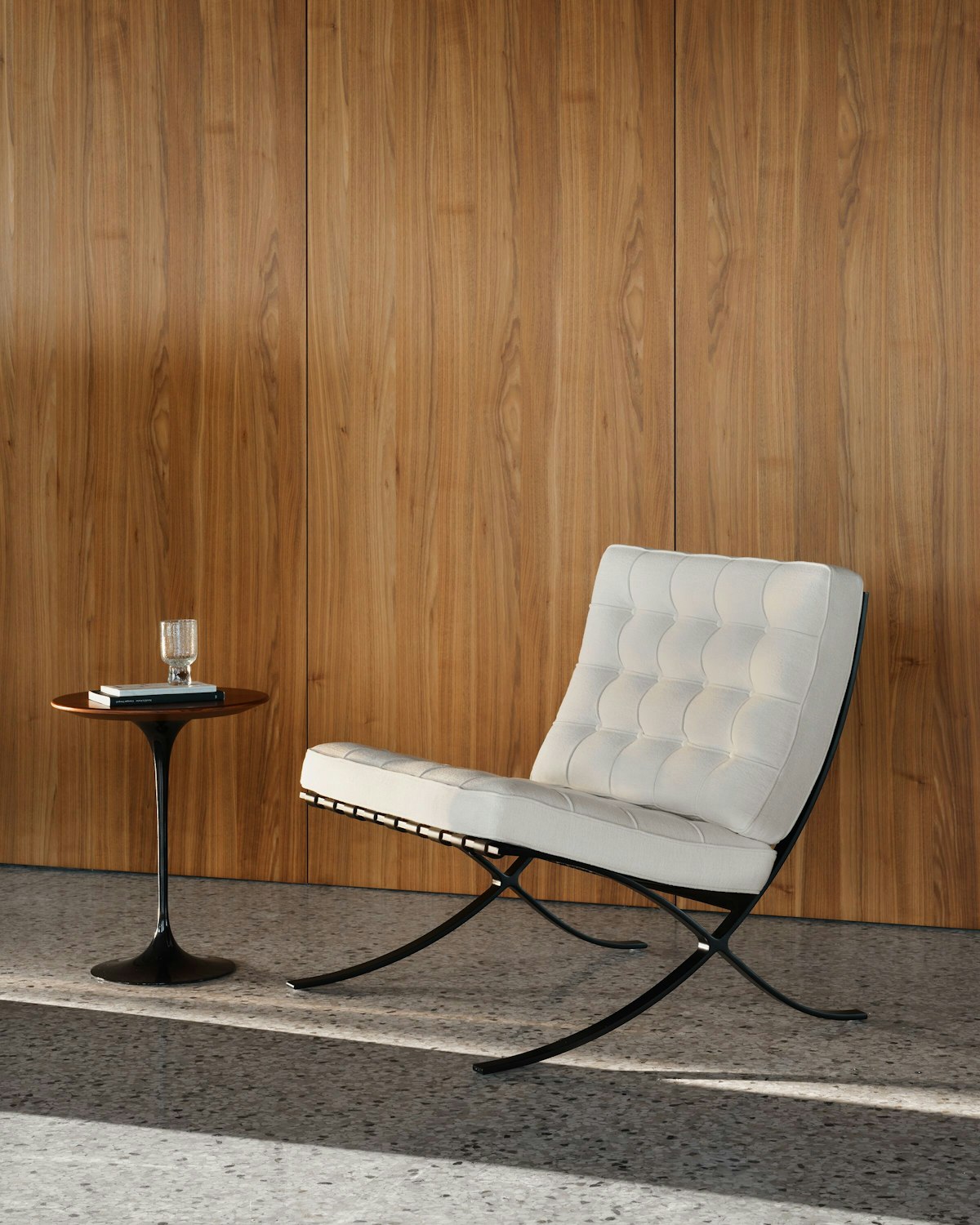
Designed for the Barcelona Pavilion at the 1929 International Exposition, the Barcelona Chair has become the archetype of modernist design. Paradoxically, this piece of apparent simplicity is technically highly complex: a polished flat steel structure forming an X, leather-upholstered cushions, proportions designed to evoke a certain solemnity. It is said to have been conceived as a ceremonial seat for the King and Queen of Spain during their visit to the pavilion.
What strikes us even today is its balance between authority and lightness. It does not seek to seduce—it asserts a calm presence. Still produced by Knoll, it remains one of the most collected pieces of the 20th century.
The Brno Chair (1930)
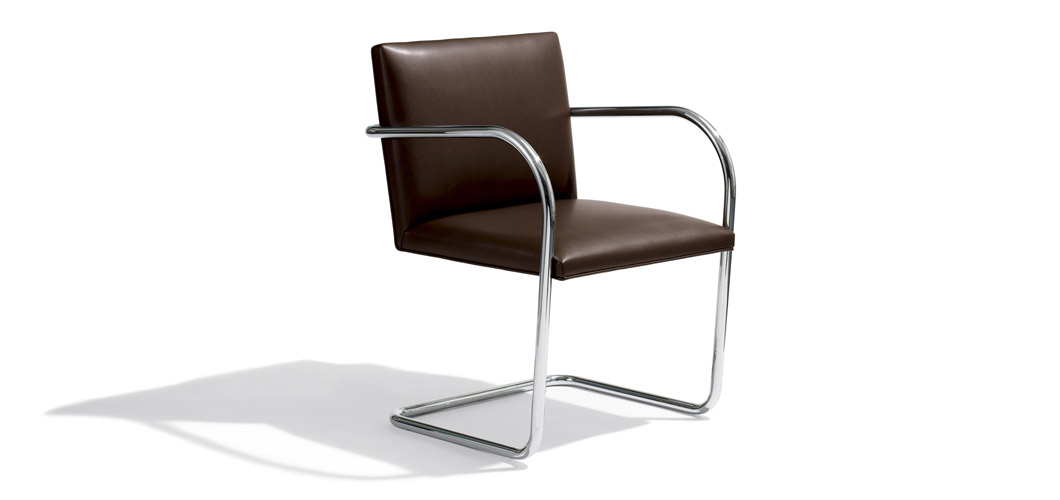
Designed for the dining room of Villa Tugendhat, the Brno Chair is a manifesto of structure.
With no rear legs, supported by a cantilevered tubular steel base, it appears to float. This technical feat is no mere flourish: it frees up visual space and complements the villa’s open floor plan. Its minimalist design does not sacrifice comfort. On the contrary, the flexibility of the metal gently absorbs the body’s movement. Here again, Mies and Lilly Reich demonstrate that elegance can arise from technical constraints.
The Barcelona Daybed (1930)
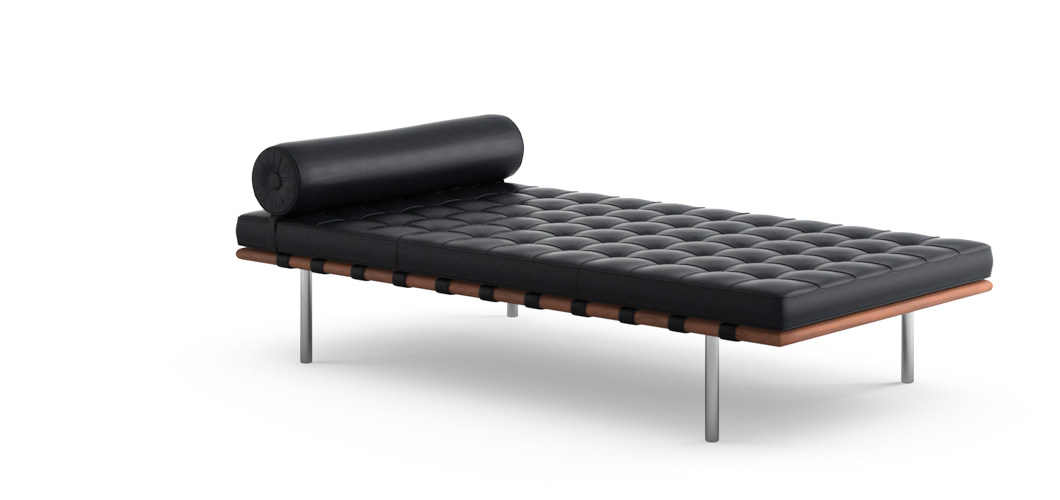
Often referred to simply as “the Mies daybed,” this bench is the embodiment of horizontal elegance. The solid walnut frame is mounted on stainless steel legs. The mattress is composed of 72 individual leather squares, cut and sewn by hand from a single hide. It is the centerpiece of minimalist lofts and executive offices, inviting an intellectual nap rather than a deep sleep.
Read more > The little stories of… Pipistrello lamp
Featured Photo: © DR