

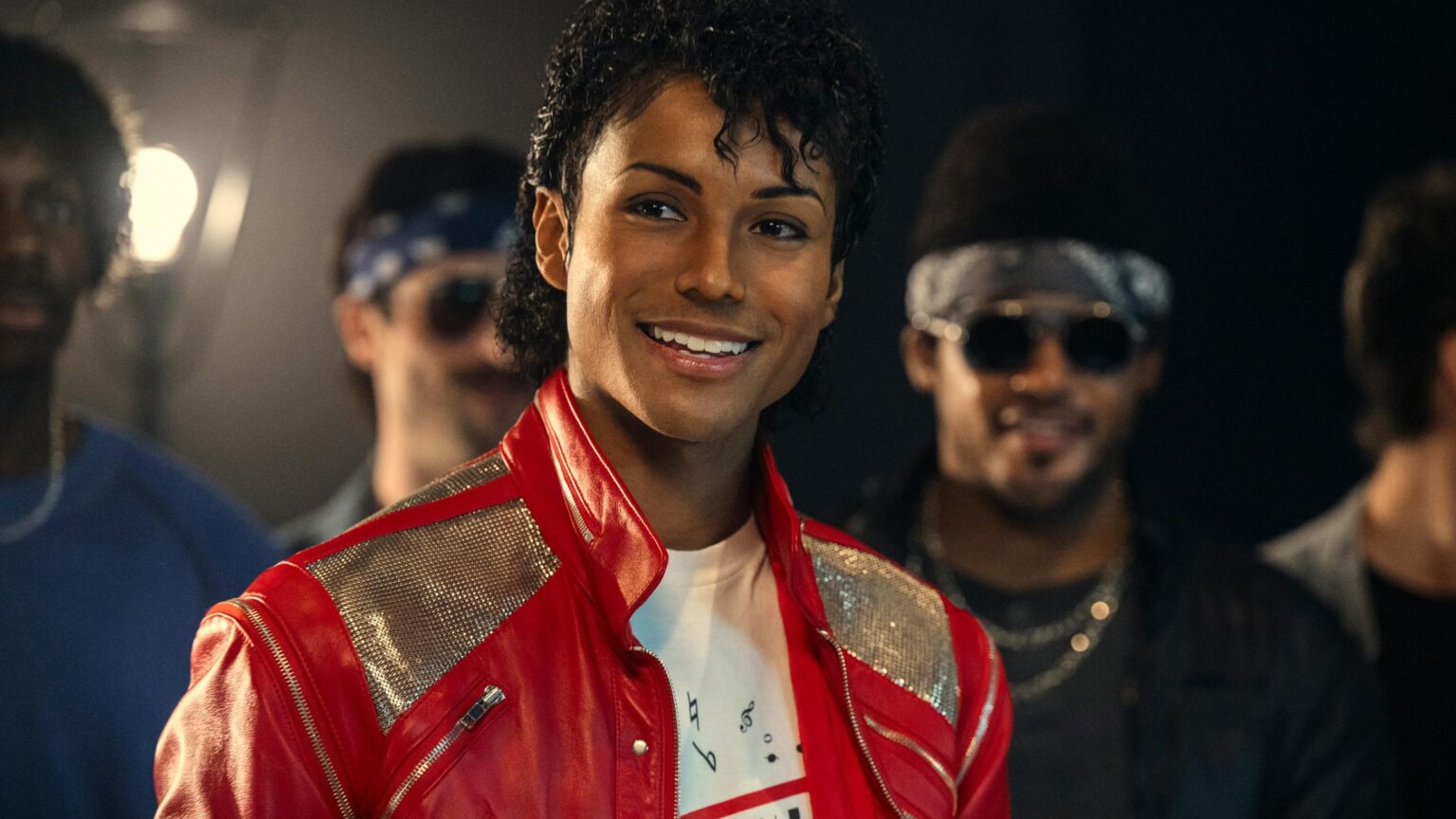




This April 22, Antoine Fuqua’s film Michael is released in French theaters. This highly anticipated feature retraces the early life of superstar Michael Jackson, from his childhood to his artistic breakthrough, including his time with the Jackson Five.
Michael immediately establishes itself as one of the most ambitious musical biopics of the decade. The film was directed by Antoine Fuqua, known for Training Day (2001), the Equalizer trilogy, the boxing drama Southpaw, and the modern western The Magnificent Seven. A filmography marked by intensity that he maintains in Michael, released on April 22, 2026, while adding a more linear narrative where emotion and music play a major role.
With a runtime of 2 hours and 7 minutes and a screenplay by John Logan, the film has a major asset: Jaafar Jackson as Michael Jackson. Son of Jermaine Jackson and nephew of the international icon, the singer, dancer, and actor lands his first major role here. Despite limited experience in film and music, he was chosen for his strong resemblance to Michael and his almost innate artistic talent, reinforcing the project’s authenticity.
Alongside him, Colman Domingo (Rustin, Euphoria, Fear the Walking Dead…) plays Joe Jackson, the family patriarch. Nia Long (Boyz n the Hood, The Best Man) portrays Katherine Jackson, Michael’s mother, while Miles Teller (Whiplash, Top Gun: Maverick) plays John Branca, the singer’s lawyer.
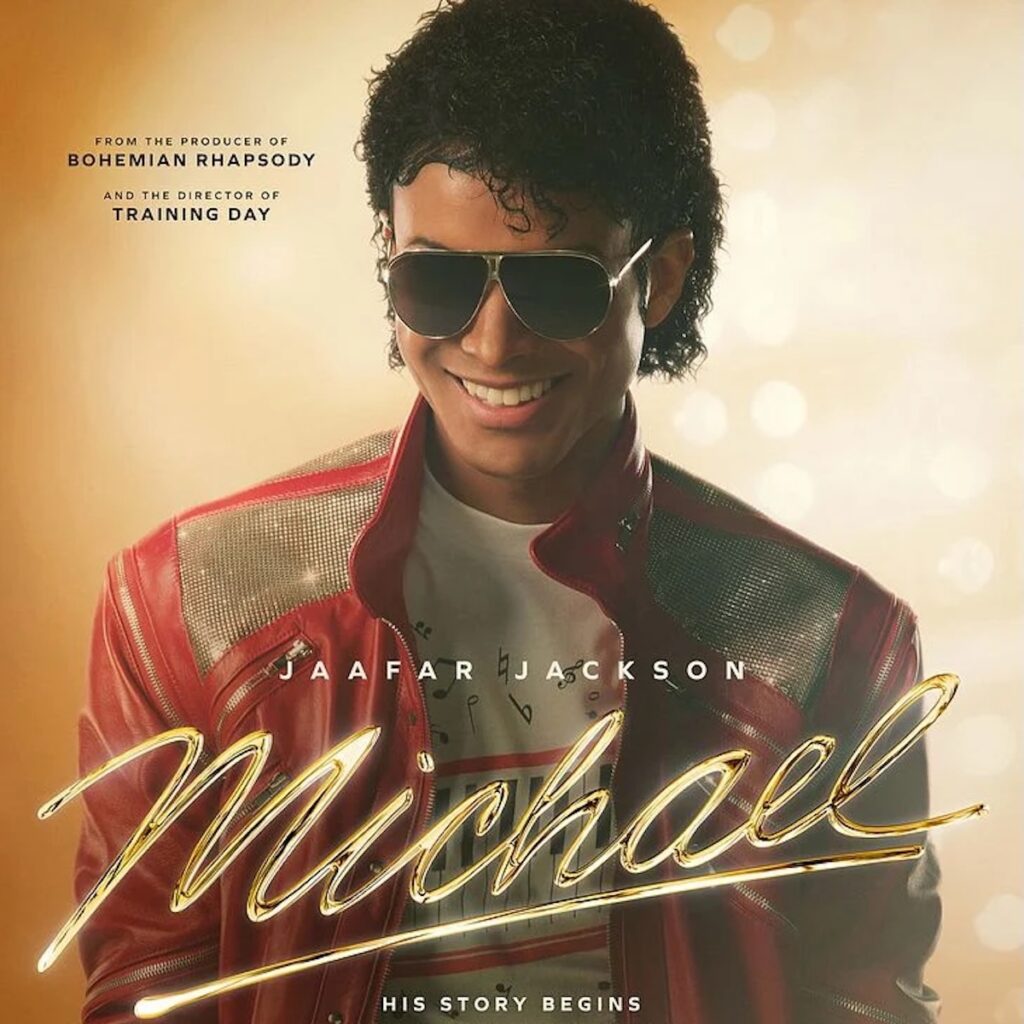
What is the film about?
Michael adopts a classic biopic structure, chronologically retracing the rise of young Michael Jackson. The film opens with his childhood in Gary, in a family where music is ever-present, marked by his father’s strict authority. It then follows the formation of the Jackson Five, with their early success at Motown, before his solo career and the artistic explosion of the 1970s and 1980s.
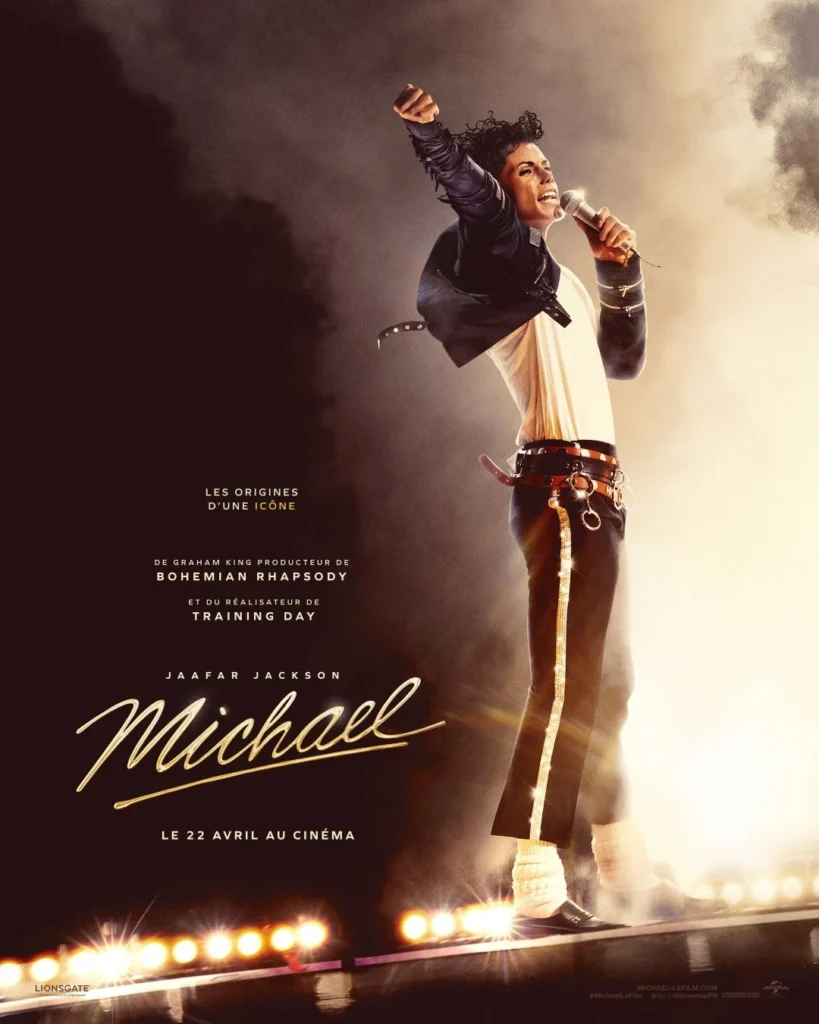
Here, Antoine Fuqua adapts his style by focusing on spectacle. Musical performances take center stage: precise choreography, visuals faithful to the original music videos, and dynamic editing give the film a concert-like dimension. Certain sequences, inspired by Billie Jean or Thriller, become particularly striking moments. The soundtrack strongly structures the narrative, making music the core of the experience. The film thus reminds us that Michael Jackson was above all an exceptional performer.
His album Thriller (1982) remains an absolute record: it has sold over 70 million copies worldwide, making it the best-selling album of all time. It was followed by Bad (1987), which reached around 35 million sales, then Dangerous (1991), with more than 30 million copies.
His singles also achieved massive success: Billie Jean, Beat It, and Black or White reached number one in many countries and sold several million copies each. In the United States, Bad set a record with five consecutive number-one singles, an unprecedented achievement at the time.
In total, Michael Jackson’s career is estimated at over 400 million records sold worldwide across all formats, placing him among the best-selling artists in history.
Far from the controversies
The film’s narrative deliberately stops before the most controversial periods, focusing on the image of an artist on the rise. From the 1990s onward, he was accused multiple times of sexual abuse of minors, allegations that deeply affected his public image.
Some cases were settled out of court, while a highly publicized trial in 2005 ended in acquittal. After his death in 2009, the documentary Leaving Neverland (2019) reignited the debate by giving a voice to two men accusing him of acts that allegedly occurred during their childhood.
This choice clearly steers the film toward celebration rather than analysis. However, this approach also reveals its limits. The narrative remains very conventional and avoids the darker aspects of the artist’s life. The absence of a critical perspective, partly due to the control of the Jackson estate, results in a polished but incomplete portrait.
But the mention “the story continues” suggests the possibility of a second part…
Read also : When Anna Wintour Meets Miranda Priestly: The Vogue Cover That Redefines the Legend
Featured photo : DR