






From the Nièvre to the edge of Earth’s orbit, Sophie Adenot has mapped out an exceptional trajectory between scientific excellence, military commitment and elite piloting. Selected by the European Space Agency, she joined the ISS on February 14, 2026 after twenty-five years of absence of French women in orbit.
Born in 1982 in Cosne-Cours-sur-Loire, Nièvre, Sophie Adenot grew up far from space centers and air bases. Nothing, a priori, predestined her for the Earth’s orbit. Yet, very early on, she became passionate about science and flying. She then joined ISAE-SUPAERO, one of the major French schools in aeronautics and space, which trains her in flight mechanics and complex systems engineering. The young graduate then continues her journey across the Atlantic, at the Massachusetts Institute of Technology, where she works notably on human factors and the adaptation of the body to extreme environments, laying the foundations for a future career in the stars.
From the Army…
Sophie Adenot joined the Air and Space Army in 2005. This military commitment allows him to become a helicopter pilot and participate in operational missions, particularly around search and rescue in combat. She then acquires a crucial quality for her future career: the management of stress in critical situations and a composure at all times. The military is training in helicopter test management, a profession that involves testing devices within their limits, analyzing their performance, detecting possible anomalies and collaborating closely with engineers and industrialists.
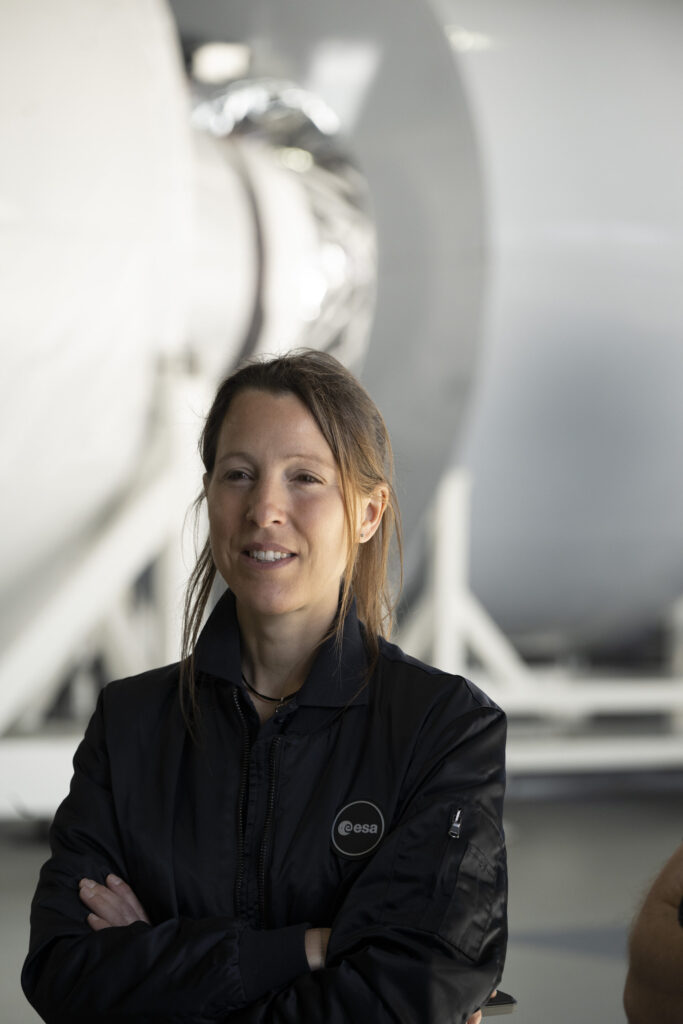
In this world of men, the pilot distinguishes herself by her position of high responsibility combining technical precision and absolute concentration. Over the years, she has logged no less than 3,000 hours of flight time on a wide variety of aircraft, strengthening her reputation and confirming the respect of her peers.
After more than fifteen years of this career in the Army, the specialist was selected in 2022 by the European Space Agency among more than 22,000 candidates. Its dual scientific and operational skills, its experience of flight in several configurations and on a multitude of objects, its mastery of international processes and its ability to work in teams make it a relevant profile, less academic but more hybrid, rich of years of land.
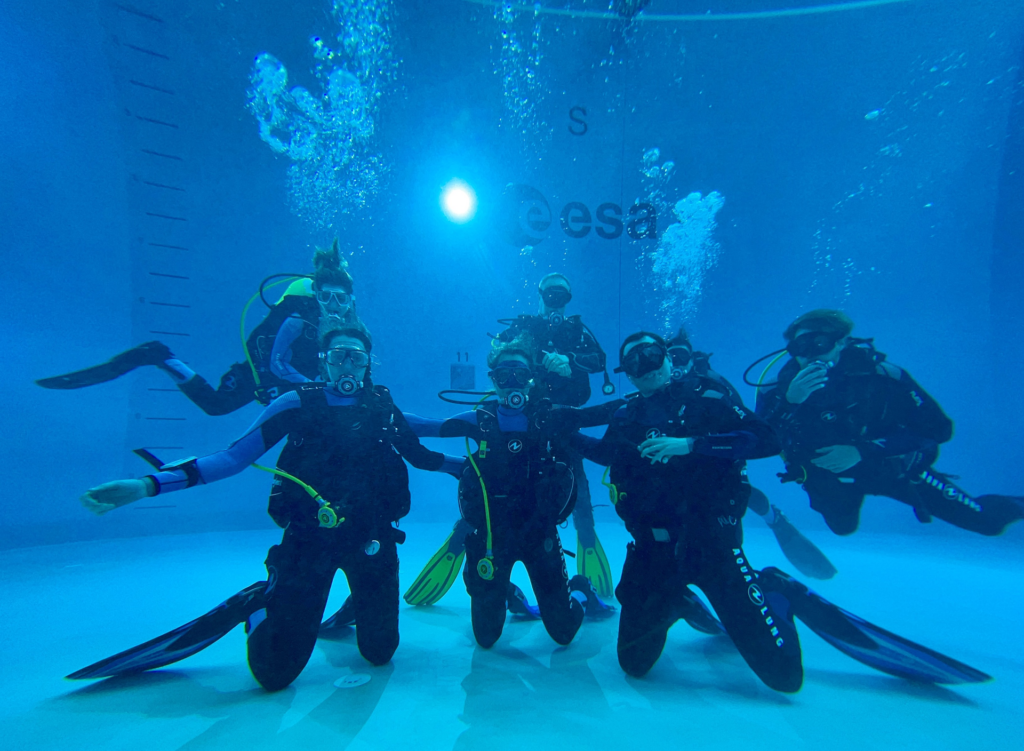
It is at the European Astronaut Centre in Cologne that she begins intensive training. International Space Station systems, robotics, spacewalks, space medicine, survival in hostile environments… two years later, she obtains her official astronaut certification.
… to the ISS
It is then time for her to make use of all this expertise: Sophie Adenot becomes the second woman to go into space. Her first mission takes her to the International Space Station for an extended stay. Accompanied by two American astronauts and a Russian cosmonaut, she thus joined the ISS on February 14, 2026 for a mission of about eight months, marking the return of a French woman to space 25 years after the previous mission.
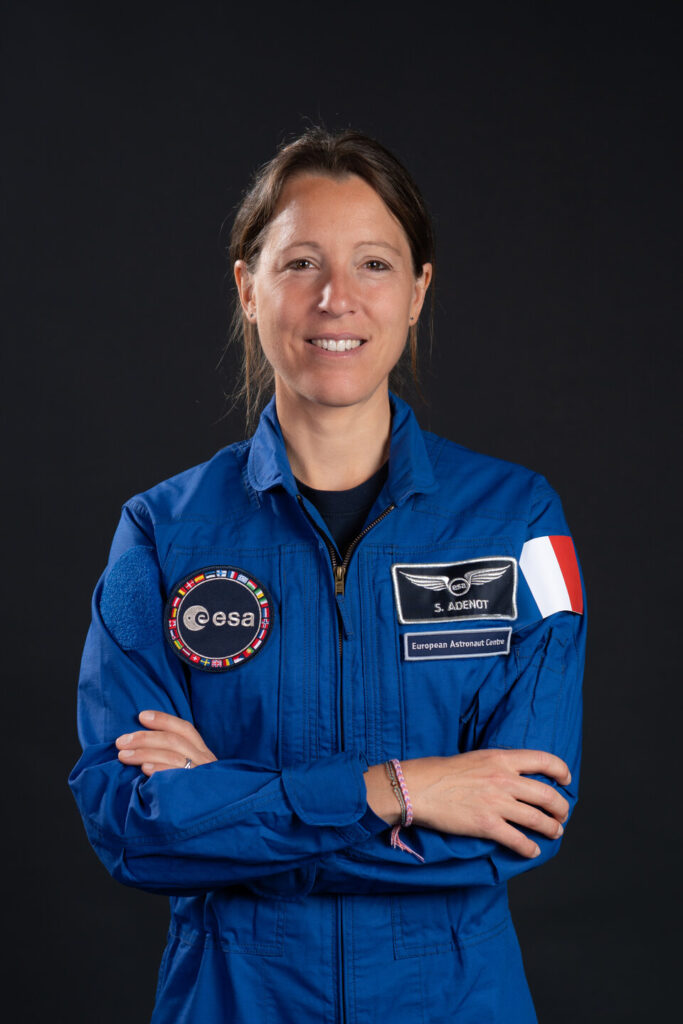
On board, she participates in scientific experiments related to human physiology in microgravity, biology, fluid physics and Earth observation. This research has concrete applications: improvement of medical treatments, understanding cellular aging, optimization of materials or even climate monitoring. Beyond the experiences, she contributes to the daily operations of the station. Between the maintenance of systems, the manipulation of the robotic arm, the preparation of future extravehicular sorties and the reception of space cargo ships, each day is intense.
While future lunar programs and strengthened international cooperation are at the heart of discussions, its role could lead it towards new ultra-selective missions. If the future looks bright for the European astronaut, Sophie Adenot already embodies a generation of inspiring, brilliant, courageous and daring women, writing the history of space exploration.
Read also : Bad Bunny or when global Latin pop becomes a political act
Featured photo : NASA/Helen Arase Vargas and David DeHoyos