





When it opened on Sunday, October 19, the world’s largest museum lost eight of its heritage jewels in a spectacular burglary. Miraculously spared in this unprecedented heist targeting the Apollo Gallery, the crown of Empress Eugénie, wife of Napoleon III, was found broken on the pavement.
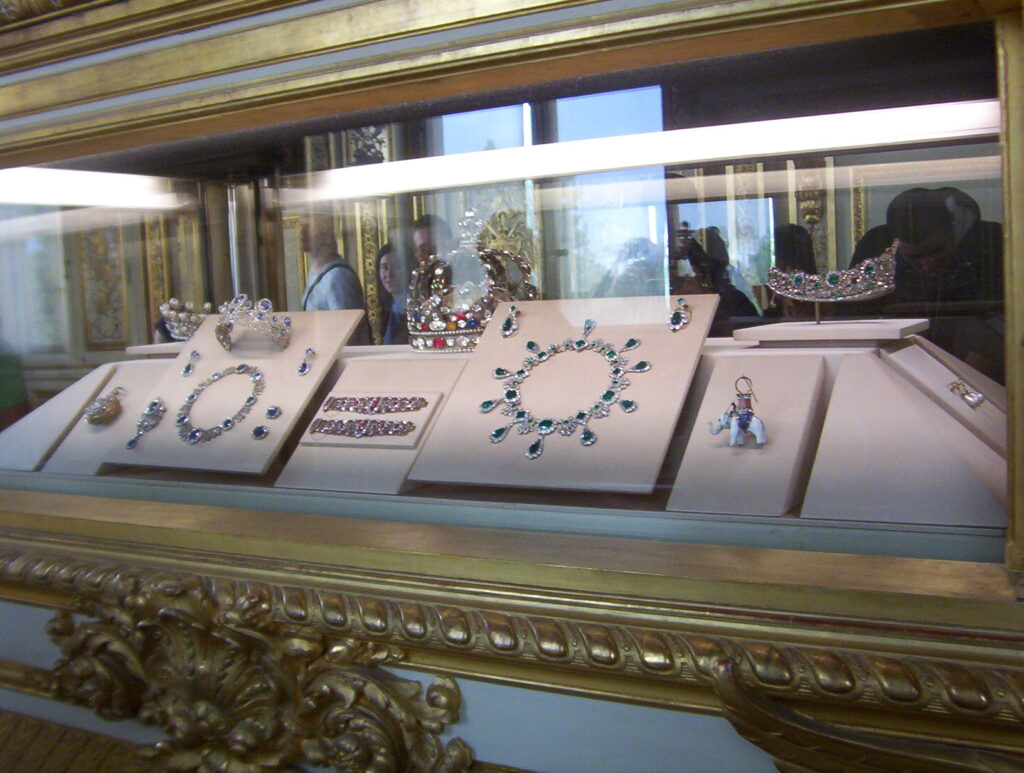
Like our British neighbors, France has its own crown jewels, a collection of gems and diamonds inherited from centuries of royal and imperial magnificence, on display in the Apollo Gallery at the Louvre Museum.
Although few jewels of royal origin remained following the spectacular robbery of the Garde-Meuble de la Couronne (ancestor of the Mobilier National) on the night of September 11-12, 1792, on what is now the Place de la Concorde, the world’s largest museum still housed jewelry reflecting all the expertise of the goldsmiths of the First and Second Empires.
Among the jewelry kept in the Apollo Gallery, eight jewels, most of which date from the reign of Emperor Napoleon III, were stolen on the morning of October 19. This “priceless” booty, reflecting the history of France and the French people, was stolen by four criminals disguised as construction workers.
An unusual modus operandi
At around 9:30 a.m. – in broad daylight – a commando of four criminals, two in a truck equipped with a freight elevator and two on powerful scooters, arrived at the foot of the Apollon Gallery.
Three of them, wearing yellow vests to simulate a construction site and motorcycle helmets, used a forklift and set up traffic cones.
Using the truck’s basket, they hoisted themselves up to the first-floor balconies of the museum and used an angle grinder to break a French window in the Galerie Apollon overlooking the Seine. The same method was reportedly used to break and loot two display cases, one containing “Napoleon’s jewels” and the other “jewels of French sovereigns,” the former of which was completely emptied.
According to Le Figaro, which had access to police sources, the alarms went off at 9:37 a.m. Five officers were reportedly threatened by the criminals with their angle grinder before they fled via the freight elevator at 9:38 a.m.
It therefore appears that, contrary to the statement issued by the Ministry of Culture emphasizing the operational nature of the internal and external alarms, the alarms on the external French windows were faulty. Security flaws had already been reported to management a month earlier. In any case, this is the theory put forward by the media outlet La Tribune de l’Art, citing a “highly placed” source. If these elements are confirmed, the possibility of an accomplice within the museum staff could be raised.
Following this break-in, the museum closed its doors to visitors for the entire day on Sunday. On Monday, the institution also decided to remain closed. Sixty investigators have been mobilized.
The President of the Republic, Emmanuel Macron, was quick to declare on social media: “The Louvre New Renaissance project, which we launched in January, provides for enhanced security. It will guarantee the preservation and protection of what constitutes our memory and our culture.”
The head of state promised to find all the stolen works and to bring the perpetrators to justice.
The investigation should shed light on the flaws in the museum’s security system, as well as that of the Apollo Gallery, whose display cases, which were supposed to be bulletproof, had been restored in 2019 after ten months of work.
A treasure of “inestimable” value
A treasure of “inestimable” value is the phrase on everyone’s lips since the spectacular theft of eight of the French Crown Jewels from the Louvre Museum. These jewels had been the subject of a detailed appraisal.
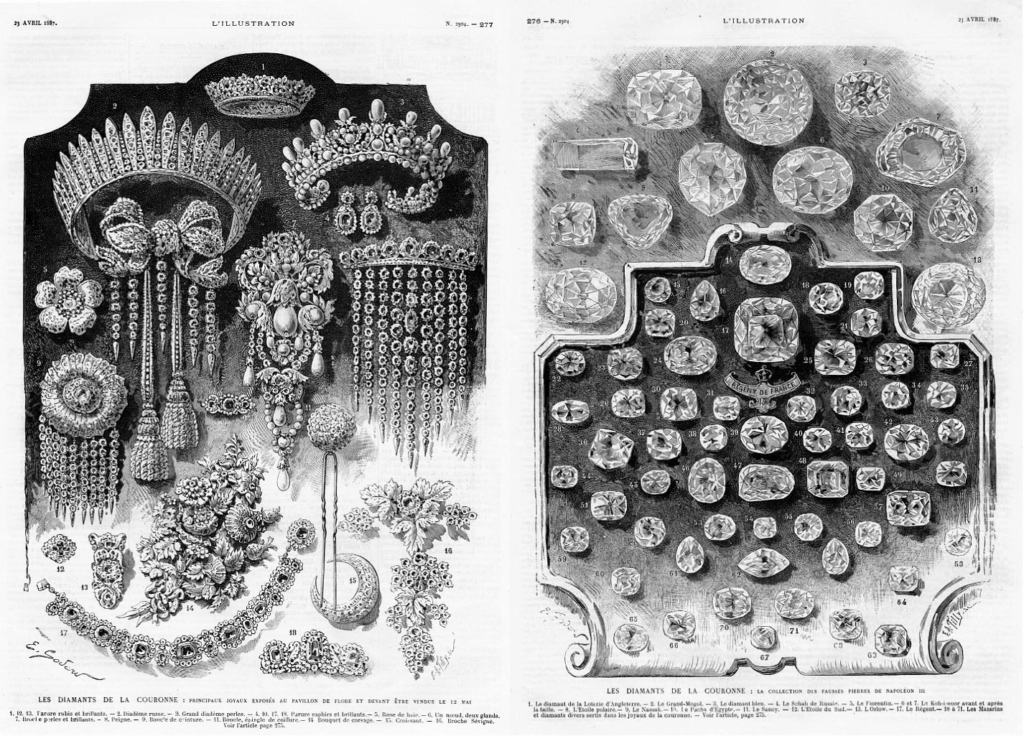
The 1691 inventory lists 5,885 diamonds, 1,588 colored stones, including the most beautiful sapphire known in the world—the “Grand Sapphire”—as well as 488 pearls, including the most beautiful round pearl known in Europe—the “Queen of Pearls”—weighing 112.25 metric grains. Throughout history, successive rulers, particularly Napoleon I and Napoleon III, enriched the collection with other exceptional gems and jewels.
During the auction in May 1887, which took place under the Third Republic, a large part of the royal treasure – except for certain historical gems – was sold for 6,864,050 old francs, which were placed in the Caisse des Dépôts et Consignations.
The Louvre Museum then purchased the reliquary brooch of Empress Eugénie, known as the “rocaille brooch” and consisting of eighty-five diamonds mounted on gilded silver.
From 1985 onwards, the world’s largest museum worked tirelessly to rebuild the royal treasure. That year, the Louvre acquired the tiara from the jewelry set belonging to Queen Marie-Amélie and Queen Hortense. It had remained in the Orléans family and had not been sold in 1887. The necklace from the sapphire jewelry set belonging to Queen Marie-Amélie and Queen Hortense was also acquired at the same time.
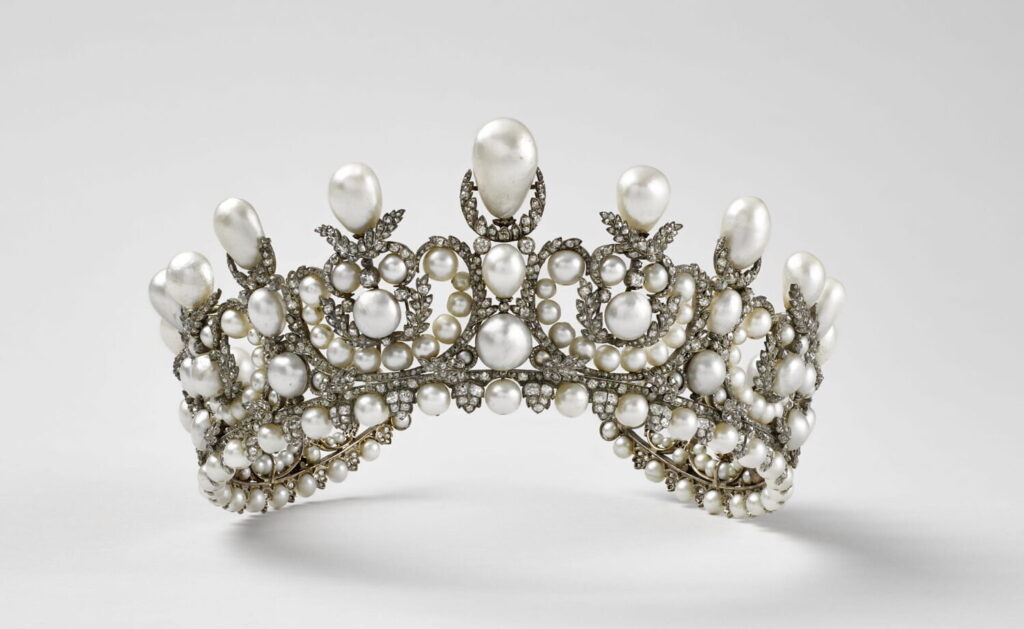
In 1992, the Société des Amis du Louvre purchased the pearl tiara of Empress Eugénie. This exceptional piece of jewelry in gold-plated silver, with 212 Oriental pearls and 1,998 diamonds, was made in 1852 by Alexandre-Gabriel Lemonnier.
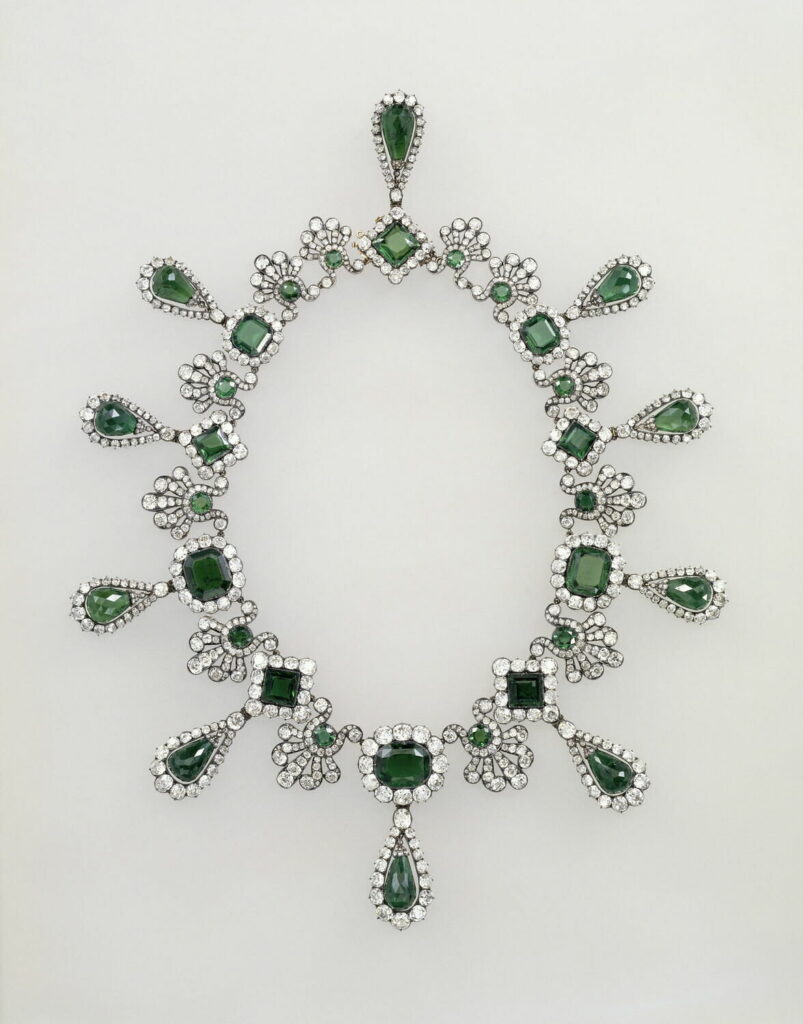
More recently, in 2004, and once again thanks to the Société des Amis, the museum managed to acquire the emerald necklace from Marie-Louise’s set, given to her by Napoleon on their wedding day. As it did not belong to the National Collections, the headdress was not included in the 1887 auction.
In 2008, the museum was able to acquire from the Astor family, who had kept it for a century, the large diamond brooch worn by Empress Eugénie, made in 1855 by François Kramer, the empress’s personal jeweler.
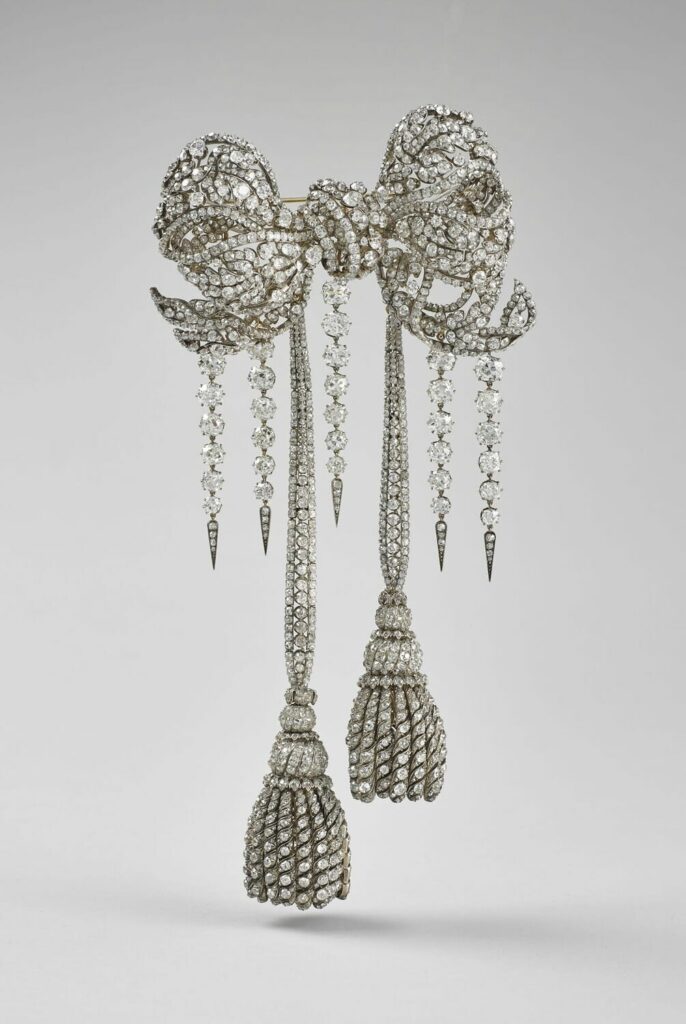
In 2015, the museum also purchased Empress Eugénie’s shoulder brooch, made in 1853 by François Kramer.
The six jewels mentioned above were stolen on October 19, along with an earring from a pair of sapphire earrings belonging to Queen Marie-Amélie and Queen Hortense, and a pair of emerald earrings from Empress Marie-Louise’s jewelry collection.
The notoriety of the pieces and their exhaustive documentation make any resale impossible, if not particularly difficult.
Empress Eugénie’s crown “miraculously” spared and the Regent spared
During their escape, the thieves abandoned a key piece of the royal treasure, Empress Eugénie’s crown. This is the very same crown that appears, resting on a cushion, in the background of her official portrait painted by Franz Xaver Winterhalter in 1853.
Acquired in 1988 by the Louvre Museum, this imperial headdress, composed of 1,354 white diamonds, 1,136 pink diamonds, and 56 emeralds mounted on gold, was created in 1885 by jeweler Alexandre-Gabriel Lemonnier.
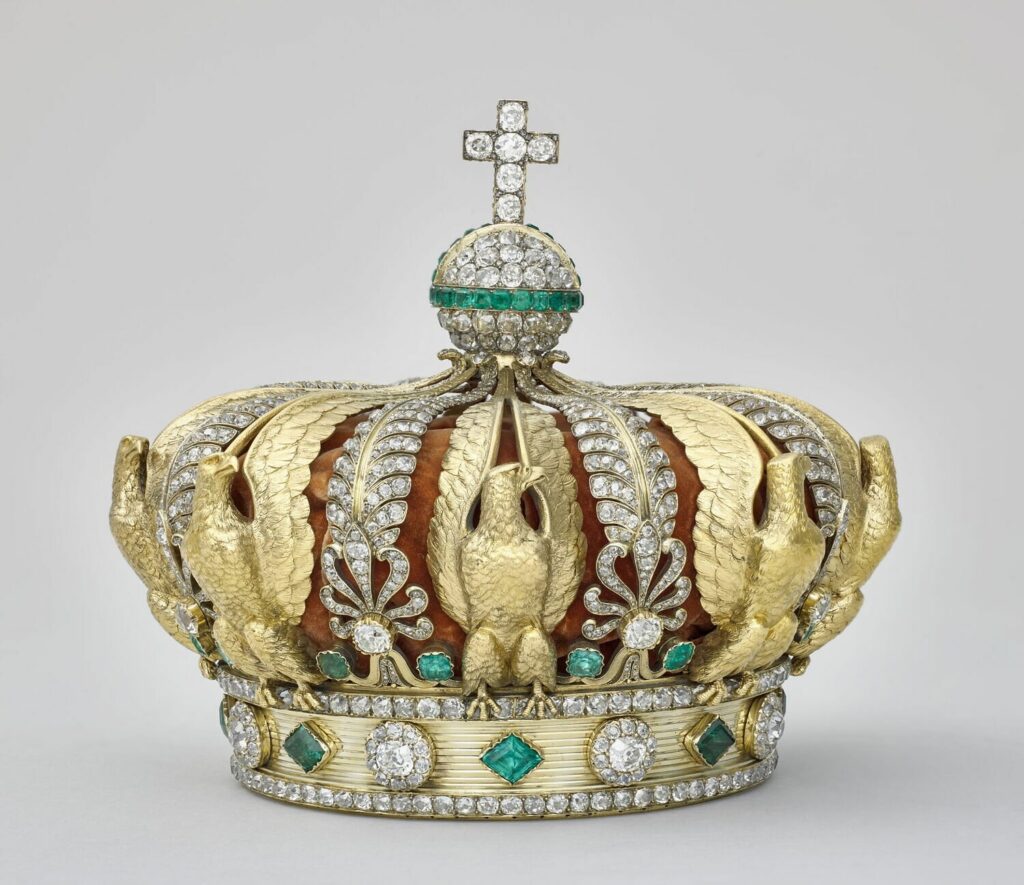
However, the crown did not escape the theft unscathed. Numerous accounts refer to a “broken” headdress, but no photos have been found showing the current state of this jewel.
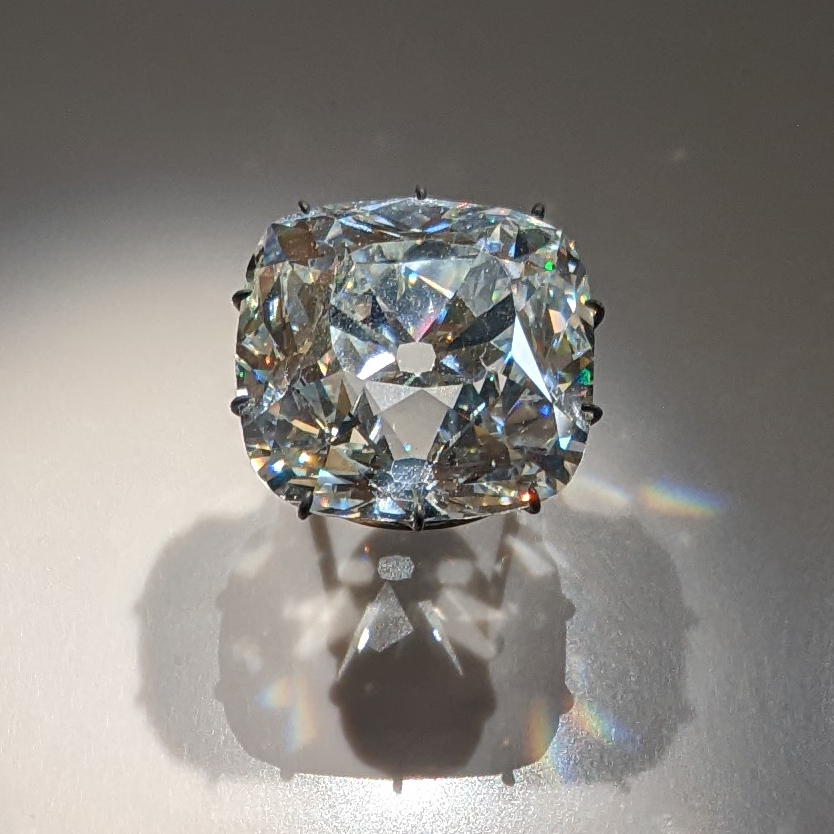
Fortunately, the most important piece of the French Crown Jewels, the Regent, kept in the Louvre since 1887, was not targeted. This 140.64-carat white diamond, discovered in 1698 in Golconda in southern India, is considered the most beautiful and purest of diamonds. Although Philippe d’Orléans, its first owner and regent, gave it its name, it was worn by the sovereigns Louis XV, Queen Marie Antoinette, and Napoleon I. The latter wore the stone on the guard of his coronation sword before having it set on the pommel of his imperial sword. After being dispersed during the Revolution, it was found, like the Sancy, during Danton’s trial.
The crown of Louis XV, set with 282 diamonds and 64 colored stones, is the other exceptional jewel to have escaped looting.
Read also > A previously unseen Picasso gem is up for auction
Featured photo: Portrait of Empress Eugénie, wife of Napoleon III, painted by Franz Xaver Winterhalter, 1853