





Published in 1925, The Great Gatsby brought its author, Francis Scott Fitzgerald, unexpected but belated literary success, against a backdrop of warnings about the false pretenses of success and out-of-control speculation. Yet, a hundred years later, most commentators have focused solely on the glitz, the Charleston dresses, and the endless jazz-filled parties. This is the story of a work that remains largely misunderstood.
“What Money Can’t Buy” is an expression that is increasingly popular in the luxury sector. It is often synonymous with the evolution of the sector’s offering, which, instead of focusing exclusively on physical products, is moving towards intangible, immersive experiences that can be shared on social media.
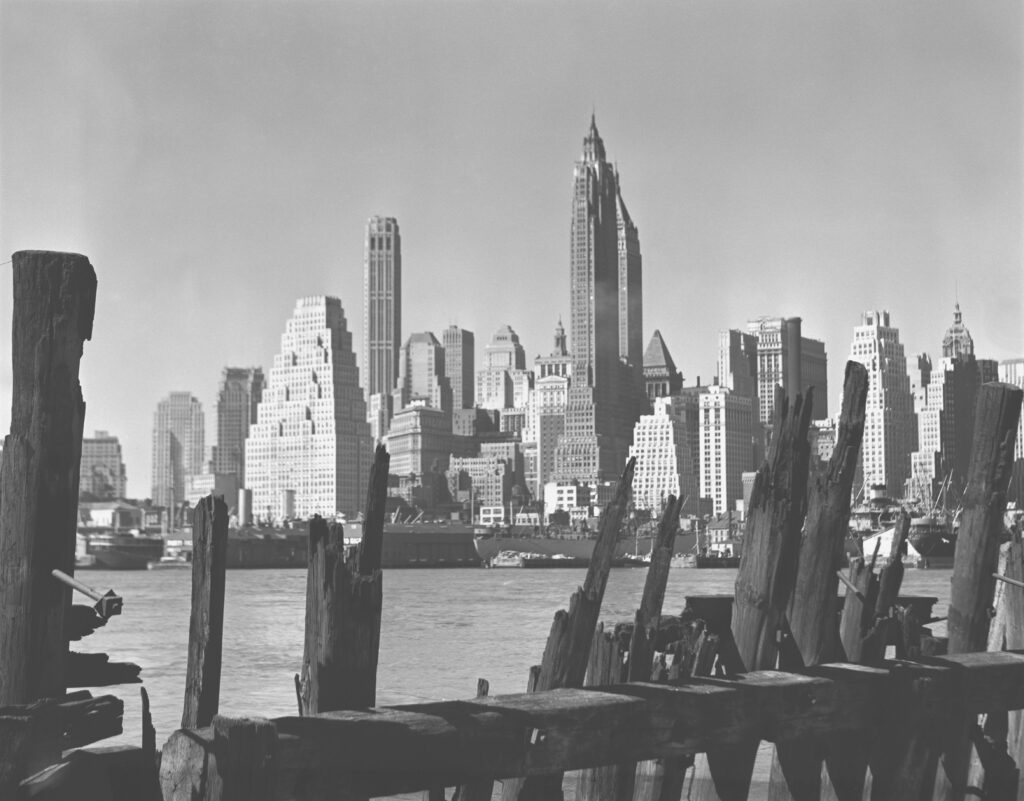
However, if there is one literary work that can be considered a manifesto of this “What Money Can’t Buy”, it is The Great Gatsby (The Great Gatsby). The story of an impossible love between a mysterious nouveau riche and a flapper married to a millionaire heir, at a time when Long Island—on the outskirts of New York—was nicknamed the Gold Coast following the construction of vast mansions by the wealthy.
A hundred years after its publication, the “great American novel” by Francis Scott Fitzgerald and the shadow of his mysterious, wealthy anti-hero, Jay Gatsby, is a staple of Roaring Twenties-inspired parties, speakeasies, and electro swing. The embodiment of essentially material success, he has been elevated to meme status among financiers, crypto bros, and start-up entrepreneurs of all stripes.
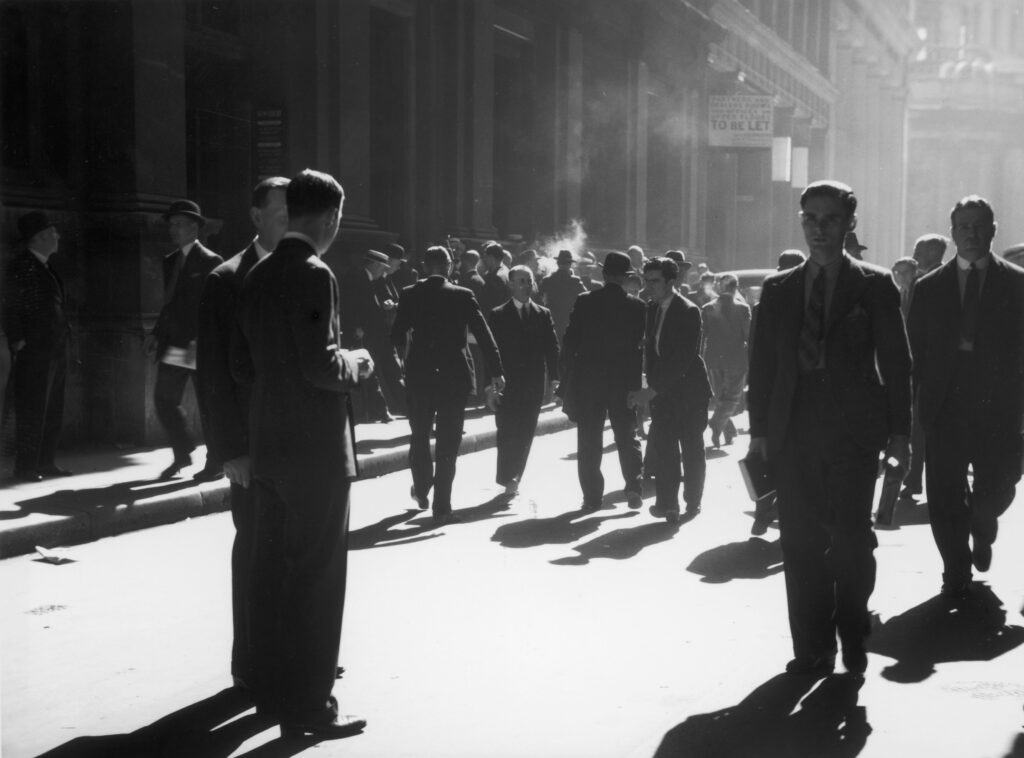
However, despite more than 25 million copies sold, it is as if the author’s warning and, above all, the experience of the novel’s narrator, Nick Carraway, a young stockbroker in the deregulated Wall Street of the 1920s, had been overshadowed.
Indeed, Gatsby is not just about drunken parties and the Jazz Age: it is a scathing and acid critique of the American dream, long before Brett Easton Ellis and his American Psycho, which painted an unflattering picture of 1980s traders.
A literary gamble
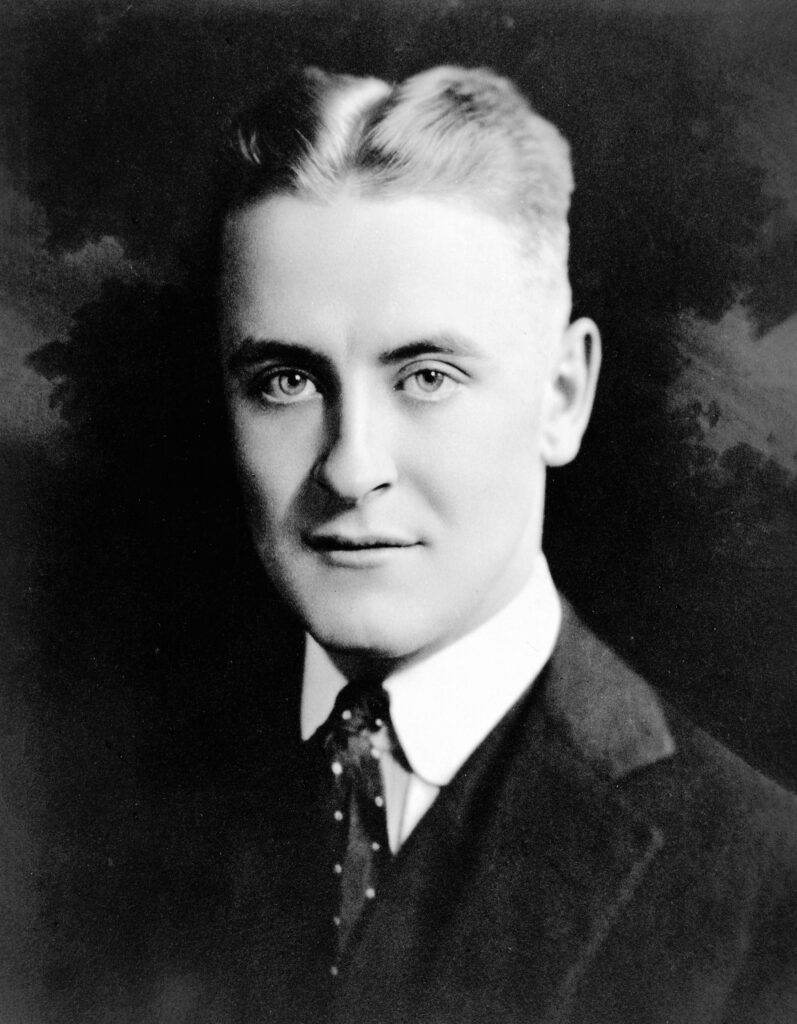
When Francis Scott Fitzgerald was about to publish what would be his third novel, he was plagued by doubt. The 29-year-old had no idea that this book would be the most famous of his works. In the meantime, he hoped to repeat the success of his first novel, This Side of Paradise, which had sold more than 40,000 copies in five months in 1920! However, five years later, such success had not really been repeated, and the dashing former Princeton student was beginning to feel the pinch. Repeated setbacks with his play The Vegetable forced him to rethink his ambitions for The Great Gatsby, which he had started writing in June 1922.
However, the writer took great care with the cover, entrusting the illustration to a little-known Barcelona painter, Francis Cugat. Entitled Celestial Eyes, the graphic design—the artist’s only work for a book—depicts the face of a flapper girl from the Jazz Age, with celestial eyes containing two nudes in the irises, scarlet lips, and a single green tear. This disembodied and melancholic face overlooks the lights of the city, or rather an amusement park, similar to that of Coney Island in New York. Although the dandy novelist was satisfied with the text, he had doubts about the title. “If the book is a commercial failure, it will be for one of two reasons, or perhaps both. First: the title is mediocre, more bad than good.” Indeed, The Great Gatsby—directly inspired by the title and certain elements of the plot of the French novel Le Grand Meaulnes by Alain Fournier, published in 1913—was actually a second choice. The author preferred “Among Ash Heaps and Millionaires” and even more so “Trimalchio in West Egg – Trimalchio being a character from Satirycon, a satirical work by the 1st-century Roman writer Petronius – Gold-Hatted Gatsby or Under the Red, White, and Blue. However, all these suggestions were rejected by his publisher and his wife for being too obscure.
He then appears resigned and pragmatic in relation to his predominantly female audience. The author adds, “Secondly, and this is crucial: the book does not contain any significant female characters, yet today it is women who dominate the novel market.” In order to portray the women in his novel as truthfully as possible, Francis Scott Fitzgerald drew heavily on his wife Zelda, who was his muse, his greatest supporter, and an outstanding proofreader. But above all, although her role has long been downplayed, Zelda Fitzgerald remained in the American writer’s work as the female voice of his novels. The character of Daisy Buchanan, the elegant wife of millionaire Tom Buchanan, shares several traits with Zelda, in particular her rural origins (both are Southern Belles, well-bred and proper white women from the upper middle class of the southern United States), her quick wit, her emotional ambiguity, and her clever mix of charm and nonchalance. We also know that the author used almost word for word passages from his wife’s diary and letters, particularly descriptions of feelings and reflections on love and disillusionment, two central themes of the novel.
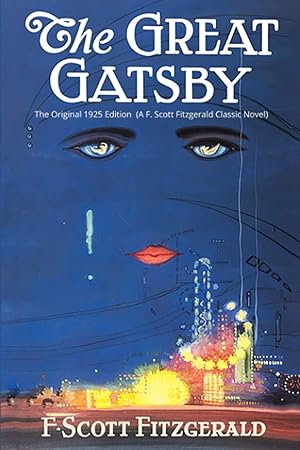
When the book was published, F. Scott Fitzgerald encountered other difficulties. The first—and not the least—was the unclassifiable nature of this work, which was unfairly dismissed by the press as a simple detective novel. In a letter sent to his friend Edmund Wilson shortly after the book’s publication, the novelist expressed his indignation: “Of all the reviews, even the most enthusiastic, none has the slightest idea what the book is about.”
But above all, despite the praise in the press, the public was not as enthusiastic as it had been for his first book… at least at first. When it was released on April 15, 1925, the book sold 20,000 copies. This relative failure inhibited the writer, who took almost ten years to write his fourth novel, Tender is the Night, which was published in 1934. That same year, a publisher attempted a second edition, this time with a preface and a retraction, but to no avail.
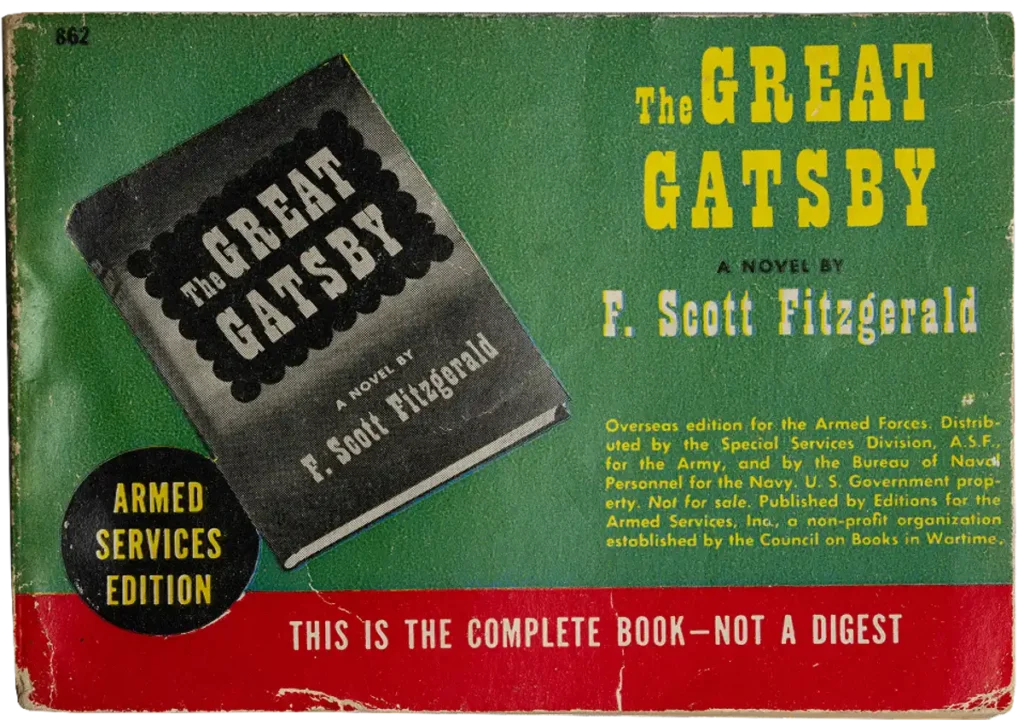
It was not until the United States entered the war in 1941 that the book enjoyed a second lease of life. The novel The Great Gatsby was included in the packages sent to American soldiers to entertain them on the front lines. The pocket-sized book was distributed in 150,000 copies. This massive and unexpected spotlight led to a wave of rediscovery by Anglo-Saxons of Fitzgerald’s entire body of work in the late 1940s and 1950s. Thus, at the end of World War II, The Great Gatsby acquired its status as a reference book and still holds a prominent place in American high schools today.
Ironically, the American writer never got to enjoy this second wave of success, dying of a third heart attack on December 21, 1940.
A whirlwind of parties and… a mysterious host
“New York, the Roaring Twenties… In his sumptuous Long Island mansion, Jay Gatsby throws lavish parties where guests flock in droves. But their host seeks to dazzle only one person: Daisy Buchanan.” From the synopsis provided by Le Livre de Poche on the back cover, the party is omnipresent.
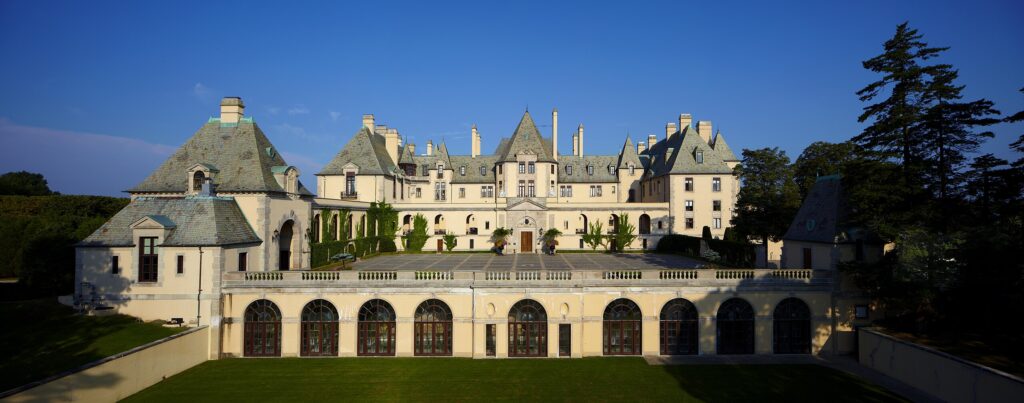
Except that these parties, attended by New York’s high society, as extravagant and decadent as they may be, take place in the midst of Prohibition. During this period (from 1920 to 1933), all distribution and consumption of alcohol was officially banned on American soil. Thus, the drinks served at Jay Gatsby’s opulent receptions are primarily contraband. The transgression of the established order contributes to this frenzied quest for pleasure.
To paint a realistic picture of these night owls, who were more or less freeloaders, Francis Scott Fitzgerald, a true night owl himself, simply drew inspiration from the social events he used to attend with his wife Zelda. The plot is thus inspired by a childhood sweetheart, the socialite Ginevra King, whom the novelist knew, as well as parties he attended on the north shore of Long Island in 1922.
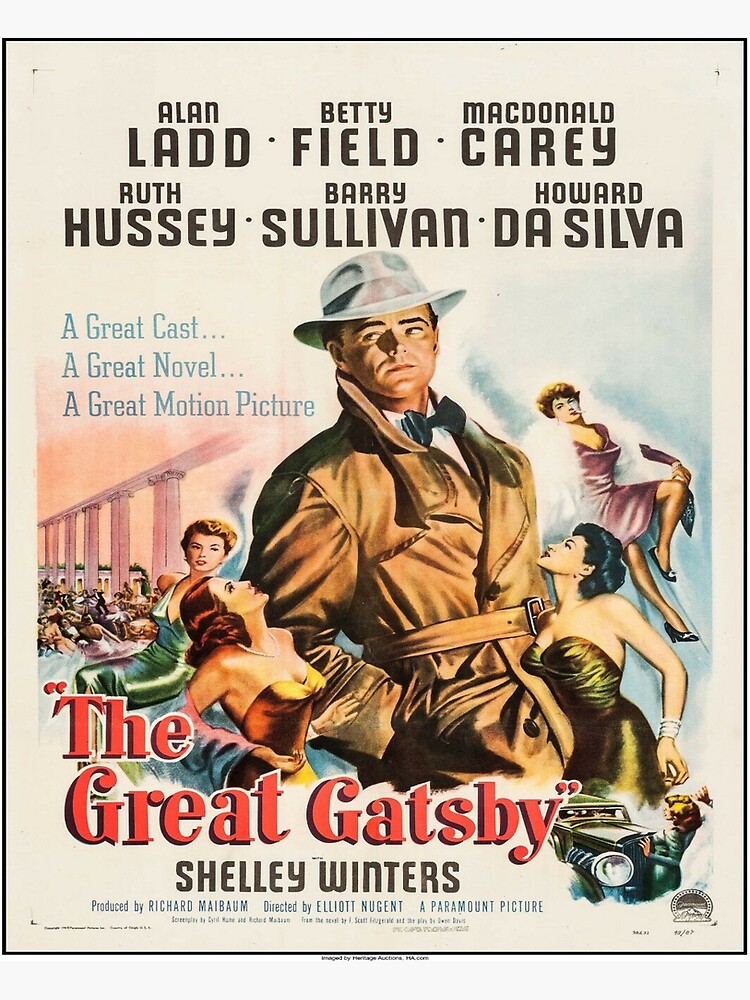
While the novel and Fitzgerald’s style are sparse and full of allusions,the film gave Gatsby unprecedented visual and cultural impact. A first film of the same name by Herbert Brenon, now deceased, was released in 1926. A second film, directed by Elliott Nugent with Alan Ladd and released in 1949, follows in the pure tradition of gangster films.
We thus witness a shift in the third well-known film adaptation of the novel, directed by Jack Clayton and released in 1974. That year, the world was facing the second oil crisis, while in the United States, President Richard Nixon resigned following the Watergate scandal. In this new version, in which the mysterious high roller is played by Robert Redford and his impossible sweetheart by Mia Farrow, the film emphasizes the festive dimension of the original work. Gatsby’s outward signs of wealth—more or less emphasized in the novel—are highlighted with a wardrobe by Ralph Lauren and a gleaming Rolls Royce of America, in this case a very anachronistic 1928 Ascott Brewster phaeton (Phantom I), a model that was only marketed six years after the novel was written. The March 1974 issue of GQ magazine doesn’t mince words, highlighting “the Gatsby Flair” with the subtitle “the movie that is influencing what you wear.”
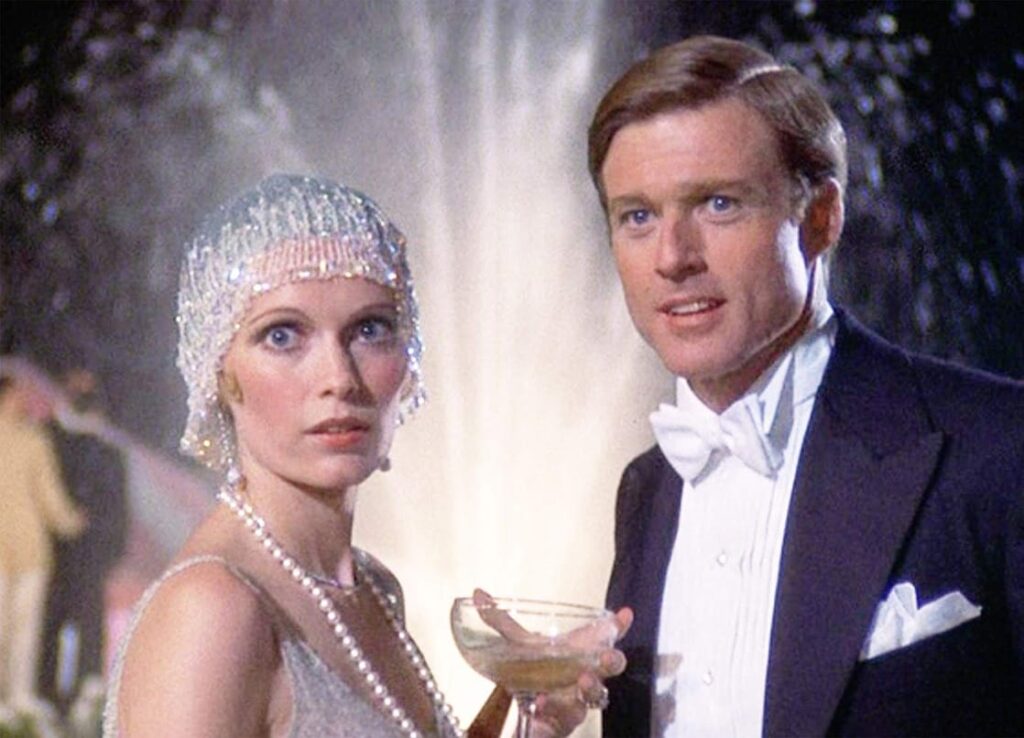
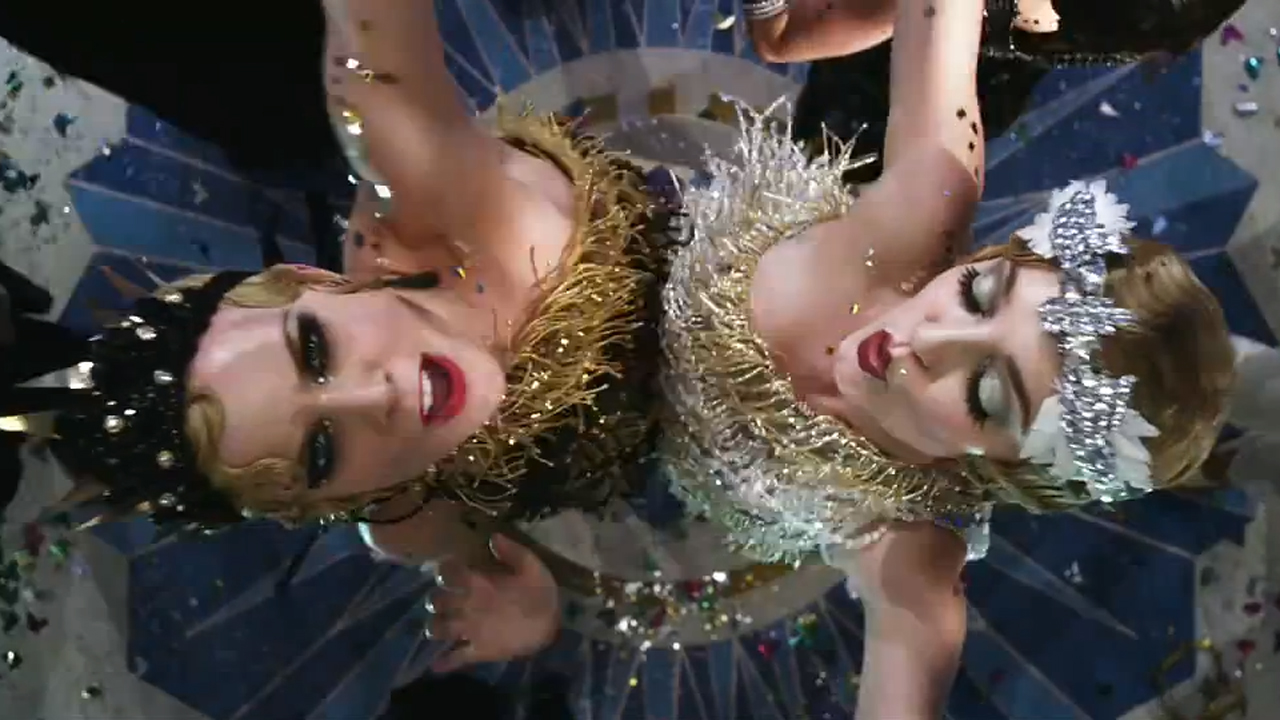
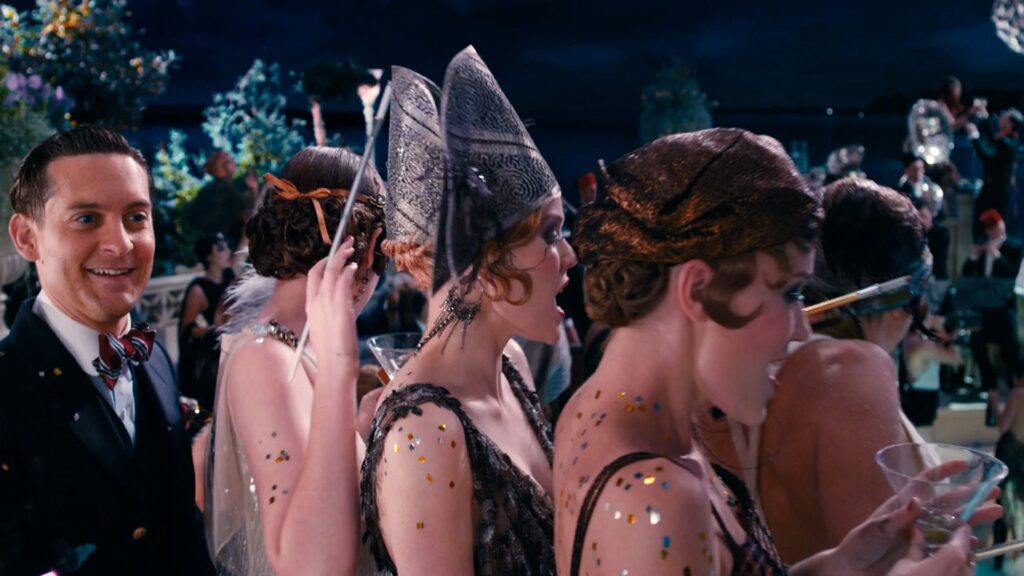
Baz Luhrmann’s 2013 film, starring Leonardo DiCaprio in the title role alongside Carey Mulligan as Daisy and Tobey Maguire as Nick, considerably amplified this atmosphere of endless partying with champagne fountains, glitter, and sleepless nights.
The ostentatious style of both films and this atmosphere of dancing on a volcano, accentuated by the shadow of the 1929 stock market crash that hangs over the novel, naturally found an echo in the money- and glamour-driven 1980s and the 1987 krach, as well as in the 2010s.
The young wolves of Wall Street thus found in the nouveau riche Gatsby a pop role model, tailor-made to embody the values of ambition and financial success. But what most people forget is that Jay Gatsby is just an illusion. Firstly, the reader only encounters him through Nick Carraway, a naive young man who has an ambiguous relationship of fascination and repulsion towards Gatsby. However, Gatsby, idealistic as he may be, is in fact a gangster who tries to buy himself a certain respectability through fine fabrics and spectacular parties. Deeply involved in the local underworld, he has a job that is very much in vogue during Prohibition: bootlegger (alcohol smuggler).
A cracked American dream
America, known since Colonial America as the home of the self-made man, has developed a myth of success that has attracted migrants from all walks of life. According to this “American Dream,” anyone who arrives in the United States, as long as they are determined and willing to work long hours, can achieve financial success.
For Francis Scott Fitzgerald, there is, however, a price to pay—a kind of Faustian pact—to live the American dream and enjoy the pleasures associated with it. For Jay Gatsby, it means losing his innocence and his time, as the young man is constantly forced to slip away from the party to take urgent phone calls. Gatsby is not the only character in the novel with questionable morals. Daisy is described as “sparkling like silver,” a play on words that leaves little doubt about her gold-digging tendencies. Tom Buchanan, Daisy Buchanan’s husband, appears as a white supremacist, the archetype of the WASP in his brutal and fickle version. Even Jordan Baker, Nick Carraway’s companion, presented as a golf champion, is known for cheating in competition. And the seemingly perfect couple formed by Tom and Daisy is also heavily criticized: “They were careless people, Tom and Daisy—they broke things, both objects and creatures, and then retreated into their money or their vast carelessness, or whatever it was that kept them together and left the rest of us to clean up the mess they made.”
More broadly, in The Great Gatsby, Francis Scott Fitzgerald questions the idea of success and the fascination it arouses—the green light serving as an allegory—with the participants at Gatsby’s parties, whether officials or celebrities, turning a blind eye to the origins of his fortune, as extraordinary as it is sudden, as long as they can have fun.
But Scott Fitzgerald’s real criticism of the American dream focuses on another attribute: status, and more specifically, social mobility. Thus, Tom Buchanan, although presented as fundamentally violent and unfaithful, cannot be challenged because he is a wealthy heir, in other words, an “old money” figure. Despite his efforts to win over all of New York, Jay Gatsby will always remain an upstart, without the codes of high society and therefore perfectly suspect. It is this vain quest for respectability, despite his attempts to conceal his modest origins, that causes him to lose Daisy, whom he believes to be the love of his life. Francis Scott Fitzgerald knew this class contempt all too well: coming from a middle-class background in the Midwest (Minnesota), he himself had experienced it with his aforementioned childhood sweetheart. Her father was opposed to their relationship.
Thus, according to the novel, what money cannot buy can be summed up in two words: love and status. For novelist Michael Farris Smith, the success and timelessness of the novel can be found in the Carpe Diem it induces: “It may not be the champagne and dancing, but rather those feelings that make us wonder where we are, that sense that everything could collapse at any moment, that make Gatsby remain significant from one generation to the next.”
The novel’s twilight dimension is not limited to its tragic ending: it is also a warning against uncontrolled speculation, which, four years after its publication, would lead the world to the Stock Market Crash of 1929. On Black Thursday, October 24, the New York Stock Exchange’s main index, which had risen by more than 500% since the early 1920s, lost almost half its value. The bursting of a speculative bubble, amplified by the new system of buying shares on credit known as call loans, led to the bankruptcy of many companies and caused many employees to experience soaring unemployment.
And what about today? With the gloomy economic climate, chronic geopolitical uncertainty, the risk of an artificial intelligence bubble bursting, and the younger generations’ fascination with old money and their epidemic of loneliness, the myth of Gatsby still resonates with the times.
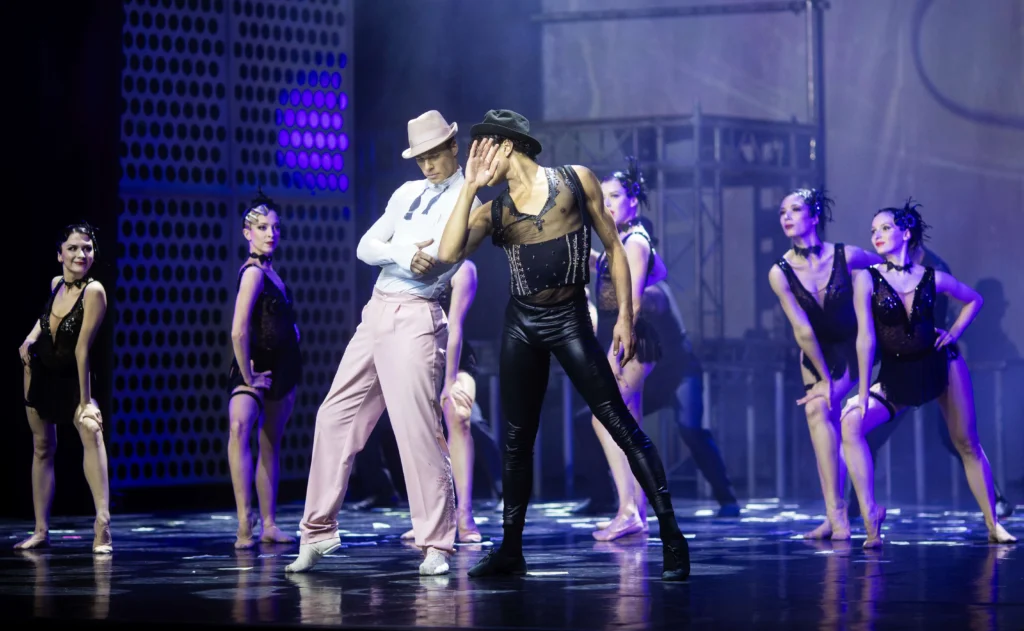
However, since 2021, the novel The Great Gatsby has entered the public domain, amplifying the range of events and merchandise based on the character of Gatsby. The work has been adapted into a play, an opera (1999) created by John Harbison at the Metropolitan Opera, a musical (2023) on Broadway by Jason Howland and Nathan Tysen, soon to be performed in London, and a classical ballet. The latter (The Great Gatsby Ballet), which blends the codes of the genre with contemporary dance, is performed by dancers from the leading Ukrainian and American companies.
Read also > Frankenstein, a monster of flesh and fear turned pop culture phenomenon
Featured photo: © Warner Bros Picture